Another Day in… BERGEN!

BRY6
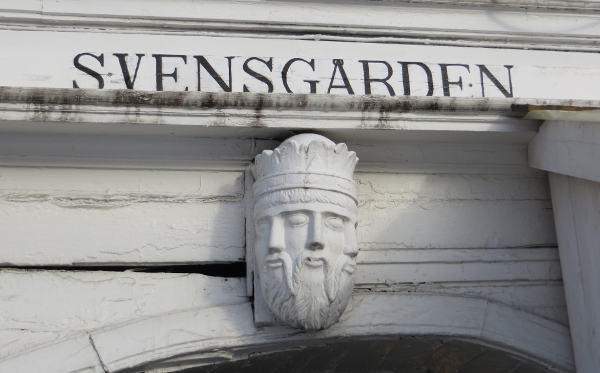
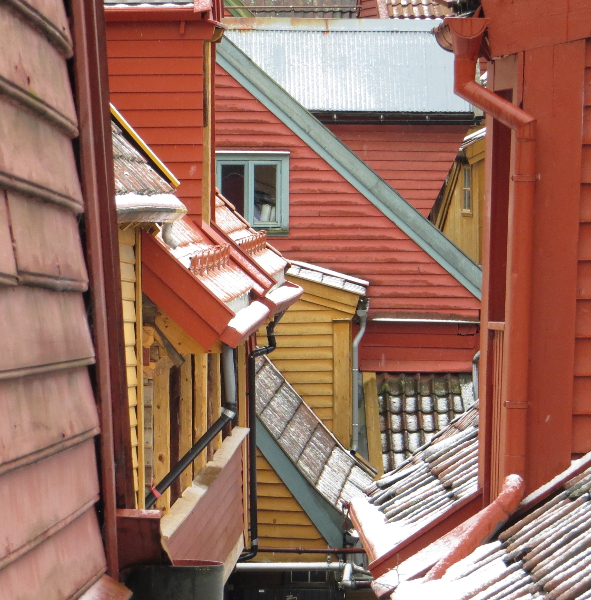
BRY5Die Attraktion in Bergen ist das Viertel Bryggen – es ist als UNESCO Weltkulturerbe gelistet. An der Ostseite der Hafenbucht Vågen reihen sich ehemalige Hansekontore (seit 1360) als Kette bunter Holzhäuser aneinander. Und hintereinander. Insgesamt sind es 60 Gebäude, die noch erhalten sind und in denen man sich ganz gut verlieren kann.

What tourists usually come to Bergen for is Bryggen, an area that has been listed as a UNESCO World Heritage site. It’s located on the Eastern shore of the harbor bay Vågen and at first sight a chain of colorful wooden houses – but there are more behind, 60 in total. They were part of the Hanseatic Kontor that was established there around 1360. You can spend quite a while exploring them.

BRY7

Und schon wieder was dazugelernt: ich höre nur Hanse und denke Hansestadt – aber falsch gedacht. Das hat man dann doch nicht zulassen wollen. Bryggen, oder auch Tyske Bryggen (die deutsche Brücke), war ein abgeschotteter Stadtteil, Deutsche und Norweger streng getrennt (theoretisch) – und es war eben nur ein Hansekontor, Lübeck zugeordnet.

And again I was humbled by my ignorance: I hear Hanse and then automatically think Hanse City – but wrong. That wasn’t permitted. Bryggen, or also Tyske Bryggen (the German Bridge), was a gated community so to say, Germany and Norwegians clearly separated (in theory at least) – hence only a Hanseatic Kontor affiliated with the Hanse City of Lübeck in Germany.

BRY13

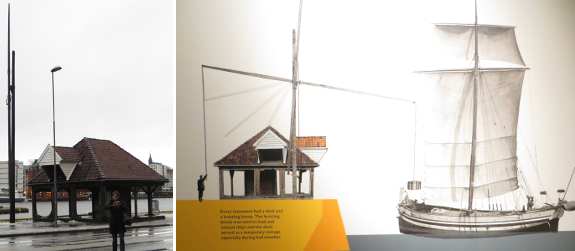
Das Tophandelsgut (bis zu 80, 90% des Exportumfangs Norwegens im hanseatischen Bereich) war… Stockfisch. Riesige Mengen. Im Hanseatischen Museum, das ich ebenfalls besucht habe, wurde die Bedeutung dieses Produkts sehr gut herausgearbeitet – wie auch die Herstellung. Überhaupt den Besuch wert: es ist im Finnsgaarden untergebracht, einem der Häuser. Im Erdgeschoss befinden sich hauptsächlich Infotafeln, aber überall sonst ist einfach das Haus und sein Interieur (wenn auch zusammengetragen) das Ausstellungsstück. Und wenn die wenigen Infotafeln dann auch noch ohne Umschweife erläutern, was man draußen so sieht und nicht wirklich einordnen kann… umso besser:

The main trade (about 80, 90% of exported goods from Norway to the Hanse) was… stockfish. Unbelievable amounts. The Hanseatic Museum which I also went to see and highly recommend goes to great lengths to explain the significance of stockfish and how it was made. The museum is housed in Finngaarden, one of the houses. On the ground floor there are mainly boards with information but everywhere else the exhibit are the house and its interior as such. And when an info board explains a mysterious building on the quayside that I was already wondering about… so much the better:
BRY15

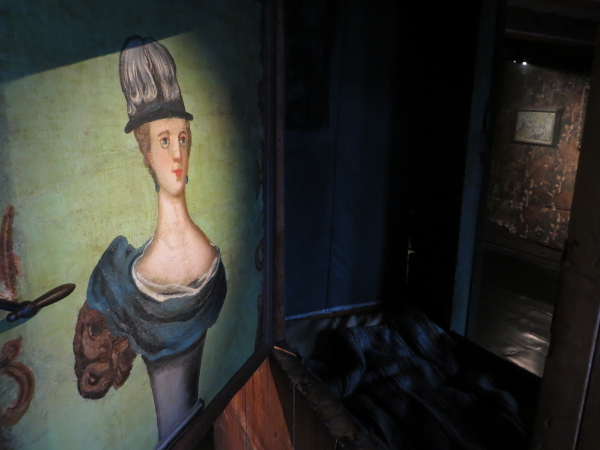
Das Haus war nicht nur von der Einrichtung her zeitgemäß: es war auch nicht geheizt und durch die Holzwände kam der norwegische Winter nur wenig gebremst rein… ich war mit Mütze und Handschuhen unterwegs. Aber so war es dann wohl auch „damals“. Das Bett – oder sollte ich sagen „Bettschrank“, denn man krabbelte rein und machte die Tür zu – vom Chef war dann auch irgendwo im Zentrum untergebracht, wo es am wärmsten blieb. Apropos: da gibt es doch allen Ernstes ein mittelalterliches Pin-up im „Bettschrank“ (kann mir bitte jemand den Fachausdruck mitteilen):

The house doesn’t only feature the interior of the period: it also – obviously – has no heating and the Norwegian winter made it through the wooden planks with only little resistance… I was exploring with a hat and gloves on. But I guess it’s only one more detail that serves to tell us what life was like back then. The bed – or should I say the „bed cupboard“ because you would get in and close the door behind you – of the boss was most conveniently located at the center, where it would be the least affected by the draft. Apropos: there’s actually a medieval pin-up in the „bed cupbaord“ (will somebody please let me know what they are really called):
BRY14

Warum man in Norwegen ein „Sommerschlafzimmer“ haben muss und das darüber hinaus nur über eine versteckte Treppe zu erreichen ist – die Antwort ist man mir schuldig geblieben. Was mir aber am besten gefällt ist, dass in der Anlage Leben drin ist. Jetzt im Winter gerade nicht allzu viel, viele Geschäfte haben geschlossen, aber man kann sich ja ein Bild machen. Ich empfehle hiermit höchst offiziell das Café Bastant in Jacobsfjorden, die Stücke Carrot Cake sind zwar klein, aber unerreicht. Und auch die Illustrationen von Gunvor – wo man sich in touristentechnisch ruhigen Zeiten auch noch nett unterhalten kann.

I never got the answer to the question why anybody would need a „summer bedroom“ in Norway that on top of the general question is also only accessible via a hidden staircase. What I really liked best is that there is actual life in Bryggen. Now in winter it’s a bit limited, I admit, as many stores are closed but you can get an idea. My official recommendation is Café Bastant in Jacobsfjorden. The the slices of carrot cake maybe smallish but divine. And then there is graphic art by Gunvor – a cozy little store where you can also have a nice chat (at least when there are no tourists around).

BRY10

Gelungen auch das Schild am Laden rechts unten auf der Collage oben:

I loved the sign on the door of the store that you can see in the lower right of the collage above:

BRY1

„Geöffnet im Großen und Ganzen täglich, aber keine festen Öffnungszeiten. Melde dich gerne unter… oder … @gmail.com Marghrete“ Es war für meinen Geldbeutel wirklich gut, dass sie nicht da war!

„Open more or less daily but without fixed hours. Be in touch at … or …@gmail.com Margrethe“ As for my finances, I consider myself lucky she wasn’t in!
BRY3

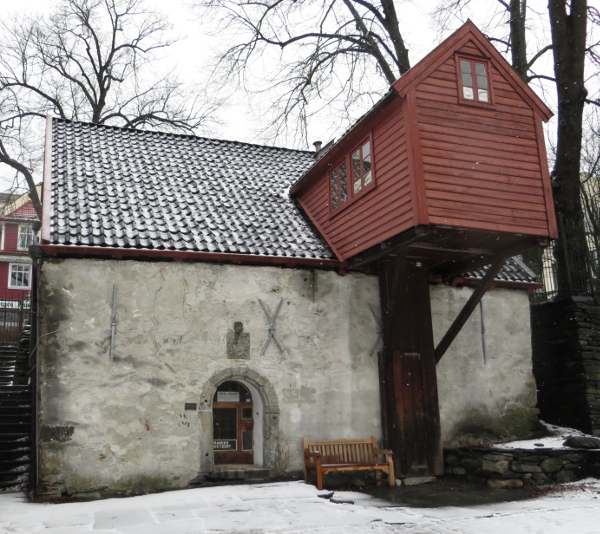
Aber es gibt ja nicht nur Geschäfte: Restaurants, Igenieurbüros, irgendein Jugendclub und alles mögliche andere. Was es allerdings genau mit diesem Gebäude auf sich hat, habe ich nicht ergründen können. Eine öffentliche Toilette wird es wohl kaum gewesen sein. Vielleicht wurde da was hergestellt, wo die Feuergefahr groß war? Aber warum dann nicht gleich in Stein bauen wie der Rest des Hauses… Sonst noch Ideen?

But there aren’t only stores: restaurants, engineering offices, some youth club and whatnot. Any ideas what the amazing architecture of the following building is about? I wouldn’t think a public restroom… maybe something was made there that could cause fires? But why not build everything in stone then, like the rest of the house?
BRY2

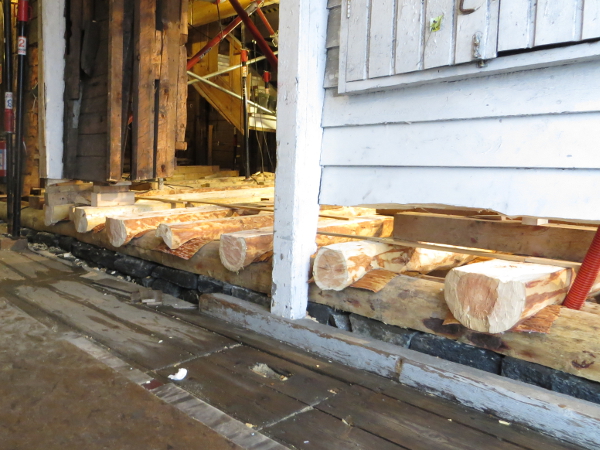
Eines der Häuser wird übrigens gerade erneuert, da kann man durch ein Gitter einen Blick reinwerfen und sehen, wie es gebaut ist. Wird.

One of the houses is currently undergoing a major overhaul. There’s a fence but you can look through it and get an idea of how these houses were constructed. Are being constructed.
BRY12

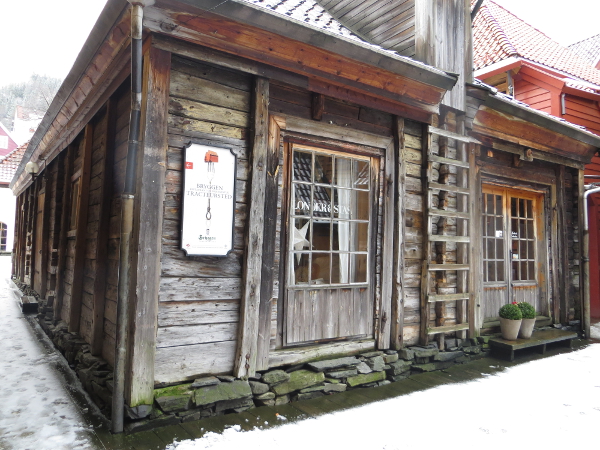
In Sachen Konstruktionsweise gibt auch dieses Doppelhaus einen guten Einblick (und zur Info: im rechten Teil werden wunderbare Hardanger Stickereiarbeiten verauft… allerdings auch nur ab April oder so):

As for construction methods I think this semidetached house is an interesting specimen, too (and just so you know: there are wonderful pieces of Hardanger embroidery on sale in the right part… but only as of April or so):
BRY11

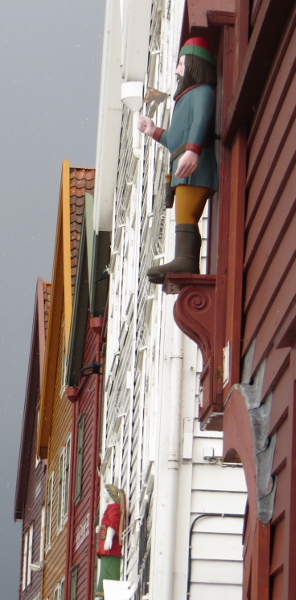
Noch eine kurzen letzten Blick auf einige Details der Front:

And now for a quick look at some of the details on the front:

BRY9

Ich könnte ja immer weiter machen… vor allem mit Fotos. Dachte, für die paar Tage in Norwegen komme ich mit 4 GB hin. Naja, dann werden eben welche runtergeladen auf den Rechner. Viele Grüße aus Bergen!

I could go on and on and on… especially with pictures. I thought for those few days in Norway 4 GB should suffice. Well. I will have to download some on the computer. Love from Bergen!

Barbara

P.S.: For the sake of completeness (and due to excitement) I do have / want to mention that my vintage Christmas tag made top three over at Sparkles Christmas Challenges, yay! That’s a great start into the creative year 2016!

A Day in…. BERGEN!

BER2
Eine Bushaltestelle mit Aussicht… ich finde, das ist ein Superurlaubsfoto. Auch wenn es ein bisschen darüber hinwegtäuscht, dass die Bushaltestelle an einer zur Rush Hour stark befahrenen Straße steht, von wo der Verkehr von den Bergen vorgelagerten Inseln zur Stadt kommt. Und man sieht nicht richtig, dass ich erstmal quasi mit Schneeketten ausgestattet werden musste, um den Berg, auf dem meine Freunde wohnen, runterzukommen…

A bus-stop with a view… I think this is the perfect vacation shot. Even though (or because?) it fails to reveal that this bus-stop is actually on a very busy road, at least during rush hour, when people from the islands west of Bergen come to the city. And you can’t really tell that I actually needed to put on quasi snow chains to come down the very steep hill that my friends live on…

BER1

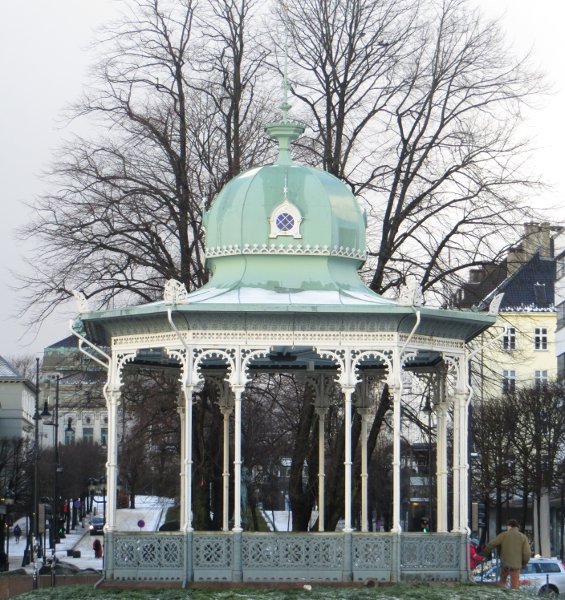
Ich finde die Dinger so praktisch – vielleicht schaffe ich sie mir tatsächlich noch an, für den einen Tag Winter in 5 Jahren, den Bonn erlebt. Es wäre der letzte Schrei. Im Zentrum dann direkt die Kamera gezückt und diesen Pavillion abgelichtet – wer weiß, wie lange das Wetter mitspielt. Eigentlich regnet es „immer“ (wenn es nicht schneit oder hagelt oder schneeregnet) – das wurde mir jedenfalls gesagt. Kein so großes Wunder, habe ich dann nachrecherchiert, kriegt Bergen doch gut 2000mm Niederschlag im Jahr ab. Meine Gegend in Deutschland so zum Vergleich ungefähr 850mm. Oder lasst uns das berühmt-berüchtigte England zum Vergleich nehmen: Schocker, Liverpool kriegt nur 796mm ab!

I’ve really come to like these things – maybe I even get myself a pair, for that one day in 5 years that winter finds its way to Bonn. It would certainly be all the rage. Less than a minute after I hopped off the bus in the center I took a picture of this pavilion – who knows how long the sun will be with us. It really „always“ rains (if it’s not snow, hail or slush that’s coming down) – at least that’s what I was told. Not too much of a surprise: I read that bergen gets 2000mm precipitation a year. Just to give you an idea: the area in Germany I come from averages about 850mm. Or let’s compare with notorious England: oops, Liverpool only gets 796mm!

BER3

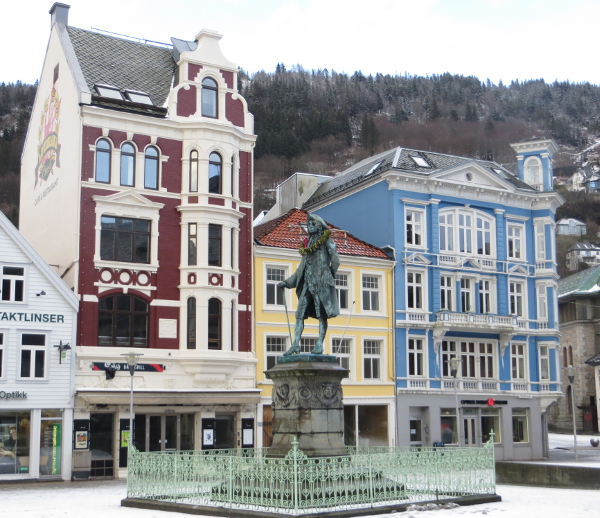
Ich mache mich auf den Weg zum Hafen… in Teilen eine Schlitterpartie, weil ich die Spikes „in der Stadt“ dann doch ausgezogen habe. Erst bin ich nicht so angetan, große, nicht wirklich ansprechende Häuser, ein riesiger Platz mit einem obskuren Denkmal. Aber dann, den Hafen schon in Sichtweite, wird es farbenfroher und die Frage stellt sich: reicht das Wetter, um die Fløyenbahn zu nehmen, für einen Blick auf Bergen von oben?

I try to find my way to the harbor… a slippery undertaking in parts because I somehow decided to take off my „spikes“ in the city. At first I’m not very impressed, large, not really eyecatching houses, a large square with an obscure mounment. But then, in spitting distance from the harbor, things start to get colorful and I wonder: does the weather hold – and make a visit up Mount Fløyen worthwhile? I just love the bird’s eye view of things!

BER4

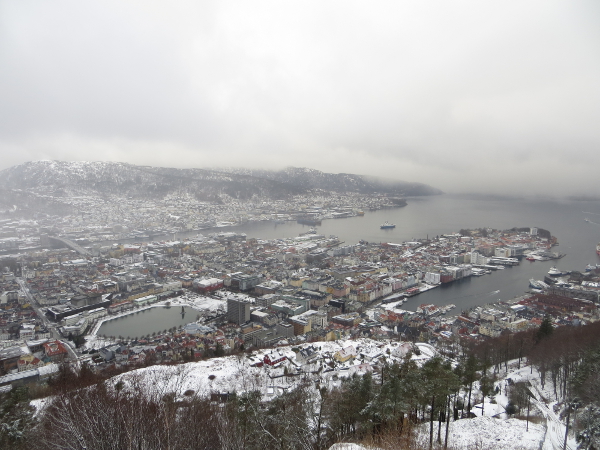
Ja, ich mache das jetzt – schließlich ist der Himmel noch blau! Eine halbe Stunde später ist der Himmel nicht mehr blau, aber man kann immerhin noch etwas sehen:

Yes, I will give it a try – the sky is still blue after all! 20 minutes later the sky is not blue anymore but I can still see the city:

BER5

BER6Die paar Minuten mit der Bahn und man ist in der Natur. Jogger, Langläufer, Wanderer, Familien mit Kindern, die auf diesen… hmmmm… wir nannten sie früher „Arsch-Bobs“ im Wald wieder runterrasen, ältere Leute, die zu Kaffee und Kuchen ins Café gehen… und Barbara, die eine kurze Runde durch den teils knietiefen Schnee dreht… bevor der Blizzard kommt!

A few minutes on that funicular and you are transferred into nature. There are joggers, cross country skiers, hikers, families with children who go down the hill through the forest on these flat plastic things with a handle (don’t know what they’re called), older people who came to enjoy the view over a coffee and a piece of cake at the café… and Barbara, who is on a short round through the (in parts) knee-deep snow… before the blizzard hits!

BER7

Ein paar Minuten warten, gucken, ob sich das Wetter ändert… aber es schien nicht so. Und gerade den Tag begonnen, kann man doch nicht gleich eine Stärkungspause einlegen?! Also dann doch wieder runter. Aber es ist ja nicht so, als gäbe es sonst nichts zu sehen. Einmal wieder unten wird das Wetter natürlich gleich wieder besser und ich entscheide erstmal, an der Hafenfront Bryggen langzugehen.

I wait a few minutes, try to figure out whether the weather is going to change… but it didn’t look like it. Having coffee and cake just after I had started my day didn’t seem the right thing to do, either. But then it’s not like there isn’t anything else to see. Once back down, of course the weather improves almost instantly, so I decide to stroll along the Bryggen harborside for a start.

BER8

Es war nicht wirklich auf irgendeinem Plan, den ich eh nicht hatte, aber es stellt sich raus, dass die Island Clipper ein „Open House“ hatte und ich kam gerade richtig. Aso rauf und rein da! Es war ganz gut besucht (200, wie ich hier nachlas), so dass es etwas dauerte, bis ich mal rausfinden konnte, was dieses Schiff und seine Besatzung eigentlich tun. Es wird zur Versorgung von Bohrinseln eingesetzt.

It wasn’t really on my non-existent plan but it turned out that the Island Clipper had an „Open House“ that afternoon and I got there just in time. So up onboard I went. Apparently, it had all been organized quite spontaneously but there were quite a few visitors (200, as I found our here).

BER10

Zuerst ging es auf die Brücke, wo sich schon so ein bisschen ein Enterprise Feeling breit machte. Und all die Dinge, über die man sich nie Gedanken macht (warum auch)… zum Beispiel, dass solche „Steuerungszentralen“ vorne und hinten (heißt das wohl bug- und heckwärts??) sind, je nach angesagter Fahrtrichtung. Zig Bildschirme mit frag mich was. Sonar. Ölvermutzungsfinder. Und das sind nur die, auf die ich mir einen Reim machen konnte. Und noch so ein altmodisches Logbuch, ungefähr A3. Jedenfalls dachte ich dann, okay – das war dann wohl jetzt das Highlight gleich am Anfang. Falsch.

The only partially guided tour started on the bridge where I got a distinct Enterprise feeling. And then all those things that you never think about (why would you)… for example, that these „control centers“ are both in front and in back – or should I say towards the bow and towards the stern? – depending on which direction the ship is going. Numerous screens showing all kinds of data. Sonar. Oil spill detector. And these are only the ones I could make sense of. And an old-fashioned logbook. I’m talking PAPER. Anyhow, I thought that was the highlight right at the start. Wrong.

BER12

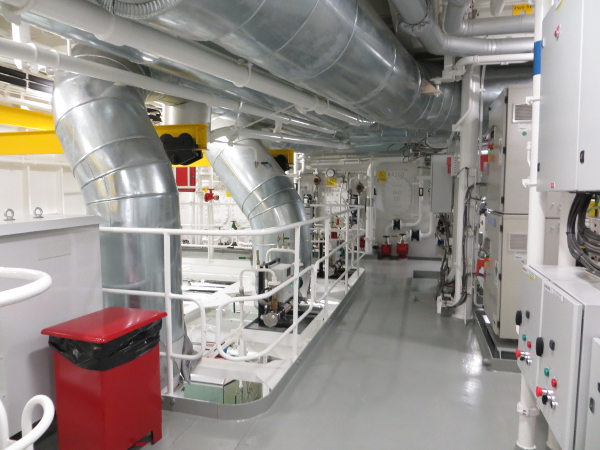
Aus unerfindlichen Gründen habe ich nicht das Notizbuch gezückt – vielleicht, weil mich so ziemlich von Anfang an die diversen Volumina fasziniert haben. Alle Info, die ich hier jetzt unterbringe, ist deswegen der Skipsrevuyen entnommen. 740m³ Frischwasser sind an Bord. 1100m³ Diesel. 2500m³ Ballastwasser. 3300m³ „Schlamm“ (mud) – was wohl die euphemistische Umschreibung für ein Chemikaliengemisch ist, das beim Bohren gebraucht wird. Ich musste dann auch nachfragen: „Schlamm? Wird der hingebracht oder abgeholt?“ Ja, es waren in der Sache firmere Menschen an Bord.

For reasons unknown, I did not get out my little (paper!) notebook to jot the info down – maybe because right from the start I was a bit overwhelmed by the sheer size of it all. All the info (the numbers) that follow are therefore taken from Skipsrevuyen. 740m³ fresh water is on board. 1100m³ diesel fuel. 2500m³ water ballast. 3300m³ „mud“ – what apparently is a euphemistic word for a mix of chemicals that’s used in drilling. You would have heard me ask questions like: „Mud? Do you take it to the rigs or do you bring it back?“ Yes, there were many people aboard who clearly had much more of clue than I did!

BER11

Zement wird in großen Mengen transportiert. Das Deck hat 1000m², wo 2500 Tonnen Cargo (in Containern) untergebracht werden können. „Wie oft wird denn eine Bohrinsel mit so einer Ladung versorgt?“ Kommt drauf an, aber einmal die Woche kann es schon sein. Läuft halt im Moment alles nicht so, weil die Ölindustrie kränkelt. Deswegen sind sie ja auch im Hafen und haben Zeit für ein „Open House“. Also, der Maschinenraum „und angeschlossene Bereiche“ hat mich am meisten fasziniert. Es war dann auch egal, dass dem engagierten Guide irgendwann die englischen Fachtermini ausgingen: „Machen Sie sich da keinen Kopf – es würde mir wahrscheinlich eh nichts sagen und mich selbst auf Deutsch im Dunkeln lassen!“

They also transport cement in large quantities. The deck has 1000m² to hold 2500 tons of cargo (in containers). „How often does an oilrig need a supply trip like this?“ Depends, but it can be weekly. It’s just not quite as busy as it used to be at the moment, the oil industry is shrinking. That’s why they are anchoring in Bergen and have time for on „Open House“. Anyhow, the engine room and „affiliated areas“ really were the most fascinating part. It really didn’t matter when the guide at some point ran out of the English technical terms for things: „Don’t worry – I probably couldn’t make sense of it anyway… even in German!“

BER14

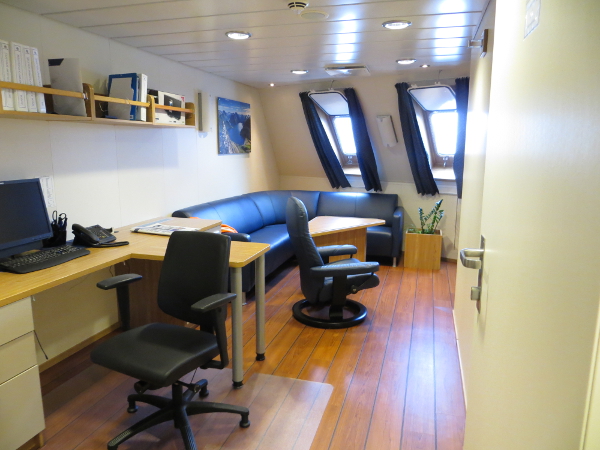
Neben der Kapitänskajüte hatten wir so Einblick in so ziemlich alles: andere Kajüten, die Messe, die Küche, Konferenzräume, Aufenthaltsräume, OP, Fitness-Studio… Keine Ahnung, vielleicht gibt es ja noch viel mehr, was ich nicht für möglich halten würde. Insgesamt würde ich sagen: da lässt es sich aushalten. Und wat kost‘ der Spass? Wohl so um die 40 Mio Euro.

That’s the captain’s cabin but we got to see just about everything else, too: other cabins, the mess room, the kitchen, meeting rooms, sitting rooms, an operating room, a gym… I don’t know, maybe there’s lots more… In all I’d say: you could be far worse off. And what does it cost? It seems the bill came to about 40 million Euros.

BER13

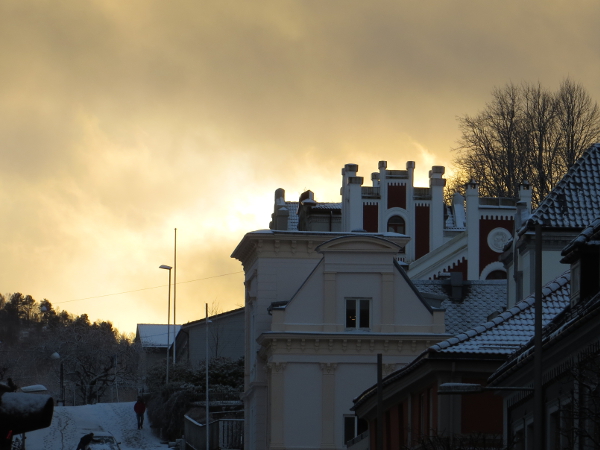
Abschließend habe ich mir dann doch noch einen guten Kaffee und noch besseren Kuchen gegönnt, bevor ich mich in dieser Abendstimmung gegen 16 Uhr auf den Heimweg gemacht habe. Morgen ist auch noch ein Tag!

After that visit I did treat myself to a good coffee and an even better slice of cake before I went home in this nice light at about 4 pm. Tomorrow will be another day!

Barbara

Ein Tag in… / A Day in… DETMOLD

DET5
Es fing an mit der Frage, wo genau Detmold eigentlich liegt. Oder nein: mit einem ganz schönen Hals und damit, dass meine gerade letztes Jahr erworbene schwedische Regalwand plötzlich nicht mehr wie die letzten 35 Jahre erweiterbar war, denn die Serie wurde inkompatibel umgestellt. Und ich auf ein Online-Verkaufshaus zurückgriff, wo ein findiger Mensch im Teutoburger Wald offenbar vorausschauend Restbestände aufgekauft hatte.

It all started with the question where Detmold is actually located. Or no: it started when I was ready to blow a gasket upon realizing that the Swedish shelves I only bought last year could not be added to anymore as the model of the past 35 years underwent some changes and the new ones are incompatible with the old ones. So I had a look online and some clever dude in Teutoburg Forest had foreseen these cases and apparently stocked up on these shelves before they were all sold out.

DET1

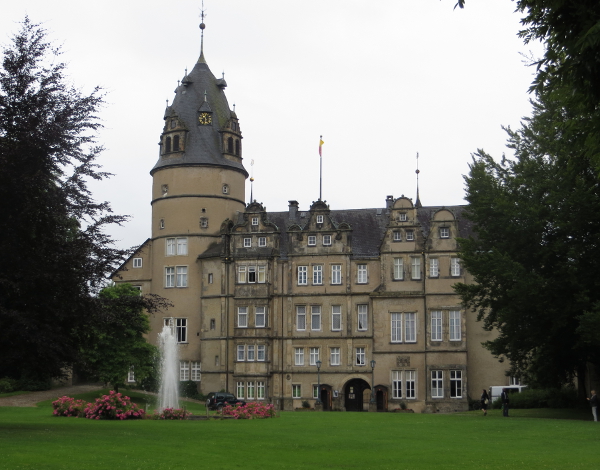
Der Versand kostete natürlich eine Stange Geld… ungefähr soviel, wie der Sprit, den ich für die Fahrt von zweimal ca. 240 km hinlegen würde. Aber was, zum Teufel, soll man in Detmold? Sehr bald stellte ich aber fest, dass es da ganz schön was zu sollen gibt: das Hermannsdenkmal, ein riesiges Freilichtmuseum, eine wunderbare Altstadt mit vielen Fachwerkhäusern, ein fürstliches Residenzschloss… Also, Regale gekauft und Ausflug nach Detmold geplant.

Shipping would have cost about as much as the gas needed to go there (about 240 km one way). But what on earth would I be doing in Detmold? Pretty soon, though, I realized that there are many things to see and do there: the Hermannsdenkmal („Hermann Monument“), a huge open air museum, a picturesque old town with numerous timber frame houses, a palace… so I bought the shelves and started planning the trip.

DET2

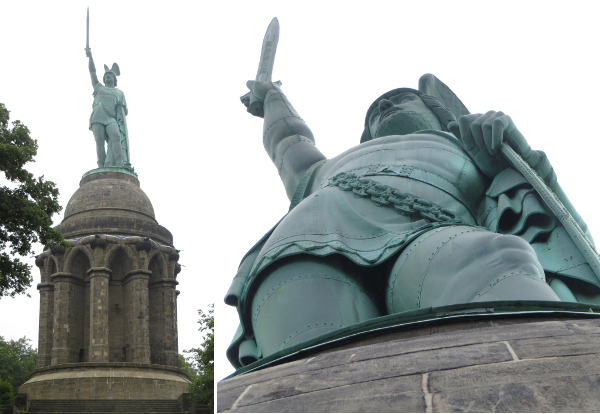
Wie man sehen kann, hat das Wetter nicht mitgespielt… am Hermannsdenkmal war ich bereits morgens gegen 9 Uhr, Regale schon im Kofferraum, und der Himmel lässt vermuten, ich hätte bei den Fotos den Hintergrund rausgeschnitten. Aber immerhin war es noch trocken. Die Figur stellt den Cheruskerfürsten Arminius (lat. für Hermann) dar, der mit seinen germanischen Stämmen im Jahr 9 n.Chr. den Römern zeigte, wo der Hammer hängt. Gebaut zwischen 1838 und 1875 ist es die höchste Statue Deutschlands und war das bis zum Bau der Freiheitsstatue auch weltweit.

As you can tell, the weather Gods were not on my side… I reached the Hermannsdenkmal around 9 am, shelves already picked up, and the sky on these pictures makes me think it looks as if I had cut out the background. But at least it was still dry at that point. The statue shows the Cherusci war chief Arminius (which tranlsates to Hermann in German) who fought back the Romans with his Germanic tribes back in 9 AD. The monument was built between 1838 and 1875 and is the highest in Germany – and used to be the highest worldwide until Lady Liberty came into being.

DET4

Dann stand für mich das Highlight auf dem Programm, das Freilichtmuseum… und es offenbarte sich ein kapitaler Planungsfehler. Leider, leider, leider hat es nämlich montags geschlossen. Ich war zutiefst betrübt… da aber kurz darauf Niesel- und später richtig heftiger Regen einsetzte, habe ich es lockerer gesehen, denn Spaß hätte es dann auch nicht gemacht. Also auf in die Detmolder Innenstadt.

The highlight of my day-trip was to be next: the open air museum… and it turned out I hadn’t planned all that well as it was closed on mondays. I was deeply saddened… but when it started to drizzle only a little later and then moved on to heavy rains, I saw the upside of it: I wouldn’t have enjoyed that visit anyway. So on to downtown Detmold.

DET6

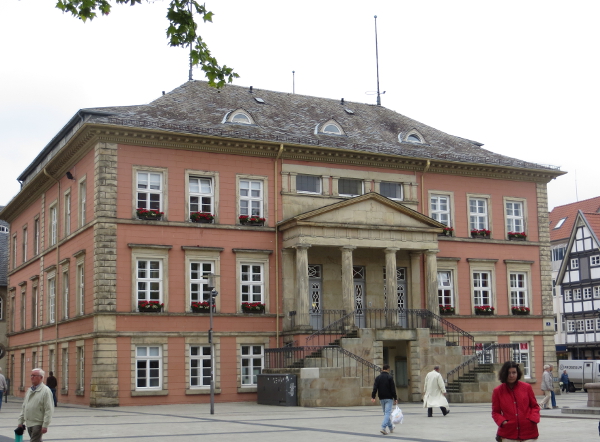
Schnieke bis steril sieht es am Wallgraben aus. Der wurde, offenbar unter großem Widerstand der Bevölkerung bis 2014 neu gestaltet. Und nach ein bisschen Recherche im Netz muss ich feststellen, dass mir der alte Zustand wie hier online zu sehen, auch deutlich mehr zusagt. Ist halt alles noch arg nackig und viel Lebensraum für Tiere ist wohl verloren gegangen, dazu gibt es hier auch bewegte Bilder. Aber lasst die Bepflanzung mal besser Fuß fassen und die Bäume wachsen…

The Wallgraben area looks really posh and somewhat sterile. It underwent a major overhaul which was finished last year – and apparently there was a rather large movement among Detmolders against it. After checking a bit online I have to admit that I much prefer the old looks (as seen here) as well. It’s all still somewhat raw and I understand that quite some habitat for different animals was lost along the way, too (a movie on that – in German – can be found here). But once the new plants and trees have grown…

DET7

Aber die Altstadt hat es mir angetan. Bevor der große Regen kam, habe ich mir Straße um Straße mit wunderbaren Fachwerkbauten angesehen. Leider waren auch viele Geschäfte montags geschlossen – und allein für einen Besuch bei Papp.Art muss ich nochmal wiederkommen. NICHT montags (oder sonntags). Und für eine weitere Köstlichkeit im Café Schokolade. Dem Regen konnte ich allerdings auch durch eine Führung im fürstlichen Residenzschloss entfliehen.

I was really enthralled by the old town, though. Before the heavy rains came, I walked street upon street featuring numerous exquisite examples of timber frame architecture. Unfortunately, many stores were closed, too – for the opportunity of seeing the Papp.Art Store alone I have to return. NOT on a Monday (or Sunday, for that matter). And for another delicacy at Café Schokolade. But I took another chance to get away from the rains: a guided tour of the palace.

DET3

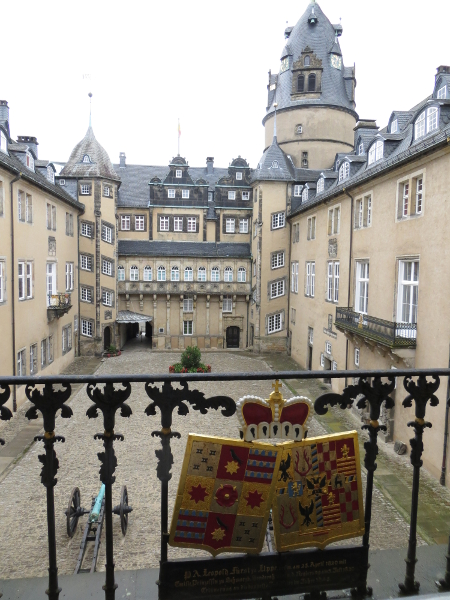
Das Fotografieren im Innenbereich war leider nicht erlaubt. Es gab wunderbare Parkettböden zu bestaunen (mit Filzpantoffeln an den Füßen), Unmengen gigantischer Wandteppiche, einen wunderschön verspielten, wenn auch nicht nutzbaren Kachelofen aus Delft, Kronleuchter aus Murano-Glas, Porzellan aus den bekannten Häusern in Sachsen und dem Saarland, im Jagdzimmer gar einen Elchkopf. Ein interessanter Einblick, der wenigstens diesen Ausblick in den Innenhof zuließ:

Photography inside was not allowed. There were the most beautiful parquet floors (for the protection of which we had to wear oversized felt slippers), at least ten huge tapestries, a fascinating (though not functioning) tile stove from Delft, chandeliers made from Murano glass, china from the well-known manufactures in Saxony and Saarland, even a moose’s head in the trophy room. A thoroughly interesting insight, which also offered this view of the courtyard:

DET8

Es gilt also, ein Wochenende in Detmold und Umgebung zu planen…

So I have to plan a weekend in Detmold and environs…

Barbara

Madagascar | Arts and Crafts

MDG Craft 4
Habt ihr euch nicht schon gefragt, warum ihr noch nichts über madagassisches Kunsthandwerk gehört habt? Da musste ja noch was kommen! Ich habe mich schon im Flieger nach Hause geärgert, dass ich die Möglichkeit, zwei Koffer à 23 kg mitzunehmen, nicht genutzt habe. Es war einfach der helle Wahnsinn. Ich bin selten irgendwo gewesen, wo soviele verschiedene und wunderschöne Dinge im Angebot waren – und das in guter Verarbeitung.

Haven’t you been wondering already why I haven’t wrote a word about Madagasy arts and crafts? You have seen it coming! I had hardly boarded the plane home when I already regretted that I didn’t make full use of my luggage allowance of 2 x 23 kg. It was sheer madness. I have a hard time thinking of another place where I found so many wonderful creations – and usually very well made.

MDG Craft 5

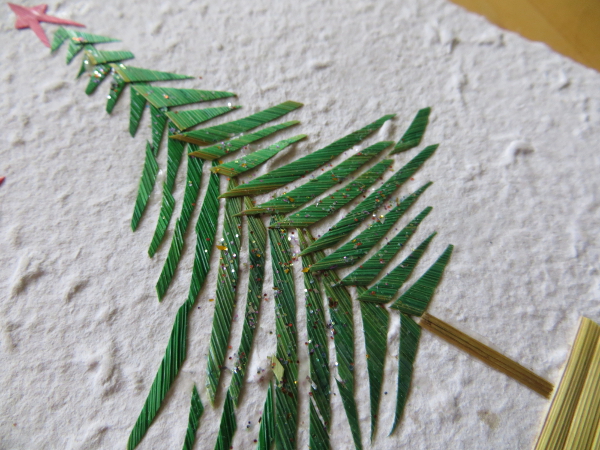
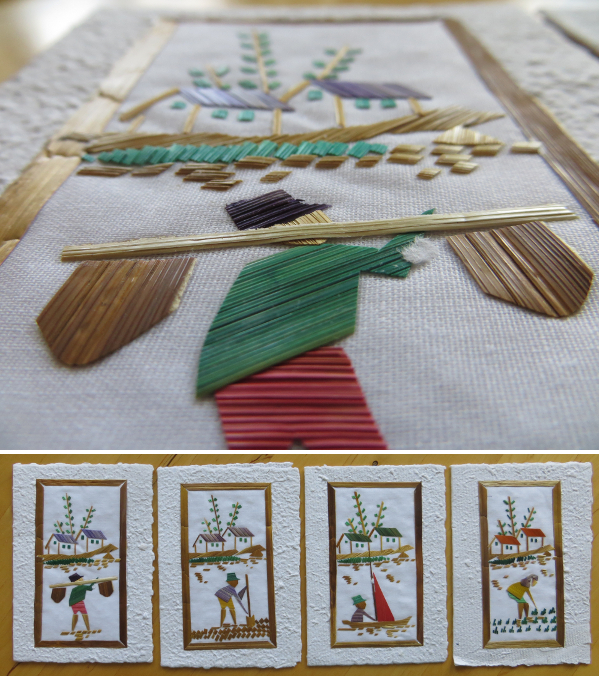
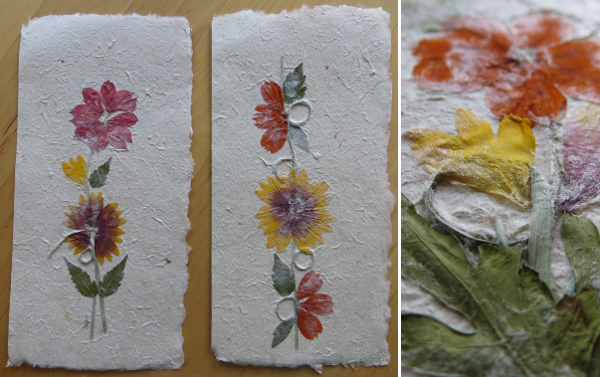
Natürlich lag mein Hauptaugenmerk auf handgemachten Karten… wen wundert’s. Die Modelle oben (also die Motive) sind aus Bananenblättern gefertigt. Bei denen unten sind es echte Blätter und Blüten, die Verwendung gefunden haben. Ich finde, die „Farnbäume“ machen sich wunderbar als Weihnachtskarten.

Of course I focused on handmade cards… no surprise there. The ones above (the images on them) are made from banana leaves, the ones below from real leaves and blossoms. I was immediately taken with those „fern trees“ as I figure they make wonderful Christmas cards.

MDG Craft 3

Wobei es sich dabei wohl um Kopien des berühmten Papiers der Antaimoro handelt. Eine Manufaktur, die solches Papier herstellt, haben wir in Ambalavao besucht. Das dort hergestellte Papier ist deutlich zarter und die Blumenmuster filigraner.

It looks as though they were just copies of the famous paper of the Antaimoro. We visited a production site of that particular paper in Ambalavao. The paper I got there was much more delicate and the flower patterns more sophisticated.

MDG Craft 9

MDG Craft 6

Es gab auch deutlich grellere Kreationen, die eine Art Seidenmalerei (nur nicht auf Seide) waren:

There were much more garishly colored creations, too, which were a kind of silk painting (only that no silk was involved):

MDG Craft 2

In Tuléar bin ich dann zum ersten Mal über gestickte Karten gestolpert, die mich ebenso fasziniert haben. Es gibt atembraubende (und riesig große) Stickarbeiten, die aus dem Hochland kommen. Ich hätte sehr, sehr gern auch größere Stücke eingekauft – wenn ich bloß gewusst hätte, was ich dann damit machen soll. So blieb es bei Karten… und kleinen Täschchen / Mäppchen:

It was in Tuléar that I first came across embroidered cards which were really fascinating, too. There were absolutely stunning and large scale pieces of embroidery from the highlands. I would have loved very, very much to buy some of those, too – if only I had known what to do with them back home. So I stuck with the cards… and a couple of small bags / pencil cases:

MDG Craft 1

MDG Craft 15

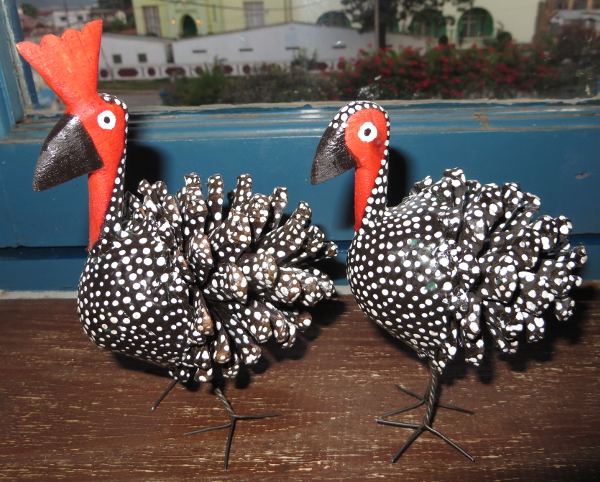
Gleich nach dem Mittagessen am ersten Tag unserer „Rundreise“ habe ich mich in dieses Pärchen verliebt – und kann kaum glauben, dass ich sie heil nach Hause gebracht habe:

Right after lunch on our first day traveling with Naivo I fell in love with this pretty couple – and still find it hard to believe I got them home without damage:

MDG Craft 7

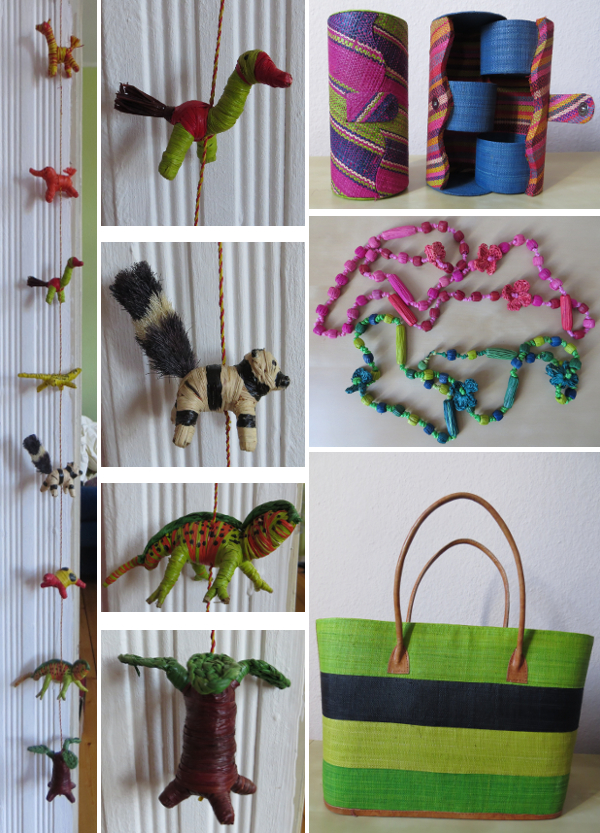
Im Hochland war es so, dass offenbar jedes Dorf sich auf die Herstellung eines bestimmten Produkts oder einer Produktart spezialiert hat. In dem einen gab es nur Spielzeug-LKWs aus Weißblech, im nächsten Raffia-Produkte, dann Marienstatuen, dann Aluminiumtöpfe usw. Die Raffia-/Bastprodukte haben es mir komplett angetan – wobei ich die wunderschönsten Sachen (die „Tierteppiche“) erst gegen Ende auf einem unfassbar großen Kunsthandwerkermarkt in der Hauptstadt gefunden habe. Diesen muss man unbedingt besuchen – er ist fest installiert und umfasst um die 300 Stände. Überall gilt: handeln, handeln, handeln. Es schien mir, man darf als Ausgangsposition nirgendwo mehr als ein Viertel des genannten Preises bieten, um bei einem halbwegs realistischen Preis anzukommen.

In the highlands every village seemed to have specialised on one product. In one, you would only see stalls of toy trucks made from tin, then it was raffia products in the next, statues of the Virgin Mary in the one after that, then aluminum pots in the fourth etc. I was really taken with all the raffia creations – though I have to say that I found the most amazing pieces (the „animal carpets“) on a large arts and crafts market in the capital. That is a must-see by the way, about 300 stalls. Don’t forget to negotiate the price, though. I felt you had to offer a maximum of a quarter of the asking price if you wanted to get anywhere near a realistic price.

MDG Craft 10

MDG Craft 11

MDG Craft 12

Ambositra liegt in der Nähe eines Dorfs der Holzkünstler und dort waren wir in der Werkstatt eines erfahrenen Herrn, der ganz wunderbare Einlegearbeiten gemacht hat. Leider war ich da noch nicht soweit, den zweiten Koffer in Erwägung zu ziehen und habe mich mit einer Füllerdose (wohl eigentlich für Vanilleschoten gedacht) begnügt.

Ambositra is close to a village where they focus on wooden art and we visited the workshop of a very skilled gentleman who made exquisite pieces of marquetry. At that early point of our trip I had not yet considered the second suitcase so decided to leave it at this beautiful pen box (which I think is actually meant to hold vanilla beans).

MDG Craft 13

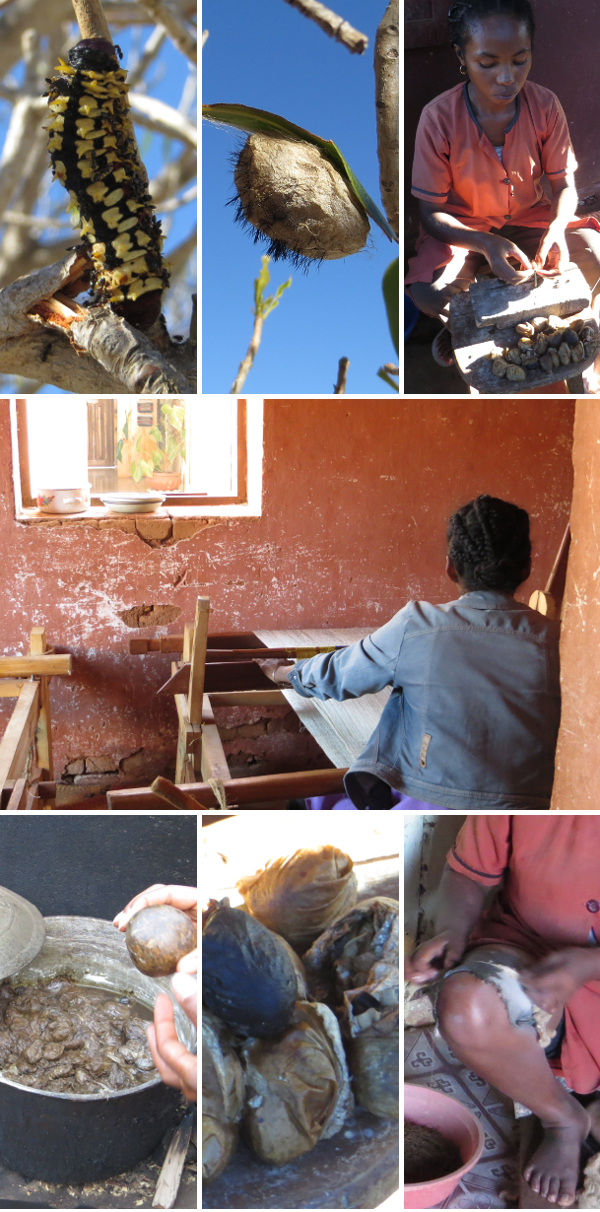
In Ambalavao gab es neben Zebus und einem Weingut auch eine Stätte der Seidenherstellung zu besuchen, Soalandy. Man kann sich ansehen, wie aus den Kokons die Seide gewonnen und dann weiterverarbeitet wird und steht dann zwei Stunden im Laden und weiß nicht, für welchen der unterschiedlichsten Schals oder Decken man sich entscheiden soll. Es sind „grobere“ Produkte als Seidentücher, die man so im Sinn hat, die so fließend sind, aber sie haben ihren ganz besonderen Reiz und tragen sich wunderbar, wie ich mittlerweile bestätigen kann.

There was more to Ambalavao than zebus and a vinery: we also visited Soalandy, a place where you can see the different steps of making silk from the cocoons to the finished scarves or blankets. You then spend about two hours in their shop wondering which scarf to choose. They are a bit „rougher“ compared to those you probably have in mind… which are more flowing but they have their own appeal and feel great (which I can now attest to).

MDG Craft 8

Sooooo… und weil es hier schon lange kein Freebie mehr gab, ich mittlerweile schon den 51. Follower zu feiern habe, weil ich Madagaskar nochmal in den Fokus rücken will und weil ich Spaß daran habe, verlose ich einen der wunderbaren Seidenschals. Und könnte mich dazu hinreißen lassen, noch ein paar Vanilleschoten dazu zu geben.

Sooooo… and because the last blog candy here was ages ago, because there’s the 51st follower to celebrate, because I want to put the focus on Madagascar again and because I have a great time doing it, I’m giving away one of the wonderful silk scarves. And I might even be tempted to throw in a few vanilla beans as well.

MDG Craft 14

Um teilzunehmen, müsst ihr bis 12 Uhr MESZ am Dienstag, 09. Juni 2015 einen Kommentar unter diesem Eintrag hinterlassen, in dem ihr mitteilt, was an der „Madagaskar-Reportage“ euch am meisten gefallen hat – und vielleicht bewegt, dieses Land auch mal als Reiseziel ins Auge zu fassen. Ich freue mich auf viele Kommentare. Bis dahin: genießt den Sommer!

To participate, please leave a comment underneath this post until 12 noon CEST on Tuesday, June 9, 2015 detailing what you liked best about my „Madagascar coverage“ – and what maybe makes you consider this country as a destination for an upcoming vacation. I’m looking forward to many comments. For the moment: enjoy the summer!

Barbara

Madagascar | Useful information

Should you intend to travel to Madagascar yourself (I sure hope my blog posts kept tempting you more and more every time they were published!), here are some useful pieces of information concerning transportation and accommodation.

Transportation
Our trip from Antananarivo to Tuléar was with a private car and a driver which we rented by the day (all negotiated and discussed via direct e-mail contact beforehand). We were on the road with Ravelomanantsoa Andrinaivo Lala, Naivo for short, and couldn’t have wished for a more reliable and experienced driver and guide – we had lots of interesting conversations (as far as our French allowed – but he does speak some English, too). We had agreed on a price in Ariary before the trip which at the time was about 45 Euros per day PLUS all the gas needed en route. As we did not go back to Antananarivo with him, he charged two days plus gas for the trip back. And you can’t do it much faster than that. If you would like to get in touch you can do so via e-mail at rnaivo@yahoo.fr or via phone at +261 (0)32 4990504.
In Antananarivo we mainly relied on regular taxis (which are everywhere and as far as we know safe). We were told that within Tana no trip should cost more than 10,000 Ariary which I would say is a lot already – but please keep in mind that inflation is a big issue in Madagascar and that we traveled in April/May 2015. Depending on when you read this, things might have changed considerably.
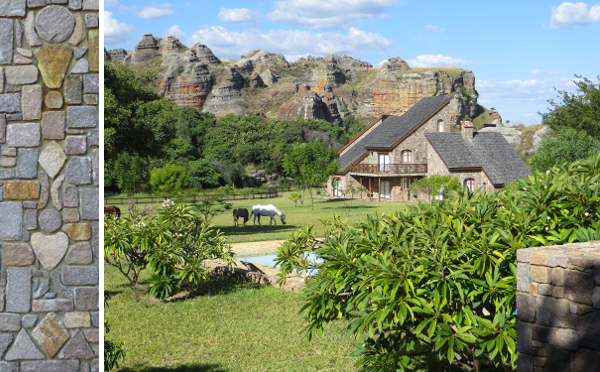
JaonaFor our trip to Ambohimanga we booked a driver via the hotel, Jaona. He charged 50 Euros for a full day, gas included. He was also very nice to travel with and very reliable. You can reach him at tanataxijaona@gmail.com or via phone at +261 (0)34 5186797. We had contacted him again for the trip to the Lemur’s Park but he was not available, went to great lengths, though, to arrange for a transport for us.
One day in Antananarivo, we also moved with Naivo’s son Kiady. which is a 100% recommendation as well. You can reach him at kiady@live.fr or via phone at +261 (0)32 5628900.
In Tuléar, taxis are hard to come by as most hired transportation is done by pousse-pousses (bike rikshas). Certainly, every hotel can arrange for transportation but as we were staying with a friend, we needed contacts. Michael seemed to have fair prices. You can reach him at each of the following phone numbers: +261 (0)32 0203689, +261 (0)34 0203689, +261 (0)33 2309108.

Air Madagascar offers domestic flights between the larger cities and tourist destinations. Flights can be booked online without problem – and the changes that concerned our flight were communicated both via e-mail and text message to the number we had indicated. Do book as soon as possible, though, as prices rise the closer you get to the travel date. And do factor in a buffer as sometimes flights are postponed.

Hotels
Accommodation in Madagascar comes at very reasonable prices, though in a few cases we did treat ourselves to more fancy ones (which, by comparison, were still reasonably priced). We liked every place we stayed at, so have a look:

Sakamanga Hotel, Antananarivo
Contact: +261 (0)20 2235809, http://www.sakamanga.com, contact@sakamanga.com

Saka
The small and somewhat battered metal gate gives no indication whatsoever of what’s behind: the Sakamanga (Blue Cat) Hotel is a true oasis in the big city! It consists of several different buildings and you have to find your way around at first… we walked through little passageways the first morning to reach the garden where breakfast was served. It has a bar, its own fantastic restaurant (very good food at absolutely competitive prices… the mousse au chocolat was a revelation… and at about 2.50 Euros one of the more pricey desserts), a pool, a little museum and attention is paid to innumerable little details. Of course there’s wifi, too. As it was a recommendation, we wanted to stay there no matter what during our first stay in Tana… and ended up with the luxury suite as that was the only one available… at a staggering… 78 Euros. But their rates start at 30 Euros (which is per room, not per person – and this could have accommodated 5 people). Breakfast can be buffet-style (about 6 Euros) or continental (about 3.30 Euros). I have no intention to stay anywhere else should I at some point return to Antananarivo. I guess you could say I fell in love.

Le Trianon, Antsirabe
Contact: +261-(0)34-0505140, http://www.hotel-letrianon-antsirabe.com, hotel.letrianon@gmail.com

Antsi
This is an old colonial building and has quite a different charm to it. There are only a few rooms, I’m not sure it is but it feels family-run. Our room was spacious with old wooden floors, had a king-size bed AND twin beds, a large desk… nothing to be desired. The bathroom was built-in. Wifi was available, though in the hall only. I didn’t mind that as there were comfy chairs and I didn’t want to talk anyway. No A/C, in case that’s important for you, and no mosquito nets, either, but they weren’t needed anyway. There’s an adjoining restaurant which was okay. Breakfast was simple but good… including Antsirabe cheese. The rate for the room at the time was 79,500 Ariary, which was about 25 Euros.

Cristo Hotel, Morafeno (near Ranomafana National Park)
Contact: +261-(0)34-1235397, http://cristohotel.cabanova.fr, cristomadagascar@gmail.com

Cristo
This hotel is not among the closest to Ranomafana National Park it’s in the next village on the road to Mananjary. I have definitely never stayed at a hotel before where the welcome was as friendly and truly heart-warming. This is a family-run place – right down to the sizable collection of orchids and other plants that is in the hands of the manager’s mother. For dinner there is a choice of two dishes and despite the fact that there are more restaurants in Ranomafana, we stayed there both nights, as it was good food (about 1.80 Euros for the entrée… zebu steak with fries and veggies). Our room featured a queen size bed and a single one, both with mosquito nets and made from bamboo. No A/C but a jaw-droppingly beautiful view… which is also in sight when you have breakfast on the verandah. There’s no wifi but our host said with a smile that they have started considering it as so many people ask. As I read a lot, I always take note of the bedside lighting which was not too good here. The rate was 90,000 Ariary… about 27 Euros.

Tsara Guest House, Fianarantsoa
Contact: +261-(0)20 75 502 06, http://www.tsaraguest.com, tsaraguest@tsaraguest.com

TSARA
A very nice place to stay – probably one of the best in Fianarantsoa. It is not in the old town but in walking distance. Really quiet with friendly staff and a good and cozy restaurant. Postcards of photographer Pierrot Men for sale at the reception desk. Wifi worked intermittently. I got a little exasperated with their website when trying to find out about rates etc. – or rather about the e-mail contact I tried to establish. We somehow ended up on a booking website and the prices were outrageous there. So what we did was not book at all and just show up. It was almost 20 Euros cheaper than what we were offered online. I forgot the exact amount but it was around 50 Euros for the twin bed room. Which also reminds me of a general remark I’ve wanted to make: during low season, there is no need to make reservations anywhere. There were vacancies in every single hotel we stayed at and Naivo, our driver, said as much, too.

Hotel Aux Bougainvillées, Ambalavao
Contact: +261-(0)75 34001, http://www.auxbougainvillees.sitew.com, auxbougainvilleesambalavao@gmail.com

Bougain
We had no reservation for this hotel, either, and once we found the manager (reception was closed, the office moved to the restaurant), it was no problem getting a room. It was a rather Spartan affair but all the essentials were there, including mosquito nets for the beds. The shower was constructed in a way that makes you flood the whole bathroom BIG TIME but once you realize why it happens, you can limit the “damage”. There’s wifi at the restaurant, which closes at about 9 pm but the wifi’s kept on and you can continue using it on the porch there. The check-out was quite an experience again, done at the bar… and I don’t remember getting a receipt, either! Breakfast was flexible: usually served from 7:00 onwards we were accommodated for 6:30.

Le Jardin du Roy, Ranohira (near Isalo National Park)
Contact: http://www.lejardinduroy.com

Isalo
The video on the hotel’s website shows horses running on the hotel grounds… and we were like “yeah, right.” But it turned out to be right: there were I think six horses roaming freely on the lawns between the bungalows, paying visits to the terraces and the pool, too! It turned out to be a perfect place to stay. It comes at a price but we were going to treat ourselves to something more fancy anyway. Wonderful architecture that picks up elements from the landscape, the fauna and also cultural elements. The hotel has its own vast kitchen gardens )which we walked through one morning) so most of the food is their own. The bungalows are spacious, the food is just amazing, the staff extremely helpful… and good deals are to be had, too: stay three nights and the fourth is free for example. There’s wifi, of course, though not in the rooms. Drivers stay free of charge. We had planned only two nights and spontaneously decided to stay for a third. I guess that pretty much sums it up.

Eco Lodge Lalandaka, Anakao
Contact: +261-(0)20 94 922 2, http://www.lalandaka.com, reservation@lalandaka.com

anakao
This was the hotel I had booked before anything else was decided and the rest of the trip was planned to accommodate the stay there. It is really, really simple, no great luxury, no running water – and rationed water on top of that. If you want to take a warm shower (bucket and ladle, that is), you need to warm some of the water that was allotted to you in a solar heater near the hut. There’s 24h electricity and also wifi, though the later only from 5pm onwards at the bar. There’s no bedside lights which made reading in bed impossible. Bar and restaurant are in a larger, open hut with sand floor, so meals taken barefoot are the norm. Our bungalow was right on the beach, where two sun loungers and an umbrella were waiting for us and it featured a hammock, too, so basically had all I needed for four days of relaxation. Food was good, too, staff very friendly – a recommend. The night was to be had at 85,000 Ariary, so about 25 Euros for the double room. Speedboat transfer is arranged by the hotel, too (from Tuléar), at 90,000 Ariary for the return ticket per person.
There are quite a few souvenir sellers on the beach but on our first day there I had found an agreement with them: leave me in peace until the afternoon of our last day and I would shop till I dropped then. They honored the agreement and so did I.

Madagascar | Lemur’s Park

LEM2

Vielleicht geht es euch ja wie mir vor der Abfahrt zum Lemur’s Park westlich von Antananarivo: bei aller Niedlichkeit – nochmal Lemuren? Muss das sein? Dazu gab es noch einen Megastau, so dass sich 22km zu einer Stunde Fahrt auswuchsen und wir das Überholmanöver unseres Lebens er- und überleben durften. Aber an der Straße gibt es ja immer unendlich viel zu sehen… Hier ein Suchbild für Hartgesottene: wer findet die Zebuzunge?

When you read the title of this post maybe you felt as I did before we left for the Lemur’s Park west of Antananarivo: cute as they may be – lemurs again? Really? Add to that a mega traffic jam so that 22km equaled an hour on the road, during we which we were treated to the take-over of a lifetime – which luckily wasn’t ended by it. But then there is also so much to see along the roads, too… Here’s another picture-puzzle – skip if you are faint at heart: where is the zebu’s tongue?

LEM3

Der Park ist privat geführt und die Eintrittsgelder haben mir (im Vergleich zu anderen vorher) erstmal den Atem geraubt – und wer die Preise im Museumsshop zahlt, ist auch selbst schuld. Aber: der Führer war ausgesprochen gut geschult… und die Lemuren ließen sich auch nicht lumpen. Es waren mindestens drei Arten dabei, die wir noch nicht gesehen haben und die meisten ließen sich durch uns Besucher nicht aus der Ruhe bringen. Im Gegenteil: bei manchen war ich mir eigentlich nicht mehr sicher, wer sich eigentlich wen genauer anguckt – viel relaxter als so geht es ja kaum:

It’s a privately run park and the ticket prices made me gasp (in comparison to what we paid in other places) – and if you shop in their store you are beyond help anyway. But: the guide was extremely well trained… and the lemurs played their part, too. There were at least three kinds that we hadn’t seen before and they didn’t get worked up about our visit. Quite the opposite: sometimes I wasn’t sure who was watching who really – it doesn’t get much more relaxed that this, does it?

LEM7

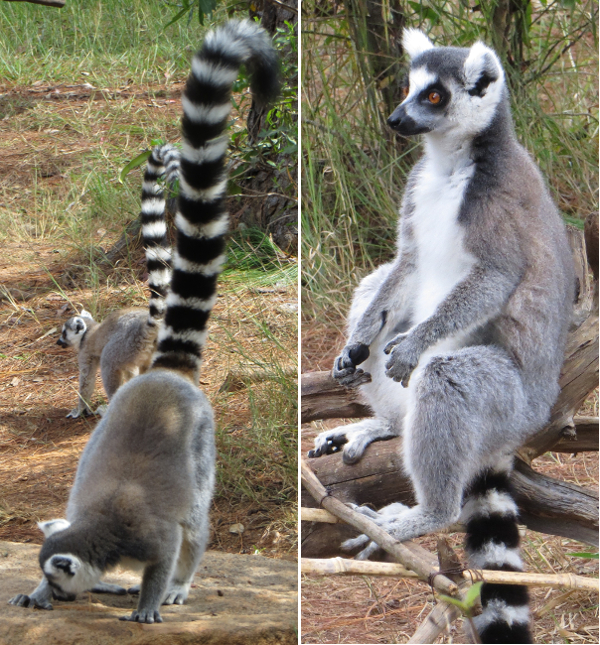
Klar, die Kattas waren auch hier dabei – aber da war mehr Action drin als bei allen vorherigen Sichtungen. Zwei Teenager haben sich über die Bäume gejagt und einen Heidenspaß dabei.

Sure, there were kattas again – but there was a lot more action in this group than in any we had seen before. Two teenagers were chasing each other in the trees and had a blast.

LEM6

Das nächste Pärchen ist noch gar nicht lange zusammen: Herr Lemur musste eine ziemlich lange Weile ganz allein ausharren, bis man eine Partnerin auftreiben konnte. Aber dann ging alles ganz schnell: Nachwuchs wird im Juli erwartet.

The following couple are practically newly-weds: Mister Lemur had been waiting for an awfully long time before a female was found for him. But they took to each other instantly and a baby is expected for July.

LEM4

Hier war auch wieder eine Menge los, wildes Hin- und Hergespringe von Bambusstamm zu Bambusstamm… das ließ sich in einem Foto unmöglich festhalten. Ein Video hätte ich machen können – wenn meine Speicherkarte nicht am Anschlag gewesen wäre.

These guys were having quite a party with lots of jumping from one bamboo tree to the other… impossible to catch on a photo. I could have made a video of course – if I hadn’t been about to reach the limit of my SD card.

LEM5

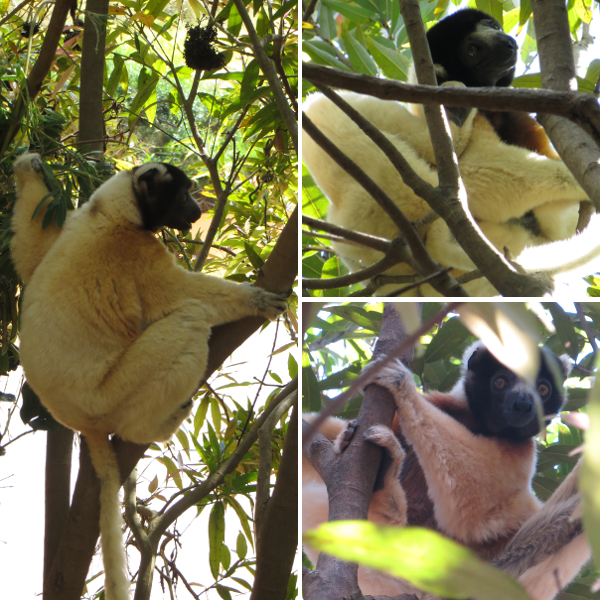
Aber meine absoluten Helden kommen ja noch. Der Guide musste uns quasi loseisen von dieser Gruppe, die ihr „Klettergerüst“ sozusagen als Laufsteg benutzt haben. Sie haben es außerdem geschafft, meinen kürzlich in ähnlicher Umgebung erworbenen Hand- und Fußfetisch wieder an die Oberfläche zu bringen.

But you have yet to meet my heroes. The guide practically had to pry us away from this group which used their “climbing frame” as a catwalk. Moreover, they managed to make my recently acquired hand and foot fetish reappear.

LEM8

Ein gelungener Abschluss für diesen Urlaub – in wenigen Stunden geht es auf zum Flughafen… letzte Grüße aus Madagaskar!

All good things must come to an end – I think this was a very appropriate finale for our vacation… a last good-bye from Madagascar!

Barbara

Madagascar | Tsimbazaza

TSIM4

Wieder zurück in der Hauptstadt gab es noch drei Tage tot zu schlagen. Und abgesehen vom Erwerb größerer Mengen Vanillestangen, was sich wie ein Drogendeal entwickelte, machten wir auch einen zweiten Anlauf, den Zoo und Botanischen Garten Antananarivos zu besuchen: Tsimbazaza.

Back in the capital we had three days to kill. In addition to the purchase of large amounts of high quality vanilla (which felt like we were dealing in drugs, really) we gave the Zoo and Botanical Gardens of Antananarivo a second shot: Tsimbazaza.

TSIM2

Und wir waren nicht allein. Das Bild gibt es nicht wirklich wieder… aber wir waren mit ungefähr 300 Vor- und Schulkindern dort. Und das, obwohl Tsimbazaza übersetzt soviel heißt wie „nicht für Kinder“. Das rührt allerdings von der früheren Nutzung des Gebiets als Militärgelände. Angesichts dieser Besuchermassen fragten wir uns noch, ob das wohl eine gute Idee war. Aber die Anlage ist mit 20 Hektar unerwartet riesig.

And we were not alone. This picture doesn’t give you a good idea… but we visited along with about 300 preschoolers and students. Even though Tsimbazaza translates to something like „not for children“. But that is due to the fact that the area was previously used as a military camp of sorts. Faced with these crowds we wondered whether our visit was such a good idea after all. But at 20 hectares, the gardens turned out to be unexpectedly huge.

TSIM8

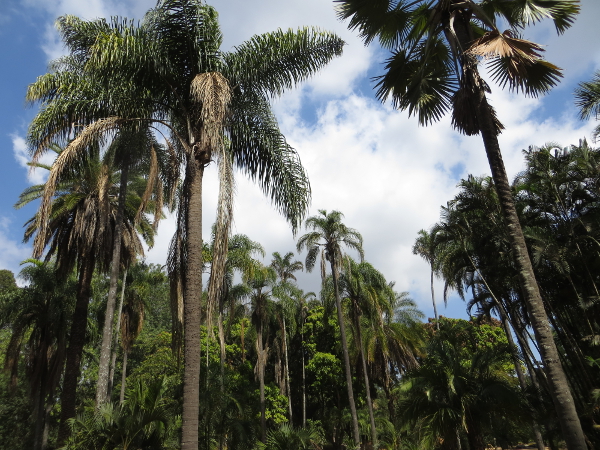
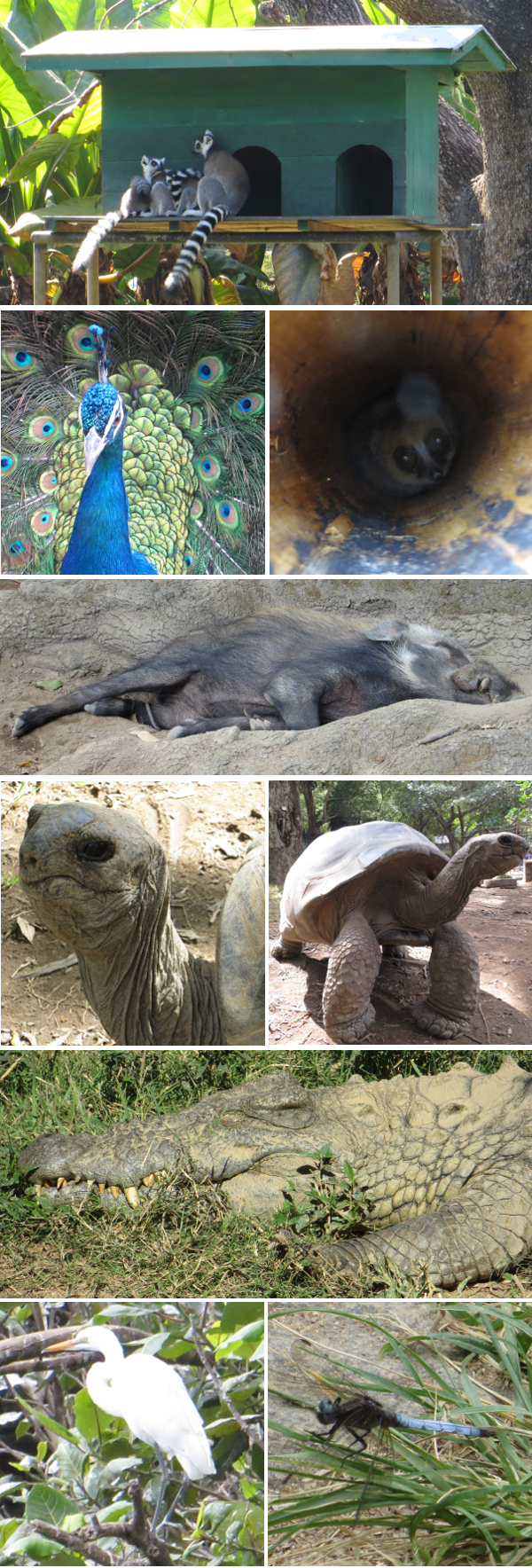
Die „Palmiere“ oben inklusive eines großen zweiten Sees haben wir nur durch Zufall entdeckt – nach einer Stunde mit unserem bemühten… aber leider unfähigen Guide hatten sich unsere Wege getrennt und wir konnten endlich in aller Ruhe alles abgehen und bewundern. Es sind viele Tiere zu beobachten. Den auch hier zu findenden Lemuren geht es auf ihren Inseln glaube ich ziemlich gut, wenn man bedenkt, dass sie auch in freier Wildbahn ein ziemlich kleines Territorium bewohnen. Die Schildkröte soll so um die 200 Jahre alt sein… und ist mit Abstand die größte, die ich jemals irgendwo gesehen habe.

It was only by chance that we discovered the „palmiere“ above, along with a large second lake – we had parted with our motivated… but unfortunately absolutely incapable guide and were finally able to explore peacefully by ourselves. There are quite a few animals to see. Of course, there are lemurs, too, and I think they’re doing pretty well on their islands – especially as we were told that the range within their natural habits is really small as well. The tortoise is supposedly about 200 years old… and is by far the largest I have ever seen.

TSIM3

Bei diesem… Adlerkäfig bin ich mir allerdings nicht sicher, ob sich irgendwer damit brüsten sollte, an der Renovierung beteiligt gewesen zu sein.

When it comes to this… eagle cage, though, I’m not sure that anyone should be proud to have their support for it on public display.

TSIM5

Natürlich habe ich auch die einen oder anderen Blüten gesehen.

Of course there were a few blossoms to admire, too!

TSIM6

Die Stimmung um den See mit den „Elefantenohren“ war eine ganz besondere – da hätte ich Stunden verbringen können und einfach nur gucken. Nach den Vögeln. Nach den Schmetterlingen. Nach Fröschen vielleicht auch.

The atmosphere by the lake with the „elephant ears“ was really special – I could have spent hours there and just looked. At the birds. At the butterflies. And maybe at the frogs, too.

TSIM1

Wir hatten zu wenig Zeit. Wir hatten nachmittags noch einen anderen Termin und nicht gedacht, dass es soviel zu sehen gäbe. Es lohnt den Besuch auf jeden Fall und wer halbwegs interessiert ist, sollte mindestens drei Stunden einplanen. Oder auch mehr. Und ein Picknick einpacken – wie die Schüler, die waren schlauer und wohl für den ganzen Tag da.

We didn’t have enough time. We had an appointment in the afternoon and hadn’t thought that there would be so much to see. It is well worth the visit and if you’re only slightly interested you should plan at least three hours. Or more. And bring a picnic – as all the students did, they were clever and probably there for the day.

TSIM7

Für den nächsten Tag steht noch ein Ausflug an… dazu später mehr!

We have another little trip planned for the following day… so more about that later!

Barbara

Madagascar | Anakao

ANA1
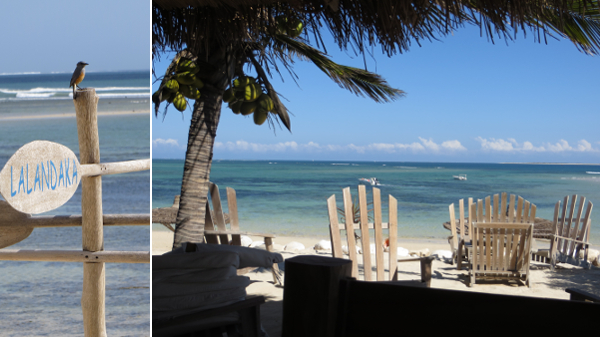
Dann doch noch ein Blick zurück auf Tuléar: mit dem Zebukarren wurden wir rausgekarrt zum Boot nach Anakao. Anakao ist keine Insel, aber über den Landweg ist man einen ganzen Tag unterwegs, mit dem Boot eine Stunde. Das ist dann keine gemütliche Fährfahrt, sondern ein wilder Ritt auf den Wellen. Aber einmal angekommen, konnte man den Tag damit verbringen, in den unzähligen Schattierungen von blau und türkis verloren zu gehen.

A view of Tuléar after all: we were hauled out to the boat to Anakao abaord a zebu cart. Anakao is not an island but if you chose to go by road it would take you a day to get there, the boat does it in an hour. But that is no quiet bobbing up and down, it’s quite a wild ride over the waves. Once you arrive, though, you can spend the day just looking at the inumerable shades of blue and turquoise.

ANA5

Die Tage waren dem Schwimmen, am Strand entlanggehen, Boote beobachten, lesen, schlafen und essen gewidmet. Auch mit den minderjährigen Souvenirverkäuferinnen kam ich zu einer Übereinkunft: ihr lasst mir jetzt ein paar Tage meine Frieden und am Tag vor der Abreise werde ich einkaufen. Überraschenderweise funktionierte es. Sollte jemand Interesse an einer oder mehereren aus verschiedenen Samen u.ä. gemachten Ketten haben – ich kann liefern.

The days were all about swimming, walking the beach, watching the boats, reading, sleeping and eating. I negotiated a truce with the underage souvenir sellers on the first morning: you leave me alone for the upcoming days and I will shop till I drop on our last day. Surprisingly, it worked out. Should you be interested in one or more necklaces made of different kinds of seeds – be in touch.

ANA6

Die Unterkunft (die harten Fakten folgen in einem gesonderten Eintrag) war eine Eco-Lodge, was unter anderem hieß: 15 Liter Süßwasser pro Tag, Klospülung mit Meerwasser aus einer großen Tonne in der Badezimmerhütte. Wer abends warm duschen wollte, musste morgens daran denken, einen gefüllten Topf in den Solarofen zu stellen. Das erschreckende war nicht, dass man eine gesamte – ausgiebige! – Tagestoilette mit deutlich weniger als 10 Liter Wasser durchführen kann. Nein, viel erschreckender war, wieviel Wasser in diese Toilette geschüttet wurde. Vielleicht hatte die Tonne keine 100 Liter, aber 80 sicher…

We were staying at an eco lodge (hard facts to follow in a separate post) which, among other things meant: 15 liters of fresh water per day and a barrel of salt water in the bathroom hut to flush the toilet. If you planned to take a hot shower at night, you better made sure to start heating some of your water in a solar stove in the morning. I was amazed to realize that a full day of body hygiene can be carried out with less than 10 liters of water. But it was shocking to see how much water actually goes down the toilet. Maybe the barrel’s capacity was only 80 and not 100 liters… but still.

ANA2

ANA3

Diese Tage des Dahinlebens werden mir immer lieber und ich hätte da durchaus noch ein paar Tage dranhängen können. Aber wir hatten ja einen Inlandsflug gebucht, von Tuléar zurück nach Antananarivo. Man hatte uns gewarnt, dass Air Madagascar (kurz und passend: Air Mad) oft Flüge cancelt, Umbuchungen vornimmt usw. Deswegen hatten wir da einen Puffer eingebaut. Den wir dann nicht brauchten: statt am Termin abends zu fliegen, wurden wir auf den Flug am Vormittag vorgezogen. Also, auf in die Hauptstadt!

I have come to love these days of doing sweet nothing and could have stayed a few days longer without a problem. But we had booked a domestic flight to take us back to Antananarivo. We had been warned that Air Madagascar (short and significant: Air Mad) often cancels flights, re-books you on a later flight etc. so we had planned with a buffer. Which of course we didn’t need in the end: we flew on the date booked… but not in the evening as planned but at noon. Capital, here we come!

ANA4

Madagascar | Tuléar

TUL1
Nächster Stop: Tuléar, an der Westküste. Das war wieder ein halber Tag Fahrt, aber auf guten Straßen. Die Landschaft blieb trocken, bis auf ein kurzes Stück durch den Zombitse Nationalpark relativ baumfrei… und ärmer als im Hochland. Offensichtlich ist es hier deutlich schwieriger, den Boden zu guten Erträgen zu bewegen. Auch die Architektur des Hochlands hat sich mehr oder weniger verabschiedet.

Next stop: Tuléar, on the West coast. Another half day on the road but they were pretty good. The landscape is still dry and relatively treeless apart from a brief part through Zombitse National Park… and clearly a lot poorer than in the highlands. Very obviously, it is a lot harder to wrest a good harvest from these soils. Also, the brick and balcony architecture from the highlands is gone.

TUL4

Wir kommen auch durch eine Gegend, in der in größerem Umfang Edelsteinabbau betrieben wird, vor allem Saphire. Da gibt es Orte, die im Umfeld einer Mine einfach aus dem Boden geschossen sind, entlang der Route Nationale, jeder zweite Laden macht in Edelsteine. Ein klassischer Grundriss einer Stadt im „Goldrausch“?

We also drive through an area where gems are being mined, saphires mostly. There are places that have just sprung up like mushrooms in the vicinity of a mine, along Route Nationale, every second joint deals in (semi-) precious stones. Could be a classic layout for a town of the „gold rush“?

TUL2

Zum ersten Mal laufen uns auch Frauen über den Weg, die eine Gesichtsmaske aufgetragen haben. So ein bisschen erinnert es mich an den Sonnenschutz, der in Myanmar verwendet wird… aber irgendwie nicht ganz so fein und deutlich greller. Es ist eine Mischung aus Fett und Sandelholz und wird hier in Vorbereitung auf große Feste verwendet – das Gesicht wird dadurch heller… und leicht gelblich.

For the first time we encounter women who have applied a traditional face mask. It reminds me a bit of that being used in Myanmar… but it doesn’t look quite as artsy and is a whole lot brighter. It’s a blend of grease and sandalwood and is used when a big celebration is coming up – it makes for a lighter complexion, apparently a little yellowish.

TUL3a

Von Tuléar selbst habe ich kein einziges Bild. Einerseits war das Ausmaß der Armut teilweise derart atemberaubend, dass ich keine Kamera hätte draufhalten wollen – und auch keine in der Gegend rumschwenken wollte. Abgesehen von hervorragenden Restaurants (inkl. einer italienischen Eisdiele mit dem besten Vanille-Eis überhaupt) hat der Ort touristisch nichts zu bieten. Der Reiseführer beschrieb ein ethnologisches Museum der Universität als sehenswert – was ich (mal wieder) nicht bestätigen kann… aber nichtsdestotrotz war der Besuch ein Erlebnis.

I have not a single picture taken in Tuléar. On the one hand the extent of poverty was often paralyzing and I wouldn’t have wanted to take pictures – or even show I had a camera. Apart from a number of excellent restaurants (inlcuding an Italian ice-cream parlor with the best vanilla ice-cream on the planet) there is nothing of interest tourist-wise. The guidebook mentioned an anthropological collection of the university as worth the visit – which, again, I can’t support… when it comes to the museum as such. The visit was still quite something, though.

TUL5

Wir standen nämlich dort vor verschlossenen Türen und es wurde uns mitgeteilt, dass es geschlossen sei, wegen eines Streiks an der Uni und wir sollten doch morgen wiederkommen. Da stand aber schon wieder unsere Abreise an – und das schockierte den netten Mann so, dass er meinte, er würde mal kurz telefonieren. Das ginge ja nicht, dass wir nun extra gekommen waren und dann nicht rein konnnten. Zehn Minuten später tauchte ein Masterstudent auf, der die Tickets verkaufte und die Führung übernahm… und es sich auch nicht nehmen ließ, einige Exponate (Webstoffe und Hüte) aus der Ausstellung zu nehmen und den Besuchern anzulegen. SO nah dran war ich wohl noch in keinem anderen Museum!

Aber nun auf zum Strand – mit besten Grüßen!

We got there and found it closed, due to a strike at the university. A nice gentleman who appeared from a nearby office asked us to return the following day but we had to tell him that we would be leaving early the next day. He didn’t like that all, now that we made our way there and not being able to see the museum – so he said he’d make a phone call and disappeared. About ten minutes later a post-graduate student appeared, sold us the tickets and went on to be our guide… and went on to take a few exhibits (textiles and hats) and fit them on us. I guess I’ve never been more „hands-on“ in a museum anywhere!

But now off to the beach – with best regards!

Barbara

Madagascar | Isalo National Park

ISA1
Okayyyyyy – ich gebe es ja zu: ohne dieses frühe Aufstehen wären solche Bilder nicht möglich. Und frühes Aufstehen war angesagt, denn der Weg zum Isalo Nationalpark war einer der längeren in unserer Route.

Alright, alright – I admit it: pictures like the one above would not have been possible without this constant getting up at ungodly hours. And that was again part of the plan of getting to Isalo National Park. That stretch was one of the longer ones on our route.

ISA2

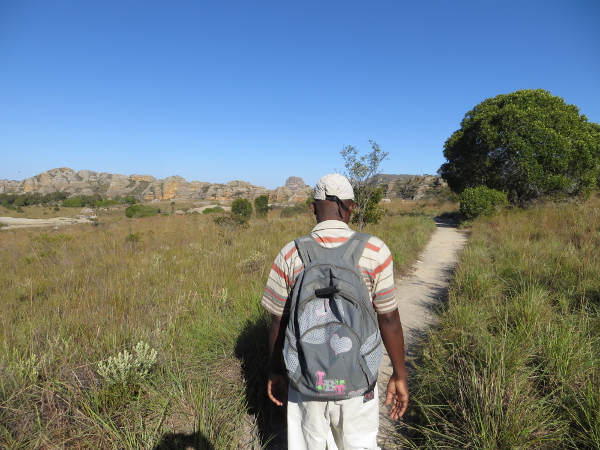
Reisfelder, geschweige denn -terrassen, waren bald nicht mehr zu sehen, dafür wurde es erst felsiger und die ersten Personen mit interessanten Frisuren wurden gesehen. Auch Zebus gab es noch einige. Der Trupp hier erinnert mich irgendwie an eine Bande Geächteter, wie sie durch den Ort ziehen.

Rice paddies, let alone terraced ones, were soon a thing of the past, instead the landscape got increasingly rocky and the first persons with interesting hairdos were spotted. Some zebus were left, too. This group here makes me think they were a band of outlaws roaming the village…

ISA5

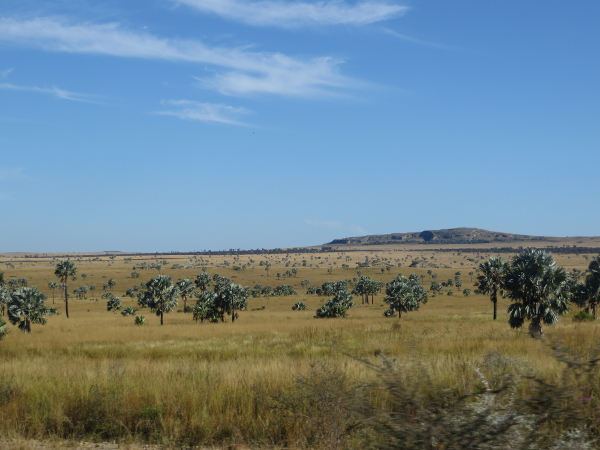
Dann erreichten wir das Plateau de Horombe, vierzig Kilometer fast absoluter Einsamkeit in einer savannenähnlichen Landschaft – „Little House on the Prairie“ schoss mir durch den Kopf (der Originaltitel von „Unsere Kleine Farm“):

Then we reached the Plateau de Horombe, fourty kilometers that felt completely deserted in a savannah-like landscape – I decided to call that picture „Little House on the Prairie“:

JETZT

Und Menschen sah man auch so gut wie gar nicht mehr.

And people were few and far inbetween, too.

ISA4

Am frühen Nachmittag erreichten wir Ranohira, den Ort am Park. Nach einem Mittagessen haben wir uns ein bisschen orientiert und einen Führer für den kommenden Tag klargemacht. Plan: in ungefähr sechs Stunden zwei Trails verbinden. Es stellte sich dann raus, dass das so ziemlich jeder macht.

We reached Ranohira, the town at the border of the park, by early afternoon. We had a quick lunch and got some information – and hired a guide for the following day. The plan: a hike that combines two trails in about 6 hours. It turned out later that this is what just about everybody else does, too.

ISA6

Letztlich war ich allein mit Baupage unterwegs, denn meine Freundin lag von Montezumas Rache niedergestreckt im Hotel. Ich hatte schon seit ein paar Tagen vorher schwerere Geschütze aus der Medikamententasche aufgefahren. Der Hike begann über einen Treppenaufstieg, der schon erste Ausblicke ermöglichte – unter anderem auch auf ein Grab, hoch in einer Bergwand:

I ended up doing the hike by myself (with Baupage of course) as my friend was exhausted after a night with „hotely belly“ and continued to prefer the proximity of a toilet. I had started to rely on medication a few days earlier already. The hike started with an ascent on steps and afforded the first views – among others a view of this tomb high up on a mountain:

ISA8

Der Sandstein erstrahlte in allen möglichen Nuancen von braun und rot bis gelb – die Färbung manchmal verursacht von Flechten und Moosen. Alles in allem schön… aber ich war schon mal beeindruckter.

The sandstone was gleaming in hues of brown and red and even yellow – the color sometimes caused by lichen and moss. Nice to look at… but I have to say I’d seen better.

ISA9

Gelesen hatte ich im Vorfeld von den bizarren Formationen, die Wind und Wetter aus dem Sandstein formen. Und ja, die gab es schon zuhauf:

During the preparations for this trip I had read about the bizarre rock formations, made by wind and water. And yes, they were there in abundance:

ISA10

So sind wir dann einen Weg entlang getrottet, der sich ewig zwischen den Felswänden hinzuziehen schien. Mittlerweile ging es auch schon auf den späteren Vormittag zu und es wurde wärmer. Immerhin gab es Iguanas und Elefantenfüße (Pachypodium rosulatum) zu sehen.

We were more or less silently trotting along a path between the mountains. And as we were getting towards noon, it got decidedly warmer, too. But we got to see an iguana and some elephant’s feet (Pachypodium rosulatum).

ISA7

ISA13

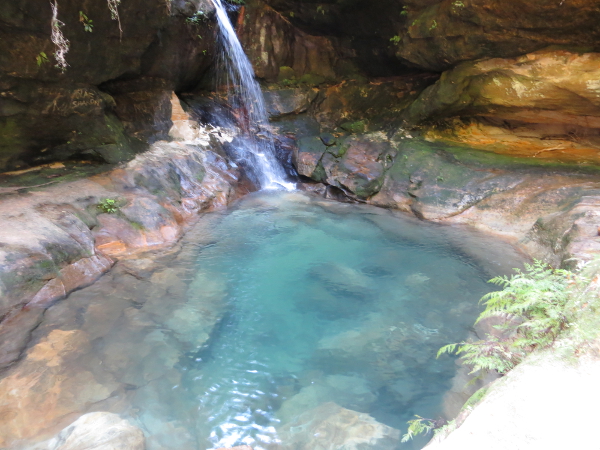
Und dann, mit den ersten Salzkrusten auf der Stirn, sind wir vielleicht 15 Meter abgestiegen, in einen kleinen Canyon, und fanden uns in einer wahren Oase wieder – am Piscine Naturelle, dem Naturschwimmbad:

And then, the first salt crystals appearing on my forehead, we descended maybe 15 meters into a small canyon and in a small oasis really – the piscine naturelle, the natural pool:

ISA12

Das war auf diese kurze Distanz schwer üebreinander zu kriegen und ich stand erst ziemlich verdattert in der Gegend rum… war aber vorbereitet und konnte mich in den erfrischenden Pool werfen und bis zu dem kleinen Wasserfall schwimmen (man hätte auch waten können, maximal brusthoch), der warm war. Und ich hatte das Teil ganz für mich allein, zumindest für 10 Minuten – als die zwei britischen Frauen weg waren und bevor das australische Ehepaar ankam. Apropos: bis hierher, Tag 10 unserer Reise, ist uns noch nicht ein einziger deutscher Tourist über den Weg gelaufen.

I had a hard time getting that sorted in my head, this practically instant change of climate zones, and was rather dumbfounded for a while… but I was prepared and finally got into the refreshing pool and swam to that little WARM waterfall at the other end (I could have waded, too, as the water was maximum chest high). And I was all by myself, for 10 minutes at least – after the two British ladies had left and before the Australian couple arrived. Talking about nationalities: up until now, day 10 of our trip, we have not met a single German tourist.

ISA11

Doch irgendwann war Schluss und es ging wieder raus in die flirrende Hitze. Gut vier Kilometer lang, dann wurde es bewaldeter und wir erreichten einen Rastplatz und machten Mittag. Da am Tag vorher der 1. Mai war, nutzte ich das als Aufhänger für ein Gespräch.

„Ist der 1. Mai in Madagaskar auch ein Feiertag?“
„Ja.“
„Wird der groß begangen oder interessiert das keinen?“
„Nein so wirklich interessiert das keinen. Die wichtigen Feiertage sind der Unabhängigkeitstag und Weihnachten.“
„Wann ist der Unabhängigkeitstag?“
„Im Juni. Und wann feiert ihr Unabhängigkeitstag?“
Ich zögere einige Sekunden zu lang mit einer Antwort, wir starren uns an.
„Wir haben keinen Unabhängigkeitstag… wir, äh, waren eigentlich immer unabhängig… so – mehr oder weniger.“
Er guckt mich sprachlos an, grinst, lacht dann wissend und sagt nur: „Ja… klar.“
Ich beeile mich zu sagen, dass wir stattdessen den Tag der Deutschen Einheit feiern… aber es ist offensichtlich, irgendwie ist das Pipifax.

But there is an end to everything and we have to return to the scorching heat. We continue for about four kilometers before we reach a more forested area with a campsite and picknick area and break for lunch. As it was May 1 the day before I decide to start a conversation from there.

„Is May 1 a holiday in Madgascar as well?“
„Yes.“
„Is it important to people or does it just pass without much ado?“
„It’s not of interest, no. The really important ones are Independence Day and Christmas.“
„When do you celebrate Independence Day?“
„In June. And when do you?“
I hesitate a few seconds too many and we stare at each other.
„We don’t have an Independence Day… we, ahem, actually, we were more or less independent all along.“
He looks at me speechless, grins and then laughs and just says: „Yes… of course.“
I hurriedly add that we celebrate German Unity Day instead… but somehow that appears to be negligible in comparison.

ISA17

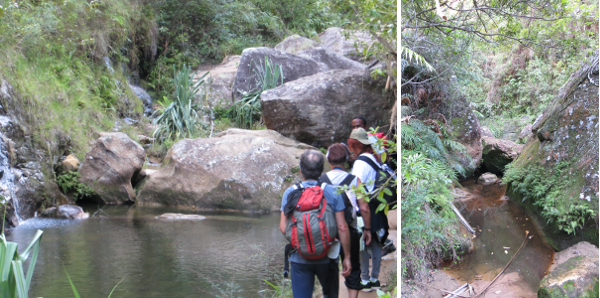
Nach dem Picknick steigen wir weiter ab, tiefer in einen Canyon, und bald sieht es schon fast dschungelartig aus. Aber es wird noch abgefahrener. Es wird eng, es wird nass, von unten und von allen Seiten, es wird richtig kühl. Wieder haben wir uns komplett woanders hingebeamt und von wo, verdammicht, kommt das ganze Wasser her?! Es kommt doch, den Gesetzen der Physik folgend, von oben – aber oben ist es staubtrocken!!

After the picknick we descend further, into another canyon and soon it starts to look jungle like. But it gets even stranger. It’s narrow, it’s wet, from below and from everywhere, it’s really cool. Again, we have practically beamed ourselves to a completely different climate zone and where, on earth, does all this water come from?! It should be coming, as per the laws of physics, from above – but it’s as dry as a bone up there!!

ISA16

Später wird mir in einem anderen Zusammenhang erklärt, dass das das besondere in dieser Gegend ist: der Boden fungiert als ein einziger riesiger Schwamm, der in der Regenzeit das Wasser speichert und die ganze Trockenzeit hindurch wieder abgibt. Ich finde das weiter schwer vorstellbar, aber so muss es wohl sein. Nach einer ganzen Weile des Streifens durch den Canyon kommen wir zum Blauen Pool, und kurz darauf zum Schwarzen Pool.

I was to learn later that this is what makes this region special: the soil works as one giant sponge that soaks up all the water during the rainy season and lets go of it all through the dry season. I still find this amazing or even incredible but I guess that it really is what happens. After quite a while following that canyon we reach the Blue Pool and little later the Black Pool.

ISA14

ISA15

Die sechs Stunden waren schon überschritten, aber ein weitere Teil fehlte noch: der Nymphenwasserfall. Es wären nochmal anderthalb Stunden gewesen und 200 steile Höhenmeter (insofern eher zweieinhalb Stunden). Nach kurzer Denkpause siegte dann der Verstand und wir traten den Weg zum mit dem Fahrer vereinbarte Treffpunkt an. Wo ich nochmal diverse Fußballthemen diskutieren und ein selbst gemachtes Schwein und einen Lemur aus einer ganzen Armada aussuchen konnte.

We had already passed the 6-hour mark but one part was missing: the Waterfall of the Nymphs. Supposedly another 1.5 hours and 200 meters in altitude difference (so let’s face it: rather 2.5 hours). I considered it for a moment but then rational thinking kicked in and we started on the way to the meeting point with the driver. Where I was able to discuss soccer yet again and purchase a handmade pig and a lemur from a whole range of different young artits.

ISA18

Viele Grüße aus Madagaskar mal wieder!

And again best regards from Madagascar!

Barbara