A Day in… OSLO!

OSL1_7

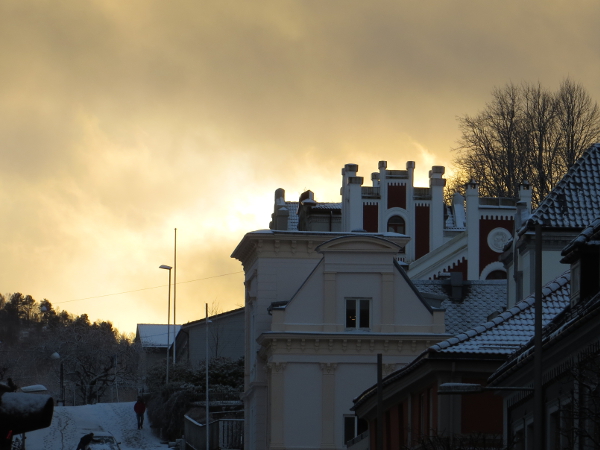
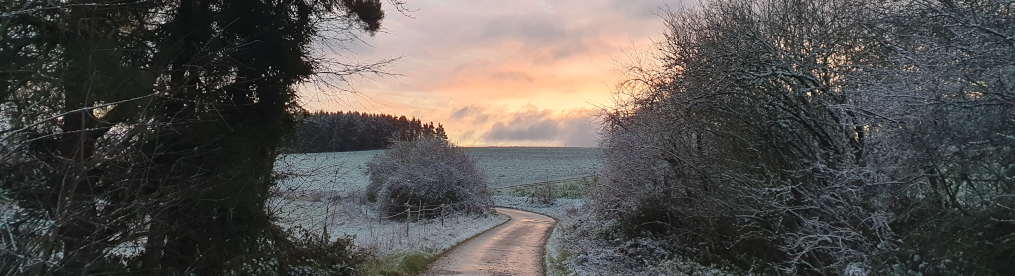
OSL1_5Es fallen mir immer mehr gute Gründe ein, in Skandinavien leben zu wollen: im Winter kann sogar ich Langsamstarter die Morgenstimmung einfangen. Etwa um Viertel nach neun. Und ich habe nie bestritten, dass sie schön ist. Nur um das nochmal klar gestellt zu haben.

I come across more and more good reasons why I would want to live in Scandinavia: in winter even a slow starter like I am can be up to catch the morning atmosphere. At about quarter past nine. And just so you know: I never said it wasn’t nice.

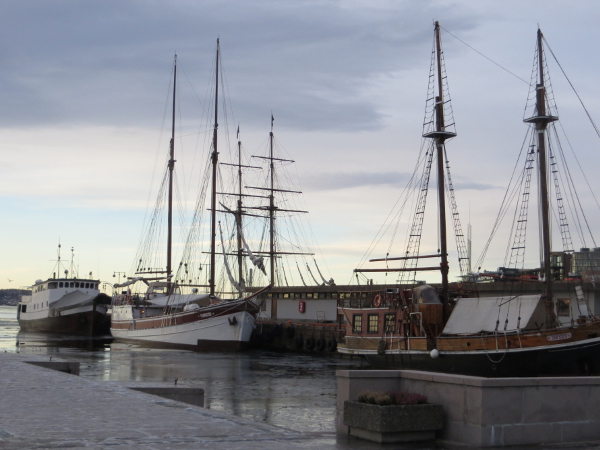
Dabei wäre ich ja eigentlich noch früher losgekommen (auch wenn sich die Frage stellt: wozu?), aber über dem Frühstück kam es noch zu einem Schwätzchen mit meinem Gastgeber – ich wohne in einem Zimmer bei Ingrid und Morten, meine erste airbnb-Erfahrung. Es wird nicht die letzte gewesen sein. Morten hatte mir noch erläutert, dass das meiste mehr oder weniger fußläufig erreichbar ist. Mit Blick auf das maximal viertägige Programm am Holmenkollen habe ich allerdings ganz untypisch eine Wochenkarte für den ÖPNV gekauft (ca. 24€). Und so bin ich an diesem ersten Morgen ganz schnell am Rathausufer und auf dem Weg zu meiner ersten Erkundung, der Akerhus Festung.

And really, I would have been out and about even sooner (even though the question does arise: what for?) but over breakfast I got into talking with my host – I stay with Ingrid and Morten, my very first try with airbnb. It won’t be the last, I can say that much. Morten had explained that more or less all the interesting parts can be reached on foot. But with view of my possibly 4-day program at Holmenkollen I bought a weekly pass for the public transport system (ca. 24€) from the start, very unusual. So it happens that I reach the harbor near the city hall really quickly. From there I went to start out exploring Akerhus Fortress.

OSL1_8

Die Festung hat eine beeindruckende Größe und man kann ihre Entwicklung seit den ersten Bauwerken von um 1300 auf dem „Fortress Trail“ nachvollziehen. Errichtet als Palastburg von Håkon V. wurde sie im 17. Jahrhundert im Renaissance-Stil umgebaut. Das Schloss ist allerdings, ihr ahnt es schon, nur im Sommer zu besichtigen. Teile der Anlage haben auch eine Geschichte als Gefängnis, erstmalig in 1652, geschlossen letztlich 1950. Ein deutsches Militärgefängnis war es ebenfalls von 1940-1945. Mit dem Teil der Geschichte befasst sich das auch innerhalb der Festungsmauern gelegene Hjemmefrontmuseet (Widerstandsmuseum). Da kamen mit mir allerdings ca. 30 pubertierende Schüler an, so dass ich lieber weiter zog.

The fortress is of impressive size and if you do the „Fortress Trail“ you can follow its development from the first buildings of about 1300 to today. It had originally been a fortress palace built by Håkon V. and was renovated in renaissance style in the 17th century. The palace itself, say it out loud along with me, is open only in summer. Parts of the complex have a history as a jail – starting in 1652 it was only finally shut down in 1950. It had also been a German military prison from 1940-1945. This part of history is also the subject of the Hjemmefrontuseet (Resistance Museum). I got there just in time to see 30 pubescent students walk in and decided to move on.

OSL1_3

Im Dezember 1998 war ich schon mal in Oslo (sprich: Uschlu) gewesen – aber ich erinnere mich an fast nichts mehr. Das königliche Schloss in ganz dünnem Licht… das Munch-Museum. Aber damit hat es sich auch schon. Also alles nochmal auf Anfang. Im Zentrum verläuft die schnurgerade Karl Johans gate, im wahrsten Sinne des Wortes die Königsallee Oslos, vom Hauptbahnhof auf das Königliche Schloss zu – und lädt zum Flanieren ein. Und das wirklich in aller Ruhe – selbst an den Imbissbuden ist es eindeutig Nebensaison.

I had been to Oslo (pronounce: ooshloo) before, in December 1998 – but I hardly remember anything from that trip. The Royal Palace in very little light… the Munch Museum. But that’s about it. So I just start from scratch. In the center, Karl Johans gate connects the central station with the Royal Palace in a straight line – it certainly invites for a stroll. And really, in peace and quiet – even the takeaway places clearly are in (s)low season.

OSL1_1

Die Gebäude entlang der Karl Johans gate sind nicht nur (fast) alle wunderschön anzusehen, sie beherbergen neben hochpreisigen Geschäften auch wichtige Institutionen wie das Parlament, das Nationaltheater oder die Universität. Dazu ist sie zur Hälfte Fußgängerzone, zu Hälfte stark verkehrsberuhigt.

The buildings on Karl Johans gate aren’t only nice to look at (most of them), they also house both high-end stores and important institutions such as the parliament, the national theater or the university. For about half of its length it’s a pedestrian zone, the other half has restricted traffic.

OSL1_2

Auch beim Schloss bleibt es beim Blick von außen, denn die 15 Räume, die zu besichtigen sind, sind nur von Ende Juni bis Mitte August zugänglich.

The 15 rooms of the Royal Palace that are open to the public – are just that only from mid-June to the end of August. So I’m left with a view of the outside.

OSL1_6

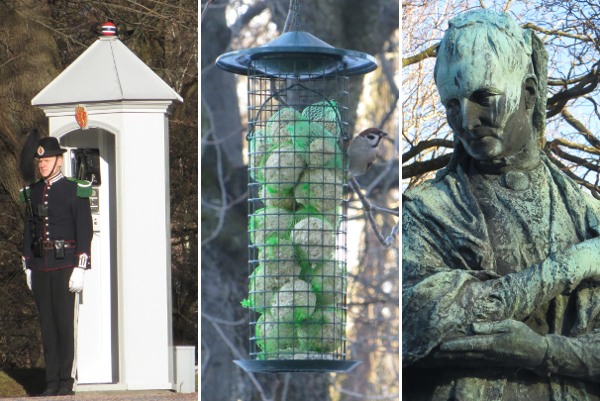
Der Schlosspark wiederum ist jederzeit frei zugänglich – wüsste nicht, wo das sonst der Fall ist an einem der Königshäuser? Auf einer Infotafel wird quasi darum gebeten, auch auf das Gras zu treten und die Bäume zu umarmen – der Park sei da um benutzt zu werden.

The palace park, though, is open for all – at any time. I can’t think of any other royal palace where that is the case? A sign practically asks you to leave the paths and walk on the grass, too, and to hug the trees – the park is there to be used.
OSL1_9

Dann mache ich mich auf zum Vigelandspark, einem Skulpturenpark des Bildhauers Gustav Vigeland (1869-1943), an dem er 22 Jahre gearbeitet hat. Er umfasst etwa 200 Skulpturen, die man an einer 850-Meter langen Achse bewundern kann.

I then move on to Vigeland’s Park which was created by the sculptor Gustav Vigeland (1869-1943) who worked on it for 22 years. The park holds about 200 sculptures most of them along an 850-meter axis.

OSL10

Es ging dem Künstler um die Darstellung aller Phasen des Lebens von der Kindheit bis ins Alter. Mein Reiseführer, den ich mal wieder erst im Nachgang zurate gezogen habe, behauptet, die Figuren seien von der problematischen Kindheit des Künstlers geprägt – und vom schwierigen Verhältis zu seinem Vater. Und zu Frauen erst. Das kann ich nicht nachvollziehen. Schon gar nicht in dieser Absolutheit.

The artist wanted to portray all stages of human life, from childhood to old age. Again, I had a look my guide only later – and was aghast to read that allegedly the work is strongly influenced by Vigeland’s hard childhood and the difficult relationship with his father. And with women. I can’t relate to that interpretation of things – and least of all with such absoluteness.

OSL1_13

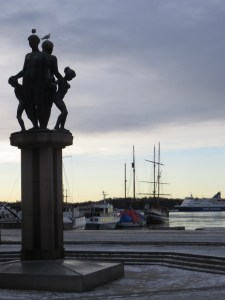
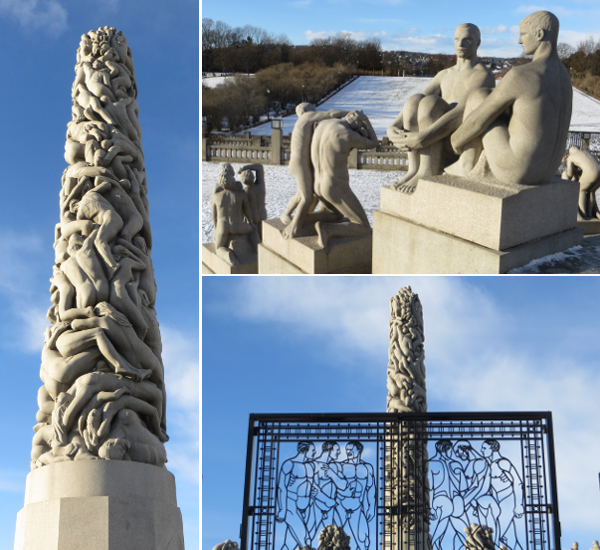
Das Zentrum der Anlage ist Monolitten, eine über 17 Meter hohe Säule, um die sich 121 Menschen schlängeln. Sie ist umgeben von 36 Figurengruppen, die Menschen verschiedenen Alters zeigen.

Monolitten is the center of the park, a pillar more than 17 meters high, 121 humans curling around it. The pillar is circled by 36 figure groups representing people in different stages of life.
OSL1_11

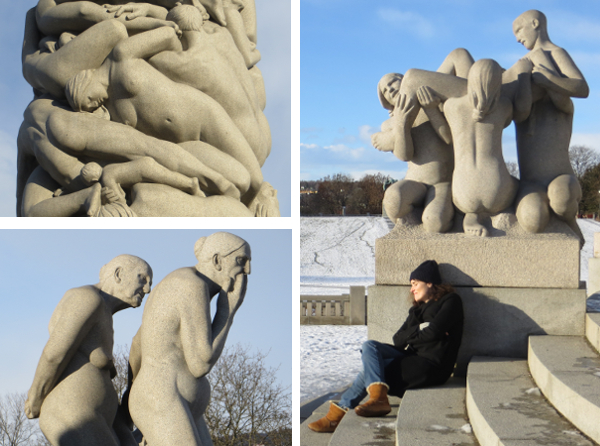
Die Sonne lud wirklich zum Verweilen ein…

The sun really made people want to stay and reacharge their batteries…
OSL1_12

Der Tag war noch nicht zuende – aber dazu später mehr! Viele Grüße aus Oslo!

The day wasn’t quite over, yet – but more about that later! Love from Oslo!

Barbara

A Day on… BERGENBANEN!

Beba1Am Mittwoch hieß es „Bergen adé“ und auf zum ursprünglichen Anlass dieser Reise: Oslo, bzw. das Skifest auf dem Holmenkollen. Immer schon ein Traum von mir. Aber bis dahin war es noch was hin. Ich hatte mich für die Bahnreise von Bergen nach Oslo entschieden – weil ich gerne Bahn fahre und weil es unglaublich günstig war (die fast siebenstündige Zugfahrt hat mich läppsche 25 Euro gekostet). Und weil ich sehen wollte, ob die Bahn in Norwegen wirklich so durch den Schnee schießt, wie im Vorspann von Lilyhammer. Tut sie. Und kommt pünktlich an.
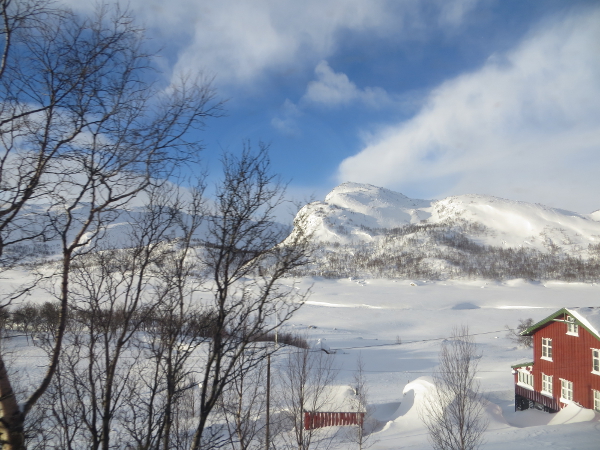
On Wednesday it was time to say goodbye to Bergen and the dear friends I came to see there and off to the actual motivation for this trip: Oslo or rather the Holmenkollen Skifest there. Attending it has been a dream of me for a while. But that was a few days off. I had decided on a train ride from Bergen to Oslo – because I like train rides and because it was incredibly cheap (it took about 7 hours and was to be had for 25 Euros). And because I wanted to see whether the trains in Norway really shoot through the snow like they do in the opening credits of the series Lilyhammer. They do. And arrive on time.

Beba2

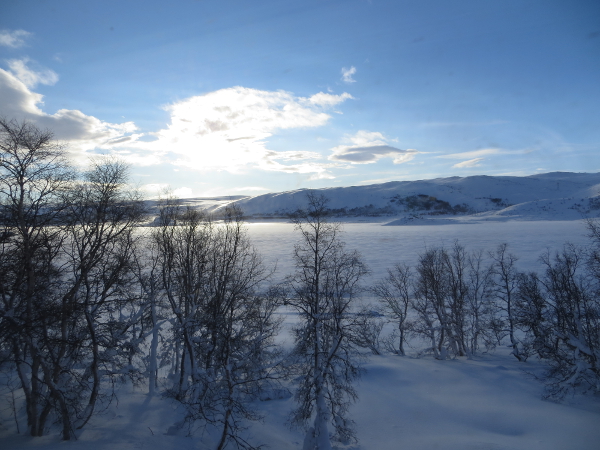
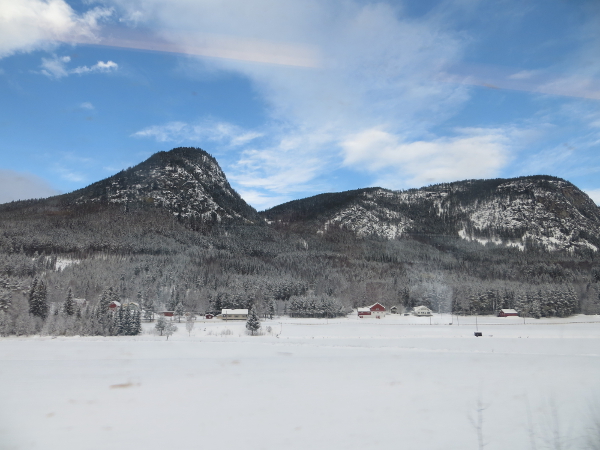
Was ich erst später herausfand ist, dass diese Bahnstrecke zu den schönsten weltweit zählt. Anfangs war es noch dunkel, unterwegs konnte man wegen Schneegestöber oft wirklich nichts sehen – aber das was ich gesehen habe war einfach nur wunderschön. Ich hatte gedacht, ich würde ein Buch lesen. Ha. Als einmal die Sonne da war, habe ich non-stop stundenlang aus dem Fenster gestarrt. Gott sei Dank gibt es auch etwa 200 Tunnel, so dass man sich ein bisschen erholen kann.

I found out only later that this trip is considered to be one of the most scenic worldwide. In the beginning it was still dark and en route there was sometimes snow flurry so hard it was basically a white-out. But all I did see was just beautiful. I had thought I would be reading a book. Ha. Once the sun was up I was staring out the window non-stop. Thank God there are also about 200 tunnels so you can relax here and there.

Beba3

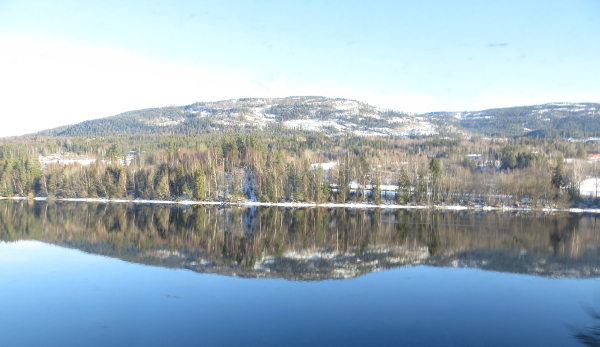
Ich habe auch Fotos gemacht wie blöd, bei Schneegestöber, bei dreckigen Scheiben, bei Gegenlicht, bei Spiegelungen, bei zwei Kratzern auf der Linse (ja, Elend…) – da müsst ihr jetzt durch. Bei Ustaoset (sprich: Üsta-å-ße) war ich davor, einfach auszusteigen, eine der zahlreichen Hütten zu beziehen und der Welt den Rücken zu kehren.

I took pictures like a mad woman, in snow flurry, through dirty screens, with reflections, with backlight, with two scratches on the lense (yes… no clue where they came from) – you have to bear with me now. Near Ustaoset (pronounce: Usta-o-se) I was a nanosecond away from exiting the train, renting one of the numerous huts in the area and turn my back to the world.

Beba4

Schneegestöber, weiße Wälder, sprudelnde Flüsse, tiefe Täler, steile Felswände, TUNNEL, Schienen im Schnee, Lawinenzäune, Höhenunterschied, Eiszapfen, gleißende Sonne, schmächtige Birken, Eisbrocken, die auf’s Zugdach schlagen, Motorschlitten, zugewehte Bahnhöfe, einsame Langlaufspuren, erfolglose Elchsuche, Findlinge, Trolle, eingeschneite Babytannen…

Snow flurry, white woods, bubbling rivers, deep valleys, steep rock cliffs, TUNNELS, tracks in the snow, avalanche barriers, difference in altitude, icicles, glistening sunshine, slim birch trees, pieces of ice or compacted snow that hit the train’s roof, snowmobiles, train stations succumbing to snow drifts, lonely cross country skiing tracks, unsuccessul search for moose, erratic boulders, trolls, snowbound baby fir trees…

Beba5

An jeder Bahnstation stand die Höhe üNN, und zwar ganz genau: Myrdahl, 866,6m. Es ging von quasi Meeresniveau in Bergen bis auf 1.222m in Finse und dann wieder abwärts. Ob ich auch Videos gemacht habe?!

All train stations had signs not only stating the name of the station but also the elevation above sea level: Myrdahl, 866.6m. It went from basically sea level in Bergen up to 1,222m in Finse and then back down. Have I made any videos? Have I ever!

Nach und nach wurde es weniger spektakulär – aber immer noch wunderschön, oder?

It slowly got less and less spectacular – but still it’s beautiful, don’t you think?

Beba6

So, es wird höchste Zeit für ’ne Runde Schlaf. Auf bald!

It’s high time I went to bed. See you soon!

Barbara

A Third Day in… BERGEN!

HisB5
Mit den touristischen Aktivitäten ist es hier im Winter nicht ganz einfach. Die Museen u.ä. haben nur sehr eingeschränkte Öffnungszeiten, von 11 bis 14 Uhr oder von 12 bis 15 Uhr – oder nur sonntags… Das erfordert eigentlich ein bisschen Vorbereitung, aber die habe ich ja geknickt. Und so kommt es dann, dass man um 9 Uhr in der Stadt steht, die Sonne noch nicht ganz da, und dann trotz widriger Wetterbedigungen eine „draußen-Beschäftigung“ in Angriff nimmt. Andersrum schade, wenn das Wetter um die Mittagszeit schön ist, dass man sich dann nach drinnen begeben „muss“, um die paar Stunden Öffnungszeit zu nutzen. Und danach holt einen draußen ja fast schon wieder der Abend ein.

It’s not all that easy being a tourist in Bergen in winter. The museums etc. have very limited opening hours, from 11 am to 2 pm or 12 noon to 3 pm – or Sundays only… A bit of prior research would have been helpful but well. And so it happens that I’m in town at 9 am, the sun not all the way up yet, and brave the elements. When the weather is great about noon, that’s a shame because you „have“ to be inside then to make use of the opening hours. And afterwards nightfall is not too far away.

HisB2

Bergen ist ganz schön… bergig. Auf meiner selbstgeführten Tour durch das alte Bergen, gegenüber von Bryggen (grob orientiert an dieser) wurde ich – von Temperaturen und Schnee einmal abgesehen, hin und wieder an San Francisco erinnert. Andererseits: war es nicht Mark Twain, der sagte, den kältesten Winter, den er je erlebt habe, war der Sommer in San Francisco? Vielleicht auch nur Legende…Wie auch immer: ich stelle beim Blick auf Nykirken und das etwas karg wirkende Umfeld fest, dass nur laubfreie Bäume eine Aufnahme der Kirche zulassen. Alles hat seine Vorteile.

Bergen is quite a hilly place. I was on a self-guided tour in one of the historic districts in Bergen, across the harbor from Bryggen (loosely based on the one I found here). In more than one instant I was strangely reminded of San Francisco – despite the temperatures and snow. Wasn’t it Mark Twain who purportedly said that the coldest winter he had ever seen was a summer spent in San Francisco? Maybe just legend… Anyhow, looking back down at Nykirken and the rather pallid surroundings I realize that a picture of the church is only possible as long as the trees are bare. There’s an advantage to everything.

HisB3

HisB4

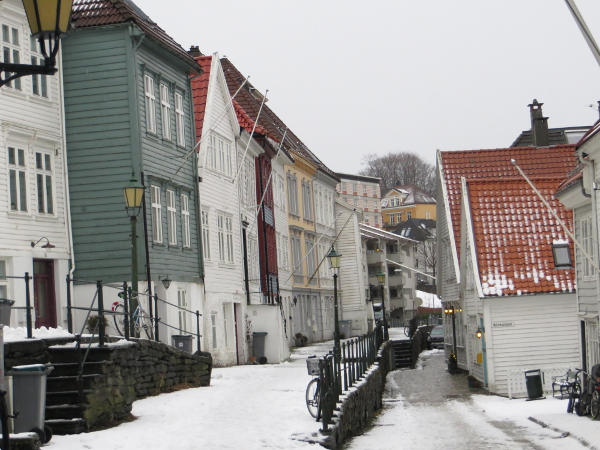
Es ist ein ziemliches Glück, dass man sich diesen Stadtteil mit den vielen Holzhäusern (hier auf dem Ytre Markeveien) noch ansehen kann, denn 1916 hat in ziemlicher Nähe ein verheerender Brand große Teile der Stadt zerstört. Es hat einige Feuer in Bergen gegeben, aber DAS Feuer war das von 1916. Dazu gibt es momentan im Bryggen Museum eine beeindruckende Ausstellung – wo man neben den Bildern der Zerstörung von 612 Wohnungen, 5 Hotels, 388 Läden, 42 Fabriken uvm. auch sehen kann, zu welchen stadtplanerischen Veränderungen es danach kam. Doch ich schweife ab. Gucken wir mal in eine Seitenstraße.

I feel quite lucky that I can still explore this neighborhood with all the wooden houses (here on Ytre Markeveien) as an huge area nearby fell victim to the flames of the Bergen fire of 1916. There have been quite a few fires in Bergen over the centuries, but the one in 1916 was THE fire. There’s currently an impressive exhibition on it at the Bryggen Museum – where you can’t only see pictures and film of the devastating destruction of 612 appartment, 5 hotels, 388 shops, 42 factories and much more but also get an idea of what urban planners had in mind with their new grid. But I’m digressing. Let’s have a look down a side street.

HisB1

Auch in der Kategorie bemerkenswerte Kleinigkeiten konnte ich einiges auftun. Dieses Pflanzgefäß, wenn auch winterlich vernachlässigt, hat mir ausgesprochen gut gefallen:

The award nominees in the category „noteworthy odds and ends“ today include this flower box, despite it being in a state of wintery negligence:

HisB7

Oder auch dieses Logo auf einem Schaufenster (Humor haben sie, die Norweger):

… as well as the logo on this shop window (a prime example of Norwegian humor??):

HisB8

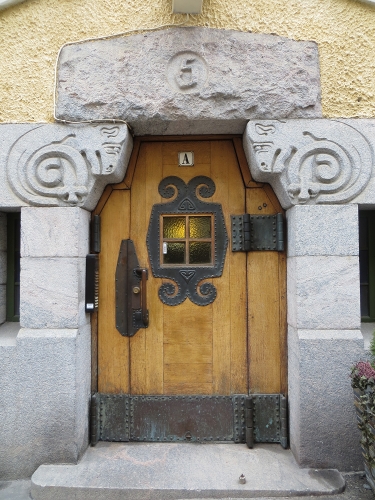
Ein einziges Mal erspare ich euch eine Collage wunderbarer Holztüren… aber diese eine mit ihrer wunderschönen Klinke kann dann doch nicht auf meinem Rechner versauern:

For once, I’ll spare you the collage of beautiful wooden doors… but this one – and especially it’s wonderful handle – can’t just collect dust on my computer:

HisB9

Ein weiterer Programmpunkt war die Håkonshalle: 1261 fertiggestellt durch König Håkon IV., der auch für die Handelsbeziehungen zur Hanse verantwortlich zeichnete. Die Halle ist Teil der Festung Bergenhus, etwas entfernt in Verlängerung von Bryggen. Zuerst (und auf dem ersten Foto unten) sieht man zwar den Rosenkrantzturm, aber der war nur sonntags zu besichtigen – aber da war ich auf der Island Clipper. Und ich glaube, das war auch besser so, da sich die Gelegenheit sicher nie wieder bietet. Die Håkonshalle jedenfalls fand ich verdammt beeindruckend… zwar hat sie über die Jahrhunderte viele verschiedene Nutzungen erlebt und war auch in Vergessenheit geraten, bevor sie dann durch die unbeabsichtigte Explosion eines mit Munition beladenen niederländischen Schiffes in deutschen Diensten 1944 große Schäden davontrug. Aber jetzt wiederhergestellt ist sie ein wunderbarer Ort für alle möglichen Anlässe.

Another must-see was Håkon’s Hall: built by King Håkon IV. (of Hanseatic fame: he established the relations between the Hanseatic League and Bergen) and finished in 1261. The hall is part of the Bergenhus Fortress, a couple of hundred yards down the quay from Bryggen. Coming from there you first (and on the first picture below) see the Rosenkrantz Tower, which unfortunately is open only on Sundays. But that was the afternoon spent on the Island Clipper. And I think it was the right choice as there will definitely be no second chance for that. Håkon’s Hall impressed me very much… it has seen a number of different dedications over the centuries and was all but forgotten about at times. In 1944 it suffered severe damages due to the accidental explosion of a Dutch ship (commissioned to Germany) carrying ammunition. But now it’s back to its old splendour and a wonderful place for all kinds of events.

HaHa3

HaHa1

Das Gelände wird heute von der norwegischen Marine genutzt, aber der dazugehörige Park ist frei zugänglich:

Bergenhus Fortress is today used by the Norwegian navy but the park within the fortress walls is accessible:

HaHa2

Ich weiß, dass sich dieser Post ins endlose zieht, aber EINS noch. Im Bryggen Museum gibt es nämlich eine weitere Sonderaustellung: über in Holz geritzte Runen, die wohl alle in Bergen gefunden wurden. Kein großes Ding, aber ich habe da ziemlich viel Zeit verbracht. Es gab u.a. solche, die Eigentumsmarker waren – also etwa an einem Sack Stockfisch angebracht waren:

I know this is getting longish but ONE more thing. There’s a second temporary exhibition at Bryggen Museum: runes found in Bergen. No big exhibition but I’ve spent quite a while there. Runes were used for a number of things, for example to let people know who the owner of, say, a bag of stockfish is:

RUN1

Datiert auf 1198-1248, wird das transkribiert als „botlaifra“ und heißt „Botleiv gehört“. Aber es wird spannender:

Dated between 1198 and 1248, this is transcribed as „botlaifra“ and means „Botleiv owns“. But it gets more interesting:

RUN2

Datiert auf 1170-1198, Transkribierung spare ich: „Ich liebe die Frau dieses Manns so sehr, dass Feuer kalt erscheint! Und ich bin der Liebhaber dieser Frau.“ Es gab Dutzende dieser manchmal undurchsichtigen Nachrichten. Und es fasziniert mich wahrscheinlich allein schon die Tatsache, dass sie erhalten geblieben sind. Okay. Gute Nacht!!

Dated between 1170 and 1198, let’s skip the transcription: „I love that man’s wife so much that fire seems cold! And I am that woman’s lover.“ There were dozens of these often obscure messages on display. And I think the mere fact that they are still there was enough to fascinate me. Alright. Good night!!

Barbara

P.S.: And another piece of news from the crafty corner! My first win for 2016 over at Winter Wonderland, yay! And I can tell you: I’ve been finding lots of (surprisingly inexpensive) crafty supplies here…

Another Day in… BERGEN!

BRY6
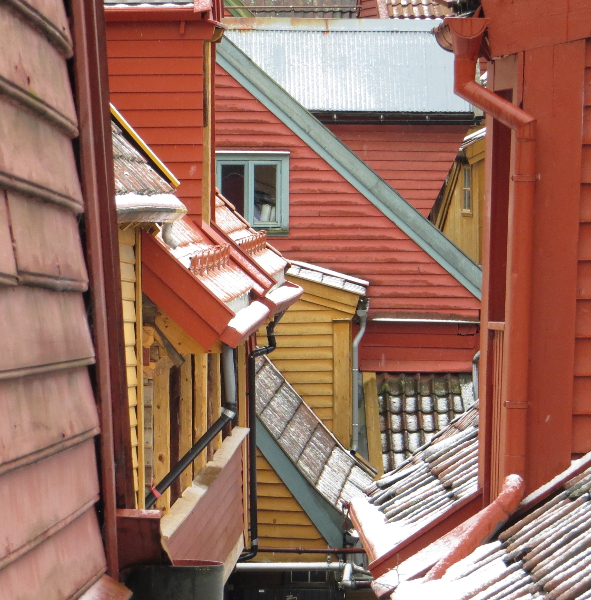
BRY5Die Attraktion in Bergen ist das Viertel Bryggen – es ist als UNESCO Weltkulturerbe gelistet. An der Ostseite der Hafenbucht Vågen reihen sich ehemalige Hansekontore (seit 1360) als Kette bunter Holzhäuser aneinander. Und hintereinander. Insgesamt sind es 60 Gebäude, die noch erhalten sind und in denen man sich ganz gut verlieren kann.

What tourists usually come to Bergen for is Bryggen, an area that has been listed as a UNESCO World Heritage site. It’s located on the Eastern shore of the harbor bay Vågen and at first sight a chain of colorful wooden houses – but there are more behind, 60 in total. They were part of the Hanseatic Kontor that was established there around 1360. You can spend quite a while exploring them.

BRY7

Und schon wieder was dazugelernt: ich höre nur Hanse und denke Hansestadt – aber falsch gedacht. Das hat man dann doch nicht zulassen wollen. Bryggen, oder auch Tyske Bryggen (die deutsche Brücke), war ein abgeschotteter Stadtteil, Deutsche und Norweger streng getrennt (theoretisch) – und es war eben nur ein Hansekontor, Lübeck zugeordnet.

And again I was humbled by my ignorance: I hear Hanse and then automatically think Hanse City – but wrong. That wasn’t permitted. Bryggen, or also Tyske Bryggen (the German Bridge), was a gated community so to say, Germany and Norwegians clearly separated (in theory at least) – hence only a Hanseatic Kontor affiliated with the Hanse City of Lübeck in Germany.

BRY13

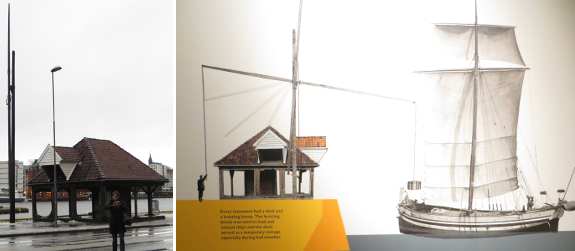
Das Tophandelsgut (bis zu 80, 90% des Exportumfangs Norwegens im hanseatischen Bereich) war… Stockfisch. Riesige Mengen. Im Hanseatischen Museum, das ich ebenfalls besucht habe, wurde die Bedeutung dieses Produkts sehr gut herausgearbeitet – wie auch die Herstellung. Überhaupt den Besuch wert: es ist im Finnsgaarden untergebracht, einem der Häuser. Im Erdgeschoss befinden sich hauptsächlich Infotafeln, aber überall sonst ist einfach das Haus und sein Interieur (wenn auch zusammengetragen) das Ausstellungsstück. Und wenn die wenigen Infotafeln dann auch noch ohne Umschweife erläutern, was man draußen so sieht und nicht wirklich einordnen kann… umso besser:

The main trade (about 80, 90% of exported goods from Norway to the Hanse) was… stockfish. Unbelievable amounts. The Hanseatic Museum which I also went to see and highly recommend goes to great lengths to explain the significance of stockfish and how it was made. The museum is housed in Finngaarden, one of the houses. On the ground floor there are mainly boards with information but everywhere else the exhibit are the house and its interior as such. And when an info board explains a mysterious building on the quayside that I was already wondering about… so much the better:
BRY15

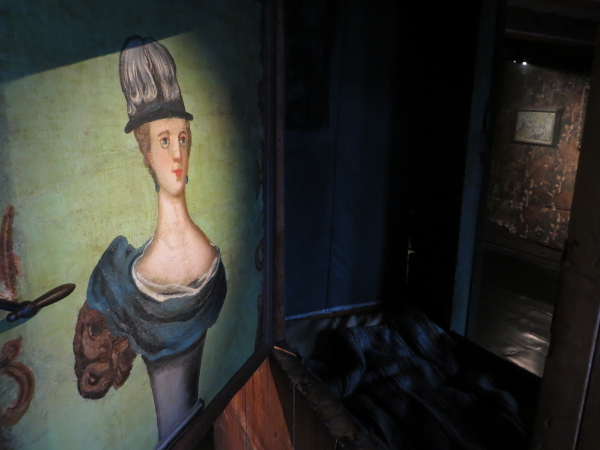
Das Haus war nicht nur von der Einrichtung her zeitgemäß: es war auch nicht geheizt und durch die Holzwände kam der norwegische Winter nur wenig gebremst rein… ich war mit Mütze und Handschuhen unterwegs. Aber so war es dann wohl auch „damals“. Das Bett – oder sollte ich sagen „Bettschrank“, denn man krabbelte rein und machte die Tür zu – vom Chef war dann auch irgendwo im Zentrum untergebracht, wo es am wärmsten blieb. Apropos: da gibt es doch allen Ernstes ein mittelalterliches Pin-up im „Bettschrank“ (kann mir bitte jemand den Fachausdruck mitteilen):

The house doesn’t only feature the interior of the period: it also – obviously – has no heating and the Norwegian winter made it through the wooden planks with only little resistance… I was exploring with a hat and gloves on. But I guess it’s only one more detail that serves to tell us what life was like back then. The bed – or should I say the „bed cupboard“ because you would get in and close the door behind you – of the boss was most conveniently located at the center, where it would be the least affected by the draft. Apropos: there’s actually a medieval pin-up in the „bed cupbaord“ (will somebody please let me know what they are really called):

BRY14

Warum man in Norwegen ein „Sommerschlafzimmer“ haben muss und das darüber hinaus nur über eine versteckte Treppe zu erreichen ist – die Antwort ist man mir schuldig geblieben. Was mir aber am besten gefällt ist, dass in der Anlage Leben drin ist. Jetzt im Winter gerade nicht allzu viel, viele Geschäfte haben geschlossen, aber man kann sich ja ein Bild machen. Ich empfehle hiermit höchst offiziell das Café Bastant in Jacobsfjorden, die Stücke Carrot Cake sind zwar klein, aber unerreicht. Und auch die Illustrationen von Gunvor – wo man sich in touristentechnisch ruhigen Zeiten auch noch nett unterhalten kann.

I never got the answer to the question why anybody would need a „summer bedroom“ in Norway that on top of the general question is also only accessible via a hidden staircase. What I really liked best is that there is actual life in Bryggen. Now in winter it’s a bit limited, I admit, as many stores are closed but you can get an idea. My official recommendation is Café Bastant in Jacobsfjorden. The the slices of carrot cake maybe smallish but divine. And then there is graphic art by Gunvor – a cozy little store where you can also have a nice chat (at least when there are no tourists around).

BRY10

Gelungen auch das Schild am Laden rechts unten auf der Collage oben:

I loved the sign on the door of the store that you can see in the lower right of the collage above:

BRY1

„Geöffnet im Großen und Ganzen täglich, aber keine festen Öffnungszeiten. Melde dich gerne unter… oder … @gmail.com Marghrete“ Es war für meinen Geldbeutel wirklich gut, dass sie nicht da war!

„Open more or less daily but without fixed hours. Be in touch at … or …@gmail.com Margrethe“ As for my finances, I consider myself lucky she wasn’t in!

BRY3

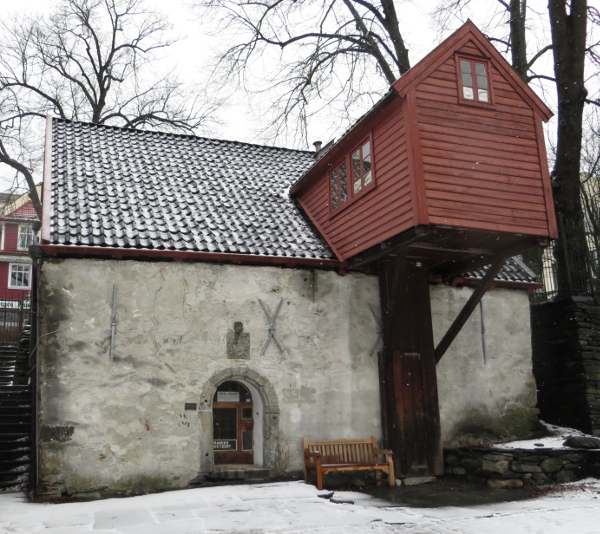
Aber es gibt ja nicht nur Geschäfte: Restaurants, Igenieurbüros, irgendein Jugendclub und alles mögliche andere. Was es allerdings genau mit diesem Gebäude auf sich hat, habe ich nicht ergründen können. Eine öffentliche Toilette wird es wohl kaum gewesen sein. Vielleicht wurde da was hergestellt, wo die Feuergefahr groß war? Aber warum dann nicht gleich in Stein bauen wie der Rest des Hauses… Sonst noch Ideen?

But there aren’t only stores: restaurants, engineering offices, some youth club and whatnot. Any ideas what the amazing architecture of the following building is about? I wouldn’t think a public restroom… maybe something was made there that could cause fires? But why not build everything in stone then, like the rest of the house?

BRY2

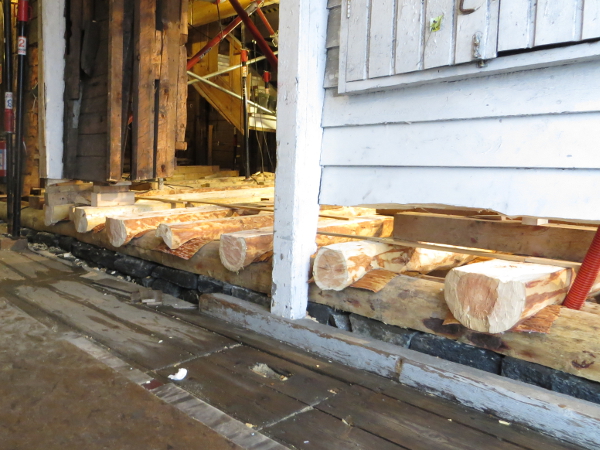
Eines der Häuser wird übrigens gerade erneuert, da kann man durch ein Gitter einen Blick reinwerfen und sehen, wie es gebaut ist. Wird.

One of the houses is currently undergoing a major overhaul. There’s a fence but you can look through it and get an idea of how these houses were constructed. Are being constructed.

BRY12

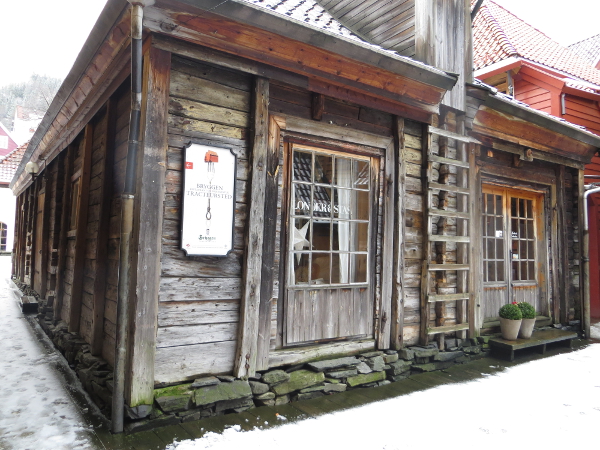
In Sachen Konstruktionsweise gibt auch dieses Doppelhaus einen guten Einblick (und zur Info: im rechten Teil werden wunderbare Hardanger Stickereiarbeiten verauft… allerdings auch nur ab April oder so):

As for construction methods I think this semidetached house is an interesting specimen, too (and just so you know: there are wonderful pieces of Hardanger embroidery on sale in the right part… but only as of April or so):

BRY11

Noch eine kurzen letzten Blick auf einige Details der Front:

And now for a quick look at some of the details on the front:

BRY9

Ich könnte ja immer weiter machen… vor allem mit Fotos. Dachte, für die paar Tage in Norwegen komme ich mit 4 GB hin. Naja, dann werden eben welche runtergeladen auf den Rechner. Viele Grüße aus Bergen!

I could go on and on and on… especially with pictures. I thought for those few days in Norway 4 GB should suffice. Well. I will have to download some on the computer. Love from Bergen!

Barbara

P.S.: For the sake of completeness (and due to excitement) I do have / want to mention that my vintage Christmas tag made top three over at Sparkles Christmas Challenges, yay! That’s a great start into the creative year 2016!

A Day in…. BERGEN!

BER2
Eine Bushaltestelle mit Aussicht… ich finde, das ist ein Superurlaubsfoto. Auch wenn es ein bisschen darüber hinwegtäuscht, dass die Bushaltestelle an einer zur Rush Hour stark befahrenen Straße steht, von wo der Verkehr von den Bergen vorgelagerten Inseln zur Stadt kommt. Und man sieht nicht richtig, dass ich erstmal quasi mit Schneeketten ausgestattet werden musste, um den Berg, auf dem meine Freunde wohnen, runterzukommen…

A bus-stop with a view… I think this is the perfect vacation shot. Even though (or because?) it fails to reveal that this bus-stop is actually on a very busy road, at least during rush hour, when people from the islands west of Bergen come to the city. And you can’t really tell that I actually needed to put on quasi snow chains to come down the very steep hill that my friends live on…

BER1

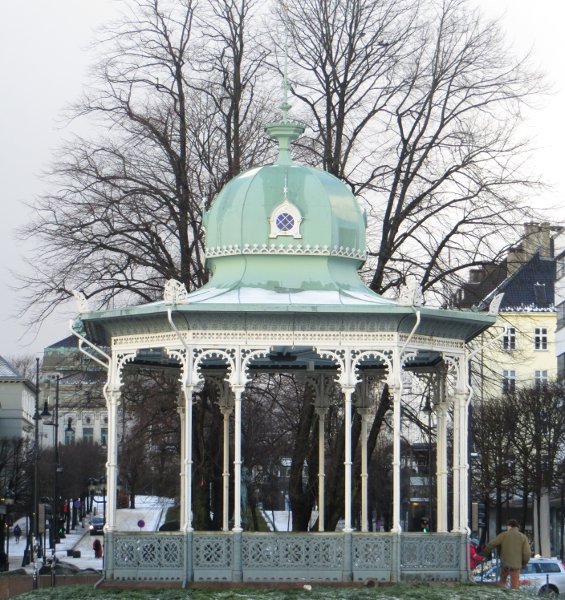
Ich finde die Dinger so praktisch – vielleicht schaffe ich sie mir tatsächlich noch an, für den einen Tag Winter in 5 Jahren, den Bonn erlebt. Es wäre der letzte Schrei. Im Zentrum dann direkt die Kamera gezückt und diesen Pavillion abgelichtet – wer weiß, wie lange das Wetter mitspielt. Eigentlich regnet es „immer“ (wenn es nicht schneit oder hagelt oder schneeregnet) – das wurde mir jedenfalls gesagt. Kein so großes Wunder, habe ich dann nachrecherchiert, kriegt Bergen doch gut 2000mm Niederschlag im Jahr ab. Meine Gegend in Deutschland so zum Vergleich ungefähr 850mm. Oder lasst uns das berühmt-berüchtigte England zum Vergleich nehmen: Schocker, Liverpool kriegt nur 796mm ab!

I’ve really come to like these things – maybe I even get myself a pair, for that one day in 5 years that winter finds its way to Bonn. It would certainly be all the rage. Less than a minute after I hopped off the bus in the center I took a picture of this pavilion – who knows how long the sun will be with us. It really „always“ rains (if it’s not snow, hail or slush that’s coming down) – at least that’s what I was told. Not too much of a surprise: I read that bergen gets 2000mm precipitation a year. Just to give you an idea: the area in Germany I come from averages about 850mm. Or let’s compare with notorious England: oops, Liverpool only gets 796mm!

BER3

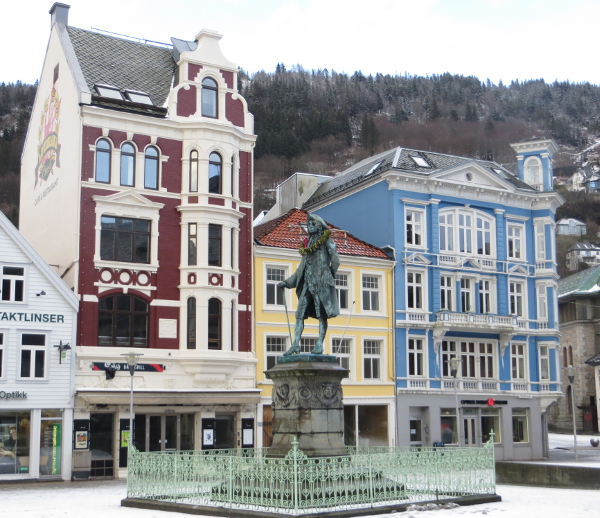
Ich mache mich auf den Weg zum Hafen… in Teilen eine Schlitterpartie, weil ich die Spikes „in der Stadt“ dann doch ausgezogen habe. Erst bin ich nicht so angetan, große, nicht wirklich ansprechende Häuser, ein riesiger Platz mit einem obskuren Denkmal. Aber dann, den Hafen schon in Sichtweite, wird es farbenfroher und die Frage stellt sich: reicht das Wetter, um die Fløyenbahn zu nehmen, für einen Blick auf Bergen von oben?

I try to find my way to the harbor… a slippery undertaking in parts because I somehow decided to take off my „spikes“ in the city. At first I’m not very impressed, large, not really eyecatching houses, a large square with an obscure mounment. But then, in spitting distance from the harbor, things start to get colorful and I wonder: does the weather hold – and make a visit up Mount Fløyen worthwhile? I just love the bird’s eye view of things!

BER4

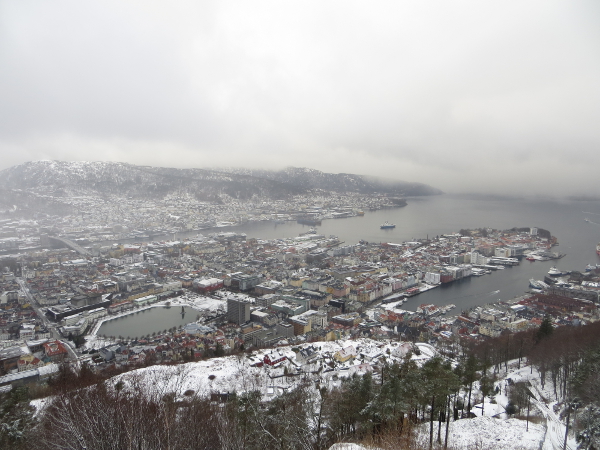
Ja, ich mache das jetzt – schließlich ist der Himmel noch blau! Eine halbe Stunde später ist der Himmel nicht mehr blau, aber man kann immerhin noch etwas sehen:

Yes, I will give it a try – the sky is still blue after all! 20 minutes later the sky is not blue anymore but I can still see the city:

BER5

BER6Die paar Minuten mit der Bahn und man ist in der Natur. Jogger, Langläufer, Wanderer, Familien mit Kindern, die auf diesen… hmmmm… wir nannten sie früher „Arsch-Bobs“ im Wald wieder runterrasen, ältere Leute, die zu Kaffee und Kuchen ins Café gehen… und Barbara, die eine kurze Runde durch den teils knietiefen Schnee dreht… bevor der Blizzard kommt!

A few minutes on that funicular and you are transferred into nature. There are joggers, cross country skiers, hikers, families with children who go down the hill through the forest on these flat plastic things with a handle (don’t know what they’re called), older people who came to enjoy the view over a coffee and a piece of cake at the café… and Barbara, who is on a short round through the (in parts) knee-deep snow… before the blizzard hits!

BER7

Ein paar Minuten warten, gucken, ob sich das Wetter ändert… aber es schien nicht so. Und gerade den Tag begonnen, kann man doch nicht gleich eine Stärkungspause einlegen?! Also dann doch wieder runter. Aber es ist ja nicht so, als gäbe es sonst nichts zu sehen. Einmal wieder unten wird das Wetter natürlich gleich wieder besser und ich entscheide erstmal, an der Hafenfront Bryggen langzugehen.

I wait a few minutes, try to figure out whether the weather is going to change… but it didn’t look like it. Having coffee and cake just after I had started my day didn’t seem the right thing to do, either. But then it’s not like there isn’t anything else to see. Once back down, of course the weather improves almost instantly, so I decide to stroll along the Bryggen harborside for a start.

BER8

Es war nicht wirklich auf irgendeinem Plan, den ich eh nicht hatte, aber es stellt sich raus, dass die Island Clipper ein „Open House“ hatte und ich kam gerade richtig. Aso rauf und rein da! Es war ganz gut besucht (200, wie ich hier nachlas), so dass es etwas dauerte, bis ich mal rausfinden konnte, was dieses Schiff und seine Besatzung eigentlich tun. Es wird zur Versorgung von Bohrinseln eingesetzt.

It wasn’t really on my non-existent plan but it turned out that the Island Clipper had an „Open House“ that afternoon and I got there just in time. So up onboard I went. Apparently, it had all been organized quite spontaneously but there were quite a few visitors (200, as I found our here).

BER10

Zuerst ging es auf die Brücke, wo sich schon so ein bisschen ein Enterprise Feeling breit machte. Und all die Dinge, über die man sich nie Gedanken macht (warum auch)… zum Beispiel, dass solche „Steuerungszentralen“ vorne und hinten (heißt das wohl bug- und heckwärts??) sind, je nach angesagter Fahrtrichtung. Zig Bildschirme mit frag mich was. Sonar. Ölvermutzungsfinder. Und das sind nur die, auf die ich mir einen Reim machen konnte. Und noch so ein altmodisches Logbuch, ungefähr A3. Jedenfalls dachte ich dann, okay – das war dann wohl jetzt das Highlight gleich am Anfang. Falsch.

The only partially guided tour started on the bridge where I got a distinct Enterprise feeling. And then all those things that you never think about (why would you)… for example, that these „control centers“ are both in front and in back – or should I say towards the bow and towards the stern? – depending on which direction the ship is going. Numerous screens showing all kinds of data. Sonar. Oil spill detector. And these are only the ones I could make sense of. And an old-fashioned logbook. I’m talking PAPER. Anyhow, I thought that was the highlight right at the start. Wrong.

BER12

Aus unerfindlichen Gründen habe ich nicht das Notizbuch gezückt – vielleicht, weil mich so ziemlich von Anfang an die diversen Volumina fasziniert haben. Alle Info, die ich hier jetzt unterbringe, ist deswegen der Skipsrevuyen entnommen. 740m³ Frischwasser sind an Bord. 1100m³ Diesel. 2500m³ Ballastwasser. 3300m³ „Schlamm“ (mud) – was wohl die euphemistische Umschreibung für ein Chemikaliengemisch ist, das beim Bohren gebraucht wird. Ich musste dann auch nachfragen: „Schlamm? Wird der hingebracht oder abgeholt?“ Ja, es waren in der Sache firmere Menschen an Bord.

For reasons unknown, I did not get out my little (paper!) notebook to jot the info down – maybe because right from the start I was a bit overwhelmed by the sheer size of it all. All the info (the numbers) that follow are therefore taken from Skipsrevuyen. 740m³ fresh water is on board. 1100m³ diesel fuel. 2500m³ water ballast. 3300m³ „mud“ – what apparently is a euphemistic word for a mix of chemicals that’s used in drilling. You would have heard me ask questions like: „Mud? Do you take it to the rigs or do you bring it back?“ Yes, there were many people aboard who clearly had much more of clue than I did!

BER11

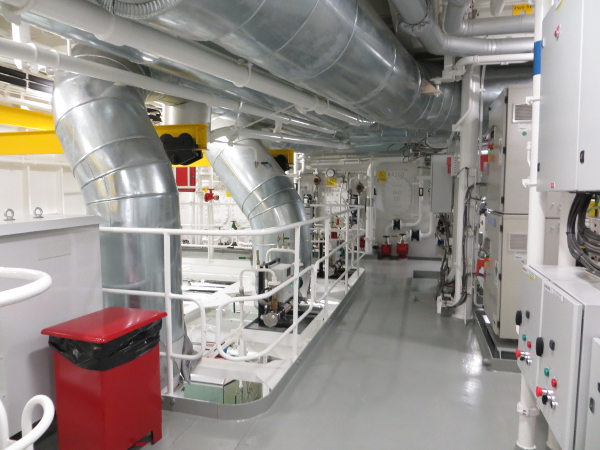
Zement wird in großen Mengen transportiert. Das Deck hat 1000m², wo 2500 Tonnen Cargo (in Containern) untergebracht werden können. „Wie oft wird denn eine Bohrinsel mit so einer Ladung versorgt?“ Kommt drauf an, aber einmal die Woche kann es schon sein. Läuft halt im Moment alles nicht so, weil die Ölindustrie kränkelt. Deswegen sind sie ja auch im Hafen und haben Zeit für ein „Open House“. Also, der Maschinenraum „und angeschlossene Bereiche“ hat mich am meisten fasziniert. Es war dann auch egal, dass dem engagierten Guide irgendwann die englischen Fachtermini ausgingen: „Machen Sie sich da keinen Kopf – es würde mir wahrscheinlich eh nichts sagen und mich selbst auf Deutsch im Dunkeln lassen!“

They also transport cement in large quantities. The deck has 1000m² to hold 2500 tons of cargo (in containers). „How often does an oilrig need a supply trip like this?“ Depends, but it can be weekly. It’s just not quite as busy as it used to be at the moment, the oil industry is shrinking. That’s why they are anchoring in Bergen and have time for on „Open House“. Anyhow, the engine room and „affiliated areas“ really were the most fascinating part. It really didn’t matter when the guide at some point ran out of the English technical terms for things: „Don’t worry – I probably couldn’t make sense of it anyway… even in German!“

BER14

Neben der Kapitänskajüte hatten wir so Einblick in so ziemlich alles: andere Kajüten, die Messe, die Küche, Konferenzräume, Aufenthaltsräume, OP, Fitness-Studio… Keine Ahnung, vielleicht gibt es ja noch viel mehr, was ich nicht für möglich halten würde. Insgesamt würde ich sagen: da lässt es sich aushalten. Und wat kost‘ der Spass? Wohl so um die 40 Mio Euro.

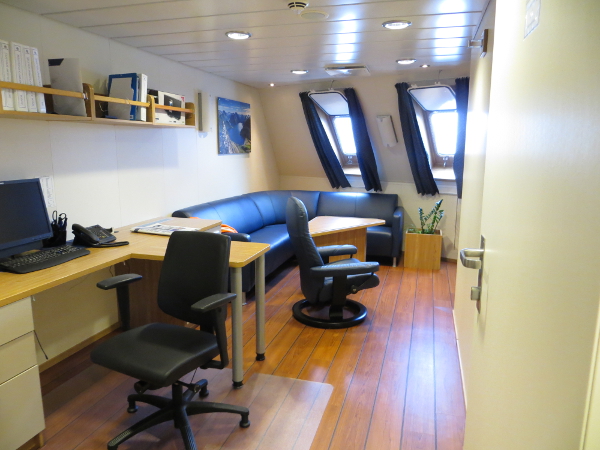
That’s the captain’s cabin but we got to see just about everything else, too: other cabins, the mess room, the kitchen, meeting rooms, sitting rooms, an operating room, a gym… I don’t know, maybe there’s lots more… In all I’d say: you could be far worse off. And what does it cost? It seems the bill came to about 40 million Euros.

BER13

Abschließend habe ich mir dann doch noch einen guten Kaffee und noch besseren Kuchen gegönnt, bevor ich mich in dieser Abendstimmung gegen 16 Uhr auf den Heimweg gemacht habe. Morgen ist auch noch ein Tag!

After that visit I did treat myself to a good coffee and an even better slice of cake before I went home in this nice light at about 4 pm. Tomorrow will be another day!

Barbara

Ein Tag / A day in HELSINKI

HELS1
Es gab noch einen weiteren Tag in Kuopio bzw. dem Skigebiet Tahko, wo wir u.a. eine kurze Waldwanderung im knietiefen Schnee gemacht haben… immer auf der Suche nach einem Elch. Ich hatte aufgrund der aus Sicht eines Elches sicher lecker aussehenden Baumbewüchse nicht unbegründete Hoffnung, dass wir einen sehen würden. Es blieb bei Hasen- und Fuchsfährten. Doch meine Gastgeber haben alles gegeben!

There was one more day in Kuopio and the ski area Tahko respectively – where we went on a short hike in the woods in knee-deep snow, always looking for moose. Thinking that moose would probably consider the plants growing on the trees to be yummy, there was reason for hope. But all we saw were rabbit and fox tracks. But my hosts gave it all they had!

HELS6

Dann ging es per Zug Richtung Helsinki, wo ich zwei weitere Nächte verbringen würde. Vier Stunden weiter südlich war es SOOOO kalt! Ein ganz fieser Wind kam da über die Ostsee und schon auf dem Weg vom Bahnhof zum Hotel musste ich in einem fantastischen Bastelladen Halt machen und mich aufwärmen. Kurz habe ich die anstehende Creativa vergessen…
Then I took the train to Helsinki where I was to spend two more nights. Four hours to the south…. and SOOOO much colder! There was a real nasty wind coming in from the Baltic Sea and on my way from the train station to the hotel I had to stop at a marvelous craft store to warm up. And for a few moments (or some more) I totally forgot about the upcoming Creativa convention…

HELS2

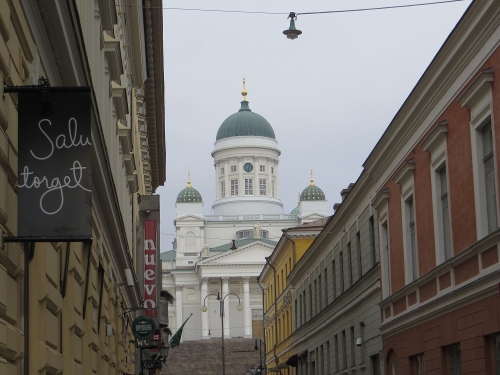
Im Sommer 2005 war ich schon mal in Helsinki (und auch in Kuopio), der heiße Sommer, als die Leichtathletik WM dort stattfand. (Und bei Kuopio eine Hochzeit!) Da habe ich mir natürlich den Dom oben auch schon angesehen, aber es war insgesamt ein total anderes Erlebnis. Aber dieses Mal habe ich in der Touri-Info eine Broschüre für eine selbstgeführte Tour zu den „Perlen des Jugendstils“ in Helsinki aufgetan. Eigentlich sogar zwei, eine per pedes, eine per Straßenbahn.

I had been to Helsinki (and Kuopio!) once before, in the summer of 2005, when they hosted the Track and Field World Championships (and there was a wedding to attend near Kuopio!). Back then, I had already had a look at the cathedral above but in all it was of course a completely different experience. This time, though, I found a brochure for a self-guided tour to the „Pearls of Art Nouveau“ in Helsinki at the tourist office. There were in fact two tours, one to walk and one to go on on the tram.

HELS3

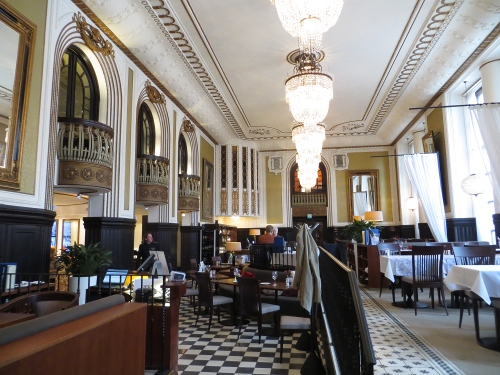
Schon der zweite Stop brachte eine Innenansicht: der Jugendsali oben, ein überdachter Innenhof, als Banksaal entworfen. Er wird heute als Café benutzt und man kann sich von den zahlreichen architektonischen Details dauerhaft von seinem Cappuchino ablenken lassen.

The second stop of the tour already offered a look at the interior of a building: the Jugendsali above, a covered courtyard that is used as a café today. There are numerous architectural details that can distract you from your cappuchino for good.

HELS4

Gleich in der Nachbarschaft, noch in der Nähe des Kauppatori, des Marktplatzes am Hafen, war Pörssitalo, die Börse zu bewundern. Von außen für mich eher wie ein Bunker anmutend (die Broschüre sagt, „die massiven hellen Granitwände […] strahlen eine dezente, Vertrauen erweckende Würde aus“), kann man innen den burgartigen Innenhof oben bewundern.

In the neighborhood, still close to the Kauppatori, the market square by the harbor, I went to admire Pörssitalo, the stock exchange. To me, the outside resembled a bunker (the brochure said the „massive, bright granite walls exude a restrained dignity, inspiring confidence“) but the inside was like the courtyard of a castle as you can see above.

HELS12

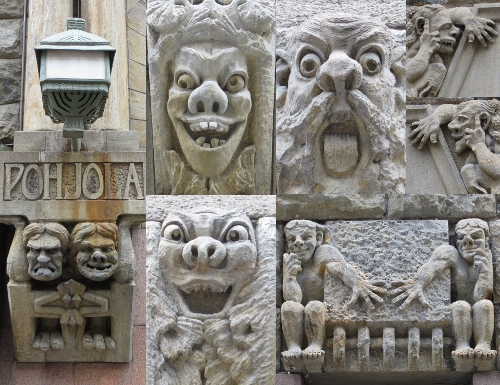
Das Pohjolan Talo oben, ein Versicherungsgebäude in einer geschäftigen Einkaufsstraße, bietet ebenfalls schon an der Fassade ausreichend Gelegenheit, sich länger zu beschäftigen:

Pohjolan Talo, an insurance building in a busy shopping street (above), will keep you occupied for a while as there is a lot to discover on the facade already:

HELS7

Das Hotelli Seurahuone war zwar eingerüstet, man ließ mich aber auf Nachfrage die Linse kurz in den noblen Restaurantsaal halten, der „einen Hauch der dezenten Opulenz vergangener Tage [ausstrahlt].“

Hotelli Seurahuone was unfortunately covered in scaffolding but I was granted a quick look into their fancy restaurant hall, described as exuding the restrained opulence of bygone days.

HELS8

Direkt gegenüber Rautatieasema, der Bahnhof – Järnvägsstation auf Schwedisch (Finnland ist ja zweisprachig):

Right across from it Rautatieasema, the train station – Järnvägsstation in Swedish (Finland is bilingual):

HELS14

Den Bahnhof habe ich ca. 25x in unterschiedlichsten Lichtverhältnissen fotografiert… Eigentlich sind die lampentragenden Herren ja ziemlich abgefahren, aber der gesamte Komplex, inkl. des Uhrenturms, ist schon faszinierend. Innen gibt es den wahrscheinlich schicksten Burger King des Planeten:

I took about 25 pictures of the train station at different times of the day… Those fellas carrying the lamps are quite strange but the whole complex, including a clock tower, is really captivating. Inside, you will find the fanciest Burger King on the planet:

HELS5

Das Nationaltheater ist direkt daneben am Bahnhofsplatz und auch eine Augenweide.

The national theater is right next to it on the square – and a feast for the eyes, too.

HELS10

Es kann aber auch ganz anders kommen, mit feinen Verzierungen in Gold am Wilkmanin Talo.

But Art Nouveau can have a different look, too, with delicate decorations in gold:

HELS11

In der Gegend bin ich auch auf eine der abgefahrensten Schaufensterdekos überhaupt gestoßen:

It was in that area that I came across one of the most bizarre decorations of a shop window ever:

HELS9

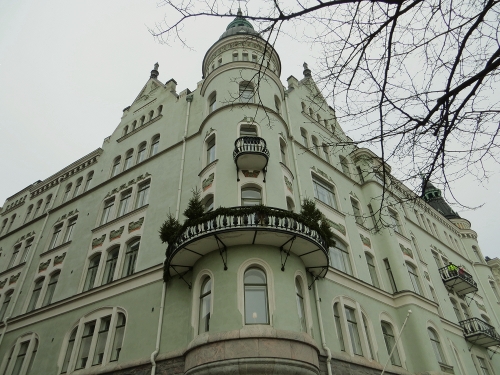
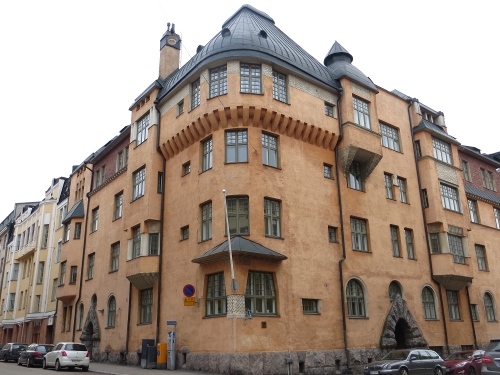
Direkt am Meer liegt das folgende Wohngebäude, das zur begehrstesten Adresse in Helsinki gewählt wurde:

Right by the sea you will find the following building which was voted the most desired address in Helsinki:

HELS13

Bevor ich mir dann noch den fast ausschließlich im Jugendstil bebauten Stadtteil Katajanokka zu Gemüte geführt habe, war ich noch im Café Johan & Nyström in der Kanavaranta 7C. Ich muss sagen, es war ein wirklich außergewöhnlicher Latte und in netter Atmosphäre… aber der „Kuchen“… war die teuerste Überflüssigkeit (7 EURO!!!), die ich jemals zu mir genommen habe. Man hatte mich vorgewarnt, er sei „raw“, also nicht gebacken. Ohne Ei, ohne Mehl. Und wahrscheinlich war er für einen biologischen, veganen, lactose- und gluten-freien Magenfüller perfekt. Aber das ist einfach nicht meins. Nun jedoch einige Eindrücke:

Before I went on to the Katajanokka neighborhood which is almost 100% Art Nouveau, I took a break at the Johan & Nyström café on Kanavaranta 7C. I have to say, it was an exceptionally tasty latte in a cozy setting… but the „cake“… was the most expensive redundancy (7 EUROS!!!), I’ve ever had. I had been warned, it would be a „raw“ cake. No eggs, no flour. And very likely it was an oragnic, vegan, lactose- and gluten-free delicacy. But it just doesn’t work for me. And now for a few impressions:

HELS16

HELS17

HELS15

Zum Blues-Konzert auf der vorgelagerten Insel Suomenlinna (bzw. zur Fährfahrt dorthin) konnte ich mich nicht mehr aufraffen. So habe ich den Tag im Kino mit NEBRASKA beendet – ein mehr als gutes Alternativprogramm! Und wann fahrt ihr mal nach Helsinki??

I could not rally to go to the planned blues concert on the island of Suomenlinna that night (or face the ferry ride) and instead decided to finish the day at the movies, seeing NEBRASKA – which I did not regret one minute! So – when will you go to Helsinki??

Barbara

Noch ein Tag / Another day in KUOPIO

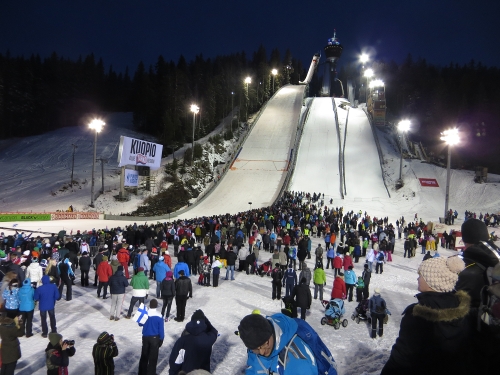
KUO2_8Nachdem ich im vorherigen Eintrag gesagt habe, das Kuopio als Stadt vielleicht nicht so der Touristenmagnet ist, muss ich ja auch anmerken, was daran die Faszination ausmacht… Das Bild oben sagt hoffentlich schon alles. Die Landschaft ist atemberaubend. Das ist der Blick von neben den Schanzen auf den Kallavesi See, der komplett zugefroren ist. Lang- und Schlittschuhläufer, Eisfischer, Spaziergänger und hin und wieder ein Motorschlitten vergnügen sich darauf.

After I explained in the previous post why Kuopio as a city might not be a tourist magnet, I will today explain what the fascination is… Maybe the picture above says it all already. The landscape is breathtaking. This is the view of frozen Lake Kallavesi from right next to the jumps. Cross country skiers, ice skaters, ice fishers, pedestrians and the odd motor sleigh enjoy its frozen vastness.

KUO2_1

Neben dieser Schanze also hat man diesen Blick – und den sollten die Skispringer da oben noch besser gehabt haben. Die Kamera ist der Wahnsinn. Wie auch immer: ich könnte jetzt so tun, als wäre dieser Tag ausschließlich dem Skispringen gewidmet gewesen. Das war er nicht. Wir waren vorher noch im Stadtmuseum (zweiter Ex-Elch, aber immerhin ausgestopft und von beeindruckender Statur) und im Museumsviertel Alt Kuopio, wo man alte Holzhäuser und ihre Ausstattung zusammengetragen hat. An solchen Orten halte ich mich ja immer gerne auf. Aber das alles würde den Umfang dieses Eintrags sprengen.

It’s right next to this jump where you get that view – and the jumpers way up on top should have had an even better one. This new camera is just great! Anyhow, I could pretend that going to see the competition was all we did that day but that would be a lie. In the morning we went to the City Museum (second ex-moose but mounted and of impressive size) as well as to the museum quarter of Old Kuopio where old wooden houses and their interiors have been set up and preserved. I love places like that. But all that would be too much for this post.

KUO2_6

Das Skispringen war ein ganz wunderbares Erlebnis und das zum großen Teil glaube ich auch deswegen, weil da nicht Zehntausende aufgeschlagen sind und man sich für eine Wurst (die hier im Papiertütchen serviert werden) 40 Minuten anstellen musste. Kein Gedränge, jeder hatte Platz und man kam gut mit den Leuten ins Gespräch. So u.a. mit einer Gruppe, die ein Plakat für Kamil Stoch und Severin Freund hatten, eine japanische Flagge und in einem Fall slowenische Kriegsbemalung – eine bunt gemischt Gruppe von Erasmus-Studenten.

The competition was a truly wonderful experience and I believe that that was at least in part due to the fact that there weren’t tens of thousands attending and you had to stand in line for 40 minutes to get a sausage (which, by the way, is served in a paper pouch here). No pushing and shoving, there was room for everybody and it was easy to start a conversation with people. Like with the group that had a banner for Kamil Stoch (from Poland) and Severin Freund (from Germany), a Japanese flag and a face painted with the Slovenian colors – a truly mixed group of Erasmus exchange students.

KUO2_7

Die Bedingungen für das Springen waren, ohne über die Details informiert zu sein, glaube ich ideal. Oben schien es so gut wie windstill und da die Weiten teilweise beeindruckend waren, muss es gepasst haben. Auch in Finnland bricht das gesamte Publikum übrigens in Jubelschreie aus, wenn Noriaki Kasai in der Luft ist.

The conditions must have been ideal – of course I don’t know the details ut it looked as if there was almost no wind at all at the very top and as some of the jumps were really impressive it must have all fallen into place. In Finland, too, EVERYBOBY cheers for Noriaki Kasai from Japan, by the way.

KUO1_13

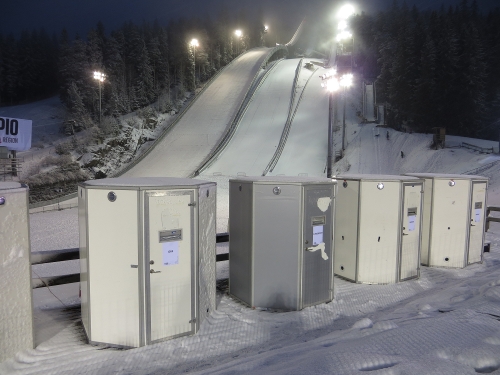
Die Boxen oben hielt ich zuerst für luxuriöse Dixie-Klos – womöglich mit Ausblick?! – aber es waren die Kommentatorenkabinen. Die hatten sicher einen guten Tag, denn der Wettbewerb kam ohne Verzögerungen aus und war spannend bis zum allerletzten Springer – besonders natürlich aus deutscher Sicht. Severin Freund hat es ja knapp nicht geschafft, aber über den zweiten Platz haben wir uns genauso gefreut. Mit den Finnen habe ich allerdings gelitten, als Ville Larinto, der nach dem ersten Durchgang sehr gut auf Platz drei lag, dann im zweiten alles vergeigt hat und nur 21. wurde.

I first thought these boxes above were luxurious portaloos with a view – but they were of course for the commentators of the different stations. And they probably had a good day reporting as the competition was without delays and a thriller until the very last jumper had come down – especially from a German perspective. Severin Freund missed victory by only a scratch but we were celebrating the runner-up just as if he’d won. I have to say I suffered with the Finns when Ville Larinto, third after the first round, ruined it all with his second jump and went down to 21st.

KUO2_2

KUO2_3

Ich war nicht mit einem Presseausweis ausgestattet und habe direkt vor dem Podest gestanden, wie diese Fotos vielleicht glauben machen. Ich war eher so 30 Meter weg. Hatte ich erwähnt, wie sehr mich die Kamera begeistert?! 😉 Deswegen auch schnell noch ein paar Portraits von Teilnehmern am Puijon Kisat 2014, wie das hier heißt. Puijo ist der Berg und in der Kombination heißt das sowas wie die Puijo Wettbewerbe. Nein, nein, das Skipringen an sich zaubert mir ein Lächeln ins Gesicht: mäkihyppy. Hört sich an wie hüpfen. Eine leichte Untertreibung. Und, kennt ihr alle?

I was not an accredited press photographer standing right in front of the podium as these pictures might make you believe. I was maybe about 30 meters away from it all. Did I mention how much I like that new camera?! 😉 And that’s why I’ll treat you to a few portraits of participants in the so-called Puijon Kisat 2014. Puijo is the mountain and in this combination it means something like the Puijo Competitions. The word for ski jumping in general is mäkihyppy… which is sort of funny to the German ear as it sounds a bit like hüpfen, to hop. Which would be quite an understatement. So – do you know any of the jumpers?

KUO2_10

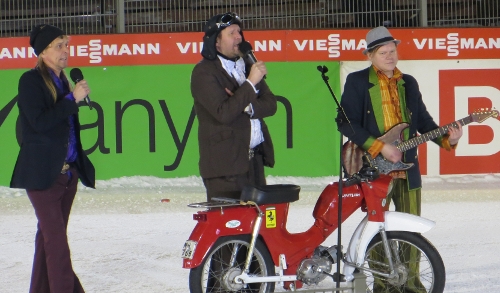
In der Pause zwischen den beiden Durchgängen kam es zu einem interessanten Einblick in die finnische Unterhaltungsindustrie. Diese drei Herren boten einen Song dar, der wahrscheinlich eine Mischung aus dem Holzmichel und der Polonaise ist (was es mit dem Mofa auf sich hat, weiß ich nicht). Ich habe davon auch ein Video, aber leider kooperiert mein Programm zu dessen Bearbeitung gerade nicht. Innerhalb weniger Augenblicke war die halbe Zuschauerschaft jedoch voll aktiv mit dabei.

The break between the two rounds afforded an interesting insight into the Finnish entertainment industry. These three gentlemen performed a song that immediately got people on their legs to form a conga line (don’t ask me what the motorcycle is about). I also have a video of this but unfortunately, the program for cutting etc. isn’t cooperating at the moment.

KUO2_5

KUO2_4

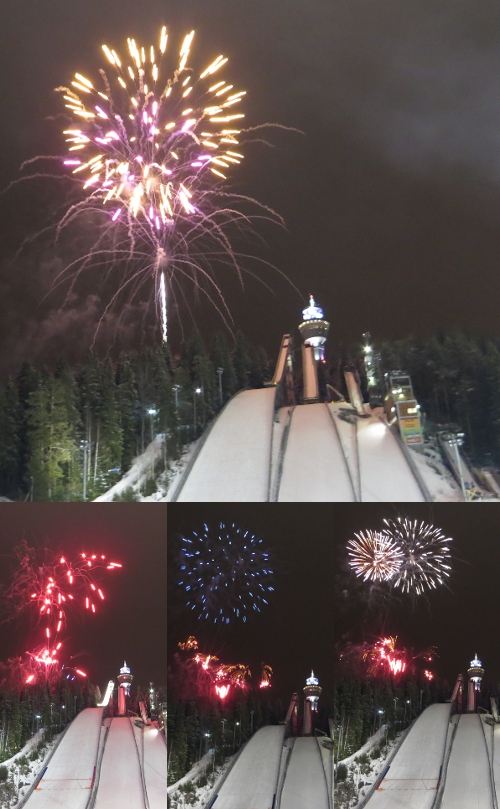
Der wirklich krönende Abschluss dieser denkwürdigen Sportveranstaltung war ein Feuerwerk über dem Puijo-Turm und den Schanzen. Und es war weit genug weg, so dass ich es ohne größeren Herzklabaster genießen konnte.

The finish of this memorable experience was a fireworks display above the Puijo Tower and the jumps. And it was far enough away for me to be able to enjoy it and not suffer a series of heart attacks.

KUO2_9

Das war also mein Highlight des Profisports für 2014. Die Planungen für 2015 können beginnen…

So this was my highlight of professional sports for 2014. Let the planning for 2015 begin!

Barbara

PK2014_2

Ein Tag / A day in KUOPIO

KUO1_4
Du weißt, du bist in Finnland, wenn schon am Flughafen an jedem Kiosk die Mumins zu finden sind. Wenn es neben „Achtung: Elch!“ auch „Achtung: Skifahrer!“-Schilder gibt. Wenn Geschäfte Namen tragen wie Huonekalukeskus und Garfield Karvinen heißt. Wenn mindestens 8 spindeldürre Birken auf einem Quadratmeter stehen und das, soweit das Auge reicht. Und wenn an der Markthalle in Kuopio, siehe oben, Kauppi Halli steht.

You know you are in Finland when you find Moomins at every airport kiosk. When there are not only „Watch out for moose“ but also „Watch out for skiers“ signs. When there are at least 8 spindly birch-trees to the sqaure meter and for as far as the eye can see. When stores bear names like Huonekalukeskus and Garfield strangely goes by the name of Karvinen. And when the Kuopio market hall, see above, is called Kauppi Halli.

KUO1_1

Oder auch, wenn an den Ständen in der Markthalle Dinge stehen wie Herkkukauppa Pikkumakkee. Es muss mit Süßwaren zu tun haben. Jedenfalls bin ich ins ca. 106.000 Einwohner zählende Kuopio gekommen, um meine Freundin Anna und ihre Familie zu besuchen. Wir kennen uns seit einem gemeinsamen Austauschjahr in Schweden vor 15 Jahren.

Or, when you see stalls called Kerkkukauppa Pikkumakkee. It must have something to do with candy. Anyhow, I came to Kuopio, a city of about 106,000 inhabitants, to see my friend Anna and her family. We first met during an exchange year at Lund University in Sweden 15 years ago.

KUO1_5

Das Stadtzentrum ist rein von der Bebauung her nicht gerade als Touristenmagnet geeignet. Die über die Jahrhunderte das Stadtbild prägenden Holzhäuser sind entweder abgebrannt oder man entschied sich bewusst zum Abriss, um der Moderne Einzug zu gewähren. Kauf-, Büro- und Wohnhäuser im wenig ansprechenden Betonbaustil der 1950er bis 1970er Jahre. Aber hier und da gibt es auch noch solche Schätzchen:

The city center won’t easily work as a tourist magnet. For centuries, there were beautiful wooden houses but they either burned down or it was decided to demolish them in order to let „modernity“ take root. Department stores, office and residential buildings all in the less than appealing concrete architecture of the 1950s to 1970s. But every now and then you do still come across treasures like this one:

KUO1_11

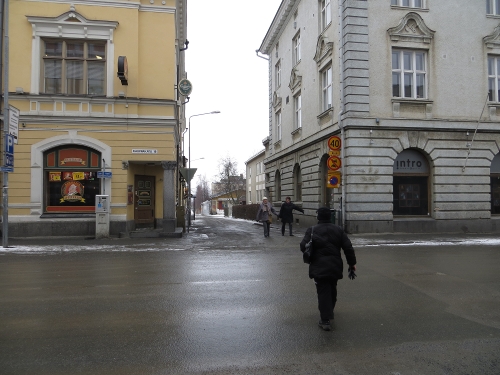
Die Verkehrsführung im Stadtzentrum war ziemlich interessant: Autos befahren nur jede zweite Parallelstraße, die anderen sind Fußgängerstraßen. Am Anfang war es etwas verwirrend, die Leute in aller Ruhe mitten auf der Straße trotten zu sehen, als gehöre sie ihnen… was sie ja in gewissem Sinn auch tut. Und an diese Lösung gewöhnt man sich gern.

There’s an unusual way of traffic routing downtown: cars are allowed only in every other parallel street, the others are pedestrians only. It was quite confusing in the beginning to see those pedestrians trotting in the middle of the street as if they owned it. Which, in some way, they do. And it’s a set-up you learn to appreciate really quickly.

KUO1_3

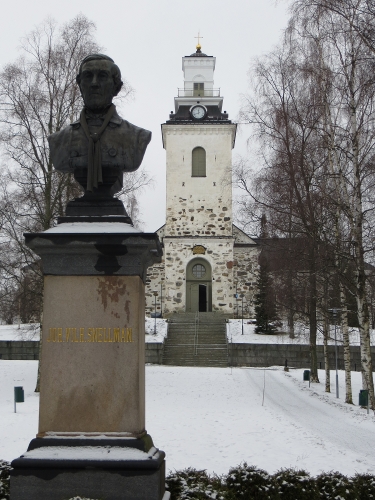
Ein weiteres städtisches Highlight ist der Dom, hier vom darunter liegenden Park aus betrachtet, mit der Statue von Johann Vilhelm Snellman, einem finnischen Philosoph und Staatsmann.

Another highlight is the cathedral. I took the picture from the park right below it. You can also see the statue of Johann Vilhelm Snellman, a Finnish philosopher and statesman.

KUO1_2

Ein weiterer Grund für mein Kommen war das an der Puijo-Schanze stattfindende Weltcup-Skispringen und auf unserem Stadtrundgang haben wir dann zufällig auch das Hotel der Skispringer gefunden… auch wenn ich das Foto erstmal wegen des Namens des Hotel gemacht habe – die Anzüge in den Fenstern habe ich erst später bemerkt!

Another reason for my coming here was the Ski Jumping World Cup at Puijo and as luck would have it we passed the hotel of the ski jumpers downtown (look for the suits of the ski jumpers hanging in the windows):

KUO1_6

Zum Training wollten wir zwar noch nicht wirklich an die Schanze, hatten aber in diesem stadtnahen Freizeitgebiet sowieso noch anderes vor, so dass wir uns erstmal an den Bus geheftet haben, der vor dem Hotel abfuhr.

We hadn’t really planned on being at the jump (located in a recreational area close to the center) for the training sessions already but now that we had the chance we started on a little „stalking“ of the bus that was just leaving from the hotel.

KUO1_10

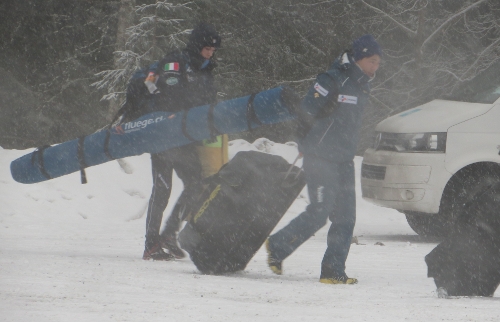
Das Wetter machte alsbald eher weniger Spaß für Außenaktivitäten… ich war wahrscheinlich der einzige, der sich über den Schnee gefreut hat, aber zum Skispringen lud es nun wirklich nicht ein. Und dem Bus entstiegen dann auch nur unbekannte italienische Springer.

The weather had turned and wasn’t really inviting for outdoor activities of any kind, let alone ski jumping. I might have been the only living soul welcoming the snow. And there were only unknown Italian ski jumpers exiting the bus.

KUO1_9

Wir blieben aber wie gesagt im Gebiet und machten uns auf den Weg zum Konttila Hof. Da kann man gemütlich einen Kaffee trinken und ein Stück Kuchen dazu nehmen, sich mit Hühnern, Schafen und einem Pferd anfreunden und sich in einem weiteren ehemaligen Wirtschaftsgebäude über Geologie, Landwirtschaft in früheren Tagen und anderes informieren.

But as I said we stayed in the area and found our way to the Konttila farmstead. There’s a little, I’d say alternative café and you have the chance to make friends amongst the chickens, sheep and horse. One of the former farm buildings houses a tiny museum where you can learn about the geology of the region or the way farming was done in the old days.

KUO1_8

Und wenn man einen Schlitten und ein Pferd zusammenbringt, kann man auch noch eine Schlittenfahrt im verschneiten Winterwald machen! Das war eine in Teilen ganz schön rasante Angelegenheit. Die Elchsuche verlief derweil erfolglos – der Ex-Elch im Café zählt nicht.

And if you add a sleigh and to a horse you can even go on a sleigh ride in the snowy woods! That was, in part at least, quite a racy undertaking. The search for moose was without success that day as the ex-moose in the café did not count.

KUO1_7

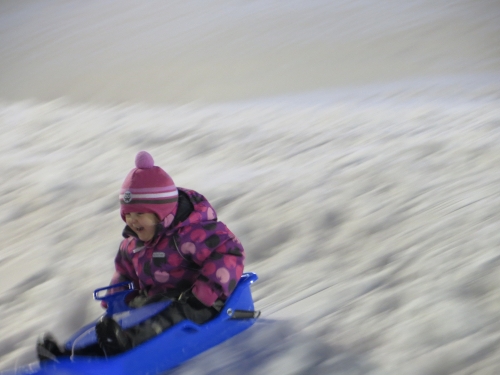
Zurück an der Schanze haben wir noch den letzten Rest des Trainingsdurchgangs mitbekommen. Die Zeit bis zur Qualifikation wurde uns aber auch nicht lang. Die Abenteuerlustigen unter uns schossen den Berg hinab (und ich glaube, sie hätte ihren Bob auch die Großschanze runtergesteuert, wenn wir es vorgeschlagen hätten)…

Back at the jump we were right in time for the very last minutes of the training. We all found our ways to pass the time until the qualification jumps. The bolder amongst us zoomed down the hill (and I think she would have steered her bob down the large hill as well, had we suggested it)….

KUO1_12

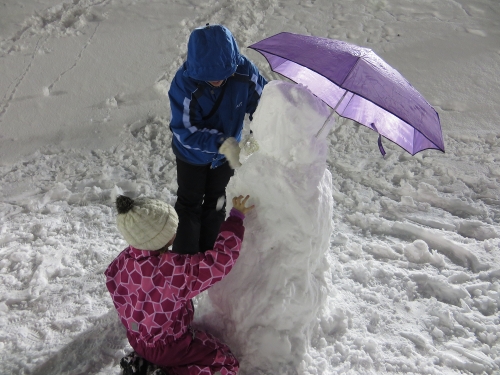
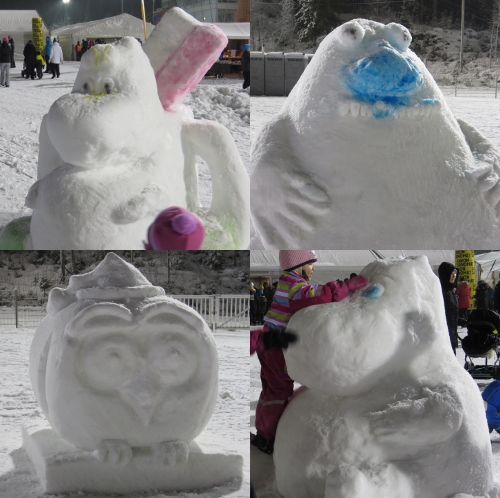
… während andere den eher beschaulichen Bau eines Schneemanns bevorzugten.

… while others preferred the more contemplative creation of a snowman..

KUO1_14

Mein wachsames Auge sah schon den starken Seitenwind die Fahnen auf der Spitze des Sprungturms bearbeiten und die Schneeflocken darüber hinwegtreiben. Und leider war es dann tatsächlich so, dass die Qualififkation abgesagt werden musste. Aber das Programm war noch nicht vorbei. So werden Goldmedaillen-Gewinner im Teamsprint von Sochi empfangen:

I had been alerted early on by the strong side winds beating the flags and the snowflakes on top of the jump. And unfortunately, conditions were really too bad to have the qualifying that night. But the program was far from over. This is the way gold medallists from Sochi are welcomed:

KUO1_17

Ich musste also mitansehen, wie der Teamkamerad des unsäglichen Finnen, der Hannes Dotzler auf der Zielgeraden rausgehauen hat, gefeiert wird… Aber immerhin gab es Lose zum Gewinn der druckfrischen Sondermarken der finnischen Post, die die beiden Helden zeigen. So hing ich also quasi an den Lippen von Iivo Niskanen und hoffte darauf, dass ich alsbald die glückbringenden Worte neljä-yksi-kahdeksan, 4-1-8 hören würde. Aber daraus wurde nichts und ich wandte mich den im Laufe des Tages entstandenen Schneeskulpturen zu.

So I actually had to stand and watch how the teammate of the infamous Finn who practically kicked out Hannes Dotzler on the home stretch was celebrated… But at least we all got a lottery ticket to win the new special issue stamps of their win. So I was practically hanging on his lips waiting for him to utter the lucky words neljä-yksi-kahdeksan, 4-1-8. But it didn’t happen and I turned to have a look at the snow sculptures that had been created throughout the day.

KUO1_15

Und so fand ein ereignisreicher Tag sein Ende… und ich kam nicht umhin mich zu fragen: was könnte denn morgen noch kommen??

An eventful day came to its end… and I couldn’t help wondering: what could tomorrow possibly have in store for me??

Barbara