Rügen – Day 5, part 1

Luftaufnahme-Putbus-gross
Das Programm war heute so gegensätzlich, dass ich mich außerstande sehe, Vor- und Nachmittag in einem Eintrag unterzubringen. Den Vormittag habe ich in Putbus verbracht. Und Putbus ist echt ’ne Nummer. Man kommt in diese Stadt, sieht den sog. Circus oben und den benachbarten, elliptischen Markt und könnte das in der Summe nach Paris verpflanzen, wo es kaum auffallen würde.

Today’s morning program was so different from the afternoon one that I feel unable to summarize it in one post. I spent the morning in the town of Putbus. And Putbus is quite something. You come to this place and see the so-called Circus above and the oblong Market close-by and feel that this could just be transplanted to Paris and nobody would find it weird.

Theater Putbus
Theater Putbus

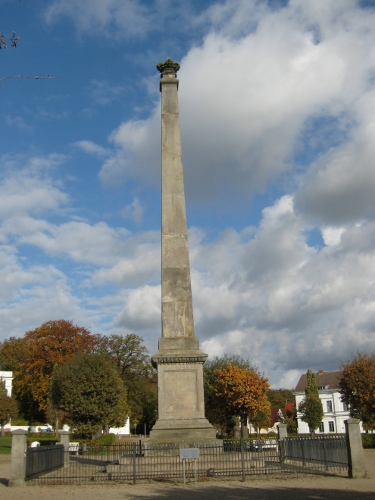
Obelisk / Circus

Obelisk / Circus

Paedagogium / Circus

Paedagogium / Circus

Aber das ist es ja gerade: Putbus ist nicht Paris – es hat in der eigentlichen Stadt wohl gerade mal gut 2.000 Einwohner. Diese ganze Anlage, wozu – ach ja – auch noch ein gigantischer, 75ha großer Schlosspark gehört, wirkt höchst surreal… und seelenlos. Es bot sich quasi an, mal die für 2 Stunden angesetzte Stadt- und Parkführung zu machen.

But that’s the thing: Putbus is not Paris – there are about 2,000 inhabitants in the city proper. This whole complex – which by the way also includes gigantic palace grounds of about 75 hectares/ 185 acres – is surreal… and soulless. It seemed like a good idea to go on a 2-hour guided tour of the town and park.

RUG5_10

Die Freuden des Reisens in der Nebensaison: ich war der einzige Teilnehmer. Das hielt den überaus engagierten Führer jedoch nicht davon ab, mir die Geschichte Putbus‘ als am Reißbrett entstandene Residenzstadt im Detail näherzubringen… so dass ich nach zweieinhalb intensiven Stunden („Das war 30 Jahre nach Stadtgründung. Na? Wann war das dann?“) abbrechen musste, weil das Nachmittagsprogramm nicht wartete.

The joys of off-season travel: I was the only participant. That didn’t stop the extremely dedicated guide from getting me acquainted with Putbus‘ creation as planned on the drawing board – it didn’t really develop over centuries, though some sort of settlement there was first mentioned in 1253. It was the most intense tour I’ve ever been on („That was 30 years after the town was founded. Well? When was that again??“), scheduled for 2 hours and I had to break off after 2.5 as my afternoon program wasn’t going to wait.

Markt / Market Square

Markt / Market Square

Dass er an mir nicht verzweifelt ist… ich konnte kaum einen Baum im Park benennen (kennt außer evtl. Winfried jemand die amerikanische Schwarznuss?), nur die Muse Kalliope schien mir bekannt, aber wahrscheinlich auch nur, weil eine wichtige Zeugin in einem amerikanischen Krimi diesen Namen trägt… aber ich habe mich eingelassen auf Fürst Malte zu Putbus, der das alles „verbrochen“ hat. Die Anlage treibt einem die Tränen in die Augen – erst einfach so, weil sie so schön ist und dann, weil sie jetzt da so rumsteht und nicht lebt. Das wird auch nicht besser dadurch, dass das zentrale Bauwerk, das Schloss Putbus, nicht mehr besteht. Es wurde in den 1960er Jahren gesprengt und nur ein paar metallene Pfähle im Rasen lassen einen erahnen, wo es gestanden hat.

It’s surprising that he didn’t become exasperated with me… I could hardly name a tree in the park (who knows the eastern black walnut?), only the muse Kalliope sounded familiar but probably only because an important witness in an Americal thriller had that name… but I was ready to meet Prince Malte of Putbus and see what happened under his reign. The complex moves you to tears – first just because it truly is beautiful in many ways and then because it now just sits there, lifeless. And it doesn’t get any better by the fact that the heart of it, Putbus Palace, does not exist anymore. It was demolished in the 1960s and today only a few metal pickets on the lawn help you imagine where it once stood.

800px-Schloss_Putbus_(1922)

Die Orangerie steht noch, aber die diversen Ananas-, Pfirsisch- und was noch Häuser sind weg, die riesigen Stallungen können weder besichtigt werden, noch scheinen sie in irgendeiner Form genutzt zu werden, Fasanen- und Affenhäuser habe ich nur in der Ferne über den Schwanenteich im Komtessgarten gesehen, den Küchengarten, der wohl die Ausmaße eines Fußballplatzes hatte, findet nur noch das geübte Auge, die Flanierwege entlang der Kastanienallee sind verschwunden – nur wer die hier und da stehenden Bänke wahrnimmt, „sieht“ sie auf einmal, die gigantischen Parkanlagen werden von genau einer festangestellten Fachkraft gepflegt (!!!!) – diese Frau muss ein As im Festlegen von Prioritäten sein…

The orangery is still there but the numerous pineapple, peach and whatnot houses have all disappeared, the huge stables can neither be visited nor do they seem to have any use at all these days, I’ve seen the pheasant and monkey houses only in the distance acoss the swan lake in the „Countess Gardens“, the kitchen garden which must have been as large as a soccer field, can only be made out by the expert eye nowadays, the promenades along the chestnut alley have disintegrated – only when you notice the weirdly placed benches you will suddenly „see“ them, the gigantic park is taken care of by exactly one full-time specialist (!!!!) – she must be a natural at prioritizing her days…

Orangerie / Orangery

Orangerie / Orangery

Was läuft hier falsch?! Selbst in den aufwändig restaurierten Gebäuden am Circus gibt es Leerstände. Praktisch jedes Haus der Alleestraße, die vom Circus abzweigt und entlang des Parks Richtung Markt verläuft, sowie in der August-Bebel-Straße, die am oberen Ende des Markts beginnt, sind Teil des Originalplans – ob nun Honoratioren- oder Handwerkerhäuser. Absolut faszinierend. An sich. Und auch, wenn definitiv noch nicht alles wieder saniert ist…

What’s going wrong here?! There are vacancies even in some of the elaborately restored buildings of the Circus. Practically every house on Alleestraße which leads from the Circus to the Market Square and on August-Bebel-Straße (which starts at the upper end of the Market Square) is part of the original plan – be it housing of the nobility or craftsmen. It’s fascinating. As such. And even though quite clearly not everything has been restored yet.

Rathaus am Markt mit "Nachbar" / Town Hall on Market Square with "neighbor"

Rathaus am Markt mit „Nachbar“ / Town Hall on Market Square with „neighbor“
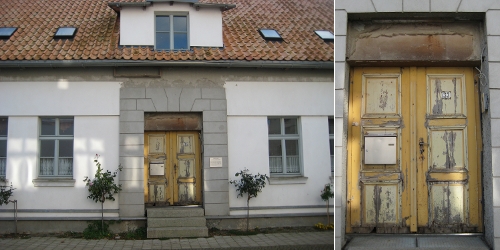
Restauriertes Haus - Tür beachten! / Restored house - have a close look at the door!

Restauriertes Haus – Tür beachten! / Restored house – have a close look at the door!

Häuserreihe an der Alleestraße / Row of houses on Alleestraße

Häuserreihe an der Alleestraße / Row of houses on Alleestraße

Okay… eine so kleine Gemeinde, soweit ich erkennen konnte ohne Industrie – wie soll die dieses Mammutobjekt auch dauerhaft stemmen? Da reichen ja die Millionen für Restaurierung nicht – wie soll denn da der Unterhalt gewährleistet werden? Und es muss Konzepte geben, diese Stadt zum Leben zu erwecken… Das IT-College scheint ein Rohrkrepierer zu sein.

Okay… how exactly is a town of that size, without any industry as far as I can tell, supposed to shoulder this mammoth complex in the long run? It’s not enough to pour in millions for restauration – what about maintenance? And concepts to bring life back to this town… Apparently, the IT college is a nonstarter.

Schwanenteich / Swan Lake

Schwanenteich / Swan Lake

Putbusser Türen / Doors of Putbus

Putbusser Türen / Doors of Putbus

Und nach all diesen Eindrücken und Gedanken bin ich dann im Laufschritt am Bahnhof angekommen, habe atemlos ein Ticket gelöst, und auf ging’s in den Nachmittag… Fortsetzung folgt.

Heaped with all these impressions and thoughts I half-jogged to the train station, bought a ticket (quite out of breath) and started the afternoon… to be continued.

Barbara

Rügen – Day 4

RUG4_15
Wir sind heute tatsächlich auf Rügen geblieben – und haben uns der Bäderarchitektur gewidmet. Die findet man hauptsächlich an der Ostsee, seit 1810 auch auf Rügen. Viel wurde in der Gründerzeit gebaut. Wir hatten uns Göhren, Sellin und Binz vorgenommen. Schon in Göhren habe ich viele Fotos gemacht, aber letztlich waren die anderen Städte deutlich beeindruckender. So bleibt mir aus Göhren nur der Mega-Anker in Erinnerung, der vor dem Heimatmuseum liegt.

We did stay on Rügen today – and dedicated the day to resort architecture. Or, as I have also seen „translated“, Bäderarchitecture. What I have now also seen translated, by the way, is Rügen: Rugia Island. Anyhow, this architecture is mainly found in German spa resorts on the Baltic Sea coast. The first building on Rügen is from 1810 but construction overall peaked during the Gründerzeit epoch. We had Göhren, Sellin and Binz on our schedule. I took many pictures in Göhren already but really the other two cities turned out to be MUCH more impressive. So what I will always remember Göhren for is the humongous anchor that lies in front of the museum of local history.

RUG4_1

Mal sehen, wann ich fertig werde mit diesem Post. Unmengen an Fotos, die allermeisten schön, letztlich jedoch mit ähnlichen Motiven. Häuser halt. Ich konnte es auf 20 runterdampfen. Dann 17. Es wird also ein kleines Album werden. Fahren wir weiter nach Sellin.

We’ll see when I will finally finish this post. There’s an incredible number of pictures, most of them beautiful but with similar motifs. Houses, right. I managed to get the count down to 20. Then 17. This will be a small album, can you tell? Let’s have a look at Sellin now.

RUG4_7

Was mir an Sellin besonders gefallen hat waren die Schautafeln, die vor historisch besonders interessanten Häusern angebracht waren. So war es einfach und übersichtlich, sich ein Bild von der bewegten Geschichte, die eigentlich alle diese Häuser hinter sich haben, zu machen.

What I really liked about Sellin was the fact that there were information panels in front of all the houses that were of particular historic interest. Hence, it was really easy to get an overview and learn more about the eventful history that practically all these houses have.

RUG4_13

Im zweiten Weltkrieg wurden sie bspw. umgewandelt in Flüchtlingslager oder für die Kinderlandverschickung verwendet. Zu Zeiten der DDR wurden die Besitzer enteignet und die Gebäude bspw. vom Ministerium für Gesundheit der DDR benutzt. Nach der Wiedervereinigung scheinen fast alle an ihre enteigneten Besitzer zurückgegangen zu sein. Aber nicht alle haben es im Originalzustand geschafft.

During World War II they were sometimes used as refugee camps or for KLV, the evacuation of children during the war. At the time of the former GDR the owners were expropriated and the houses then used by, e.g. the Ministry of Health of the GDR. After reunification most seem to have been returned to their rightful owners. But not all were returned in their original stae or rather: design.

RUG4_2

Die Häuser sind gigantisch: Haus Eintracht (1909) ist 13,63m lang, 11,26m tief. Im Erdgeschoss gab es ursprünglich neben einer Küche 6 Zimmer und einen „Abort“. Im ersten Stock dann 8 Zimmer und einen „Abort“, in der Mansarde dann nochmal 6…

The houses are huge: Haus Eintracht (House Harmony), from 1909, is 13.63 by 11.26 meters. There were originally a kitchen and 6 rooms on the ground floor and a lavatory, another 8 rooms and a lavatory on the first floor and another 6 rooms in the attic…

RUG4_3

Es wurde in der Lokalpresse 1901 festgehalten, dass der „Villenbau des Fräulein Johanna Richert“ begonnen wurde – das Haus Ingeborg. Die wunderbare Holzveranda mit reicher Ornamentik ist noch im Original erhalten. Und irgendwie war das Haus immer in der Hand „von selbstbewussten und selbstständigen Frauen“:

The local paper stated in 1901 that „the building of the villa by Miss Johanna Richert“ was started – Haus Ingeborg. The beautiful wooden verandah with its detailed ornamants is still the original. And somehow this house was always in the hands of „self-confident and autonomous women“:

RUG4_4

Aber in Sellin gibt es auch eine schöne Seebrücke… zu der man aber erst einige Stufen absteigen muss. Steilküste – ich hätte es wissen müssen, aber ich war dennoch überrascht.

But Sellin also has a gorgeous pier… that you have to climb down to. Steep coasts – I should have known yet it still came as a surprise.

RUG4_5

Nächster Stop: Binz – wo auch schon das erste Foto dieses Eintrags herkommt. Da war deutlich mehr los als in Sellin und es war schicker. Das Kurhaus ist zu groß, um es ganz auf’s Bild zu bekommen.

Next stop: Binz – where I took the very first picture of this post as well. It was a lot livelier than Sellin and it was somehow fancier. The Kurhaus (center of a spa resort) is too large to photograph in its entirety.

RUG4_8

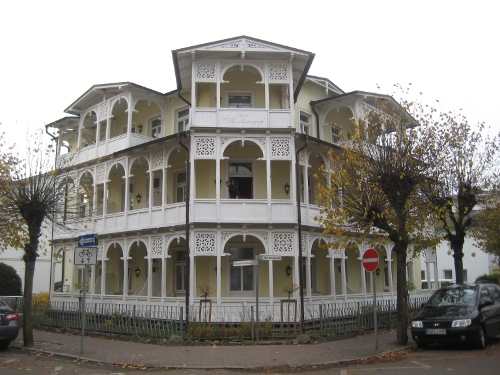
Die Bäderarchitektur ist auch hier zu finden und sehr ähnlich, aber doch anders – häufiger auch in weniger verspielten Holzfassaden, dafür Stein und Stuck, hier und da auch in Backstein.

You find the Bäderarchitecture here as well but it’s same, same but different so to speak. It also had the playful, richly ornamented wooden verandahs etc. but also a lot of stone and stucco, sometimes even brick.

RUG4_10

RUG4_11

RUG4_19

RUG4_20

Sagt sie und stellt fest, dass die ausgewählten Fotos dann doch fast alle verspielte Holzelemente aufweisen… Also kommt zu den 17 Fotos noch eins dazu: die Villa Glückspilz!

Says she and realizes that almost all the pictures chosen have the wooden ornaments after all… So I will add another picture to the 17 I thought I could make do with: Villa Glückspilz! (Villa Lucky Devil which when translated literally from German would be Villa Lucky Mushroom…).

RUG4_21

Es darf außerdem festgehalten werden, dass ich am 23.10.2013 bei gefühlten 5°C Wassertemperatur (es waren wohl tatsächlich 11°C) nicht davon abgehalten werden konnte, meine Füße von den Ostseewellen umspülen zu lassen.

Please note that on October 23, 2013 I could not be held back from having my feet bathed in Baltic Sea waters at what felt like 5°C/41F (when in fact it was 11°C/52F).

RUG4_17

(Prohibited)

(Prohibited)

Und kurz vor Abfahrt brachte ich noch in Erfahrung, was in Binz das Äquivalent zu nervenden Quads in der Eifel ist… siehe links.

And shortly before we left I found out that Binz has an equivalent to the hugely annoying quad bikes cruising through the Eifel… see left.

Bis bald!

Take care!

Barbara

Rügen – Day 3

RUG3_6
Ich weiß ja nicht, wie das Wetter war, da wo ihr so seid – aber hier war es heute HERRLICH! Meine direkte Leitung zum Wettergott macht sich bezahlt – Danke, Thierry (lange Geschichte)! Und da wir den Wetterbericht immer genauestens im Auge haben, hatten wir am Vorabend beschlossen, den Tag heute auf Hiddensee zu verbringen. Also wieder ein verwirrend gewählter Titel – aber egal.

I don’t know what’s the weather been like today where you are but here it was downright GORGEOUS! My direct line to the weather god really pays off – Thank you, Thierry (long story)! And of course we do follow the weather forecast closely and decided last night to go to the island of Hiddensee today. So again a misnamed title – anyhow.

RUG3_1

Wir nahmen also die Fähre von Schaprode nach Vitte. Es war schon kein Problem, auf Deck zu bleiben und das soll für so eine Fahrt was heißen Ende Oktober an der Ostsee. Den Großteil des Tages war absolutes T-Shirt-Wetter und nachdem wir am Deich entlang nach Kloster gewandert waren, ging es richtig los, auf Erkundung des Dornbusch, dem Hügelland nördlich von Kloster.

We took the ferry from Schaprode to Vitte. It was rather pleasant to stay on deck and that really says a lot about the weather on the Baltic coast at the end of October. For the majority of the day we were in picture perfect t-shirt weather. We first hiked along the dike from Vitte to Kloster and then on to the Dornbusch area, a hilly area north of Kloster.

Footpath. Bikes prohibited.

Footpath. Bikes prohibited.

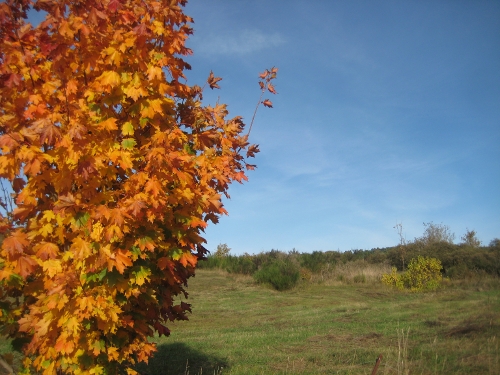
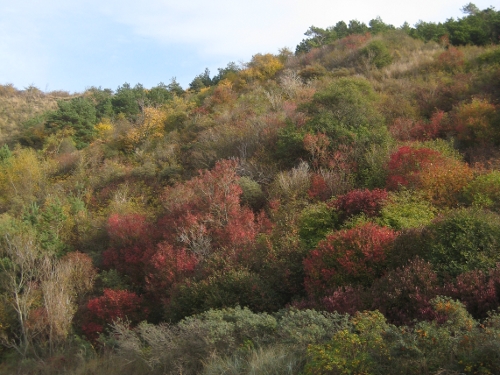
Die Farben des Herbstes waren natürlich auch heute ein ständiger Begleiter.

The colors of fall were of course a constant companion today as well.

RUG3_12

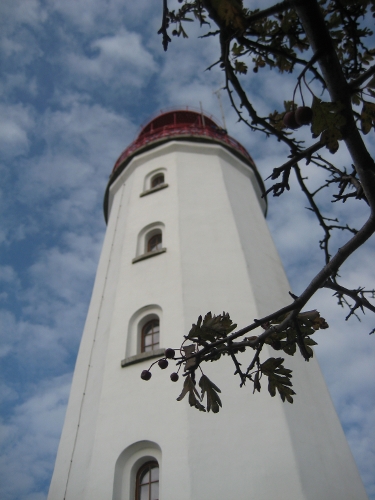
Und ich habe meine Liebe für Leuchttürme wiederentdeckt. Es fiel mir sehr schwer, aus den geschätzten 87 Aufnahmen eine auszuwählen.

And I have rediscovered my love for lighthouses. It was one hell of a job to choose one of approximately 87 pictures.

RUG3_5

Und darum zeige ich euch noch zwei weitere! Und wähle obiges als meinen Beitrag bei Our Beautiful World diese Woche. Da heißt das Stichwort, das es zu bedienen gilt, LOVE.

And that’s why I show you two more! And I have chosen the above as my entry at Our Beautiful World this week – the prompt being LOVE.

RUG3_4

RUG3_3

Wir hatten eigentlich vor, dann ein wenig an der Steilküste langzulaufen, aber die war in großen Teilen aus Sicherheitsgründen gesperrt. Nach einigem Gewurschtel landeten wir dann am Strand, den wir geschätzte 2 bis 3 km zurück nach Kloster entlang liefen. Immer auf der Suche nach schönen Steinen u.ä.

We had intended to continue down a path along the bluff but that was in large part cordoned off for security reasons. After some trying here and there we got down to the beach and walked along that for about 2 to 3 km back to Kloster. Always looking for unusual stones.

RUG3_13

RUG3_7

RUG3_14

Und woher bläst der Wind nochmal meistens??

And what direction did you say the wind usually blows from??

RUG3_9

Wieder in Kloster kamen wir an diesem wunderbaren Stand mit selbstgefertigten Sanddornprodukten lang – Saft und Likör. Bezahlung in das kleine Vogelhäuschen. Da fällt mir ein, ich habe den Likör noch gar nicht probiert. Moment, ich trink auf euch! Uuaahh, bitter. Und am Alkohol wurde nicht gespart, soviel ist sicher… Prost!

Back in Kloster we passed this wonderful stand with homemade sea buckthorn products – juice and liqueur. To be paid into the little red birdhouse. And I now remember that I haven’t even tried it yet! Hold on, a toast to you all! Whoa, bitter. And I can’t state a lack of alcohol, that’s for sure… Cheers!

RUG3_8

Im Café nicht weit entfernt fiel uns die Entscheidung schwer: Sanddorntorte, Waffeln mit Sanddorncreme, Germknödel mit Sanddorncreme, Suppe aus hab ich vergessen mit Sanddorn… Ich nahm die Waffeln und sie waren gut!

At the café not far away we had a hard time making up our minds: Sea buckthorn cake, waffles with sea buckthorn sauce, yeast dumplings with sea buckthorn sauce, soup with I forgot and sea buckthorn… I chose the waffles and never looked back!

RUG3_11

Noch ein bisschen am Fähranleger gesessen und gewartet, dann ging es wieder zurück… im Sonnenuntergang.

We sat on a bench near the quai for a bit and waited for the last ferry back… and enjoyed the sunset.

RUG3_10

Bis morgen!

„See“ you tomorrow!

Barbara

Rügen – Day 2

RUG2_1
Vorab: dieser Beitrag trägt einen falschen Titel… der Einordnung in diese Reise halber habe ich mich aber dafür entschieden. Wir waren nämlich heute nicht lange auf Rügen. Der gestern angekündigte Überraschungsausflug brachte uns auf den Vilm, eine Rügen vorgelagerte Insel. Die, genauer betrachtet, gar nicht so richtig von Rügen getrennt ist. An der schmalsten Stelle ist die Entfernung zu Rügen nur 1,2 km und das auch erst seit 3.000 Jahren – und davon könnte man fast die Hälfte noch gehend überwinden. Wir haben uns trotzdem für die „MS Julchen“ und eine Führung entschieden.

Let me put this straight: the title of this post is a misnomer but just to make sure it is recognized as part of this trip I stuck to Rügen. But in fact, we didn’t spent much time on Rügen today. The surprise event I mentioned yesterday already brought us to the tiny island of Vilm which is situated to the South East of Rügen. And when you look at it in detail, it isn’t even really separated from Rügen. At the most narrow point, the water stretches to only 1.2 km and has been there for only 3,000 years – and half of that distance you could cover on foot. But we chose a trip on the boat „MS Julchen“ and a guided walk.

RUG2_6

Für diesen Ausflug war uns der Wettergott größtenteils wohlgesonnen. Das kleine Inselchen ist ein Naturschutzgebiet und ohne Führung kommt man da gar nicht hin. Sicher, zu Fuß usw. – sogar das eine oder andere Wildschwein soll sich schonmal schwimmend (nein: rinnend!) dorthin begeben, aber ansonsten nur ca. 30 Touristen am Tag und die Mitarbeiter und Tagungsgäste der Internationalen Naturschutzakademie.

The weather God was with us for most of this trip. The little island is a nature reserve and you can’t even get there without a guided tour. Sure, on foot etc. – and apparently only last week a wildboar made it across swimming but other than that there are only a maximum of about 30 tourists a day and the staff and guests of the International Academy for Nature Conservation.

RUG2_12

Ja, warum würde man denn in so ein Naturschutzgebiet ein Tagungshaus bauen? Nun, die vorhandene Bebauung stammt aus DDR-Zeiten und ist mit dafür verantwortlich, dass es überhaupt ein noch bestehendes Naturschutzgebiet ist. Ende der 50er Jahre war es ein überlaufenes Touristenziel und viel wäre von der Natur bald nicht mehr übrig geblieben. Dann entschied man, dort eine Ferienhaussiedlung für hohe Staatsfunktionäre zu errichten und in der Folge war das Gebiet für Otto Normalverbraucher gesperrt. Die Ferienhäuser stehen weiterhin und werden als Unterkünfte für die Tagungsteilnehmer genutzt.

So, why exactly would you build seminar facilities in a nature reserve? Well, the current buildings are vintage GDR and sort of „responsible“ for the fact that the nature reserve still exists. At the end of the 1950’s this was a crowded tourist attraction and was rapidly going down the drain. It was then decided to make it into a holiday resort for the former GDR Council of Ministers and as such was off limits for John Doe. The houses are still standing and are used as dorms for the guests of the academy.

RUG2_5

Die Insel zeichnet sich durch wertvollen alten Baumbestand aus, da sie seit über vier Jahrhunderten (seit 1527) von forstwirtschaftlicher Nutzung verschont geblieben ist. Entsprechend sind die gewaltigen Buchen ca. 300 Jahre alt.

The island features a precious old growth forest as it hasn’t been forested for more than 400 years (since 1527). Accordingly, the huge beech trees are about 300 years old.

RUG2_9

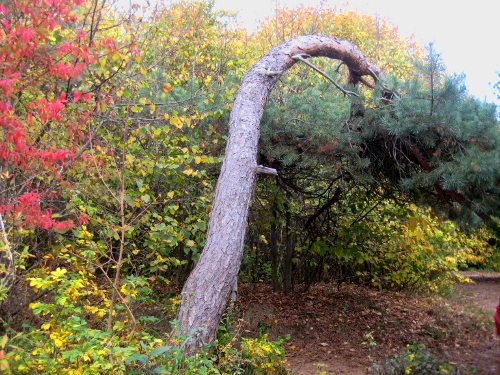
Einige Bäume haben einen bizarren Wuchs, der meist durch irgendwelche Naturphänomene hervorgerufen wird. Die Buche unten z.B. hat unter einem Blitzeinschlag gelitten, der das gesamte Stammholz rausgesprengt hat. Der Wundverschluss hat links gut funktioniert, wie man an dem Wulst auch auf diesem überbelichteten Foto vielleicht noch erkennen kann. Noch interessanter finde ich fast den Ast, der sich nach rechts hinten zum Boden abknickt und sich zu einem dicken Stamm entwickelt und Wurzeln geschlagen hat.

Some trees really look bizarre, usually because they suffered from some kind of natural phenomenon. For example the beech tree below which was hit by lightning and consequently the trunk wood exploded and was scattered about. The „wound closure“ worked pretty well on the left side which you can maybe make out on this overexposed picture (there’s this thick vertical bulge). And look at that branch that cracked backwards to the right and developed into a trunk of its own and struck root.

RUG2_10

Oder der Baum unten, an dem sich eine sog. Frostleiste ausgebildet hat. Diese entstehen durch extreme Temperaturschwankungen. Erst friert alles zu, dann knallt morgens ggf. intensiv die Sonne drauf und Stücke platzen ab. Wundheilungsprozesse starten, werden aber auch wieder unterbrochen und je öfter das passiert und je mehr sich Insekten und Käfer auch noch einmischen, umso beuliger wird das ganze. (Nicht ganz falsch dargestellt, Winfried?!)

Or this tree below which has what I have no clue what it is called in English – those bumps that were caused by extreme changes in temperature. First everything freezes solid during the night and then the sun comes up and pieces are chipped of. Wound healing starts but is interrupted and the more this happens and the more insects and bugs decide to interfere, the larger the bumps get.

RUG2_3

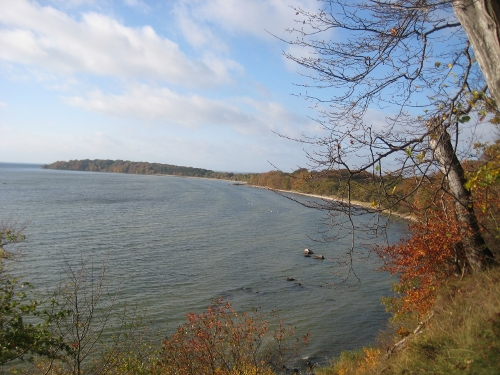
An den Steilküsten kam man nicht runter, um an die Strände zu gelangen… aber vielleicht wird das ja morgen noch was. Schön anzusehen ist das alles auch von oben.

There was no way to climb down the bluffs to get to the beaches… but maybe I get to walk on some beach tomorrow. And anyway, it was nice to look at from above as well.

RUG2_2

Ich hatte es noch nicht erwähnt: hier gibt es unheimlich viele Schwäne, die aber schön weit weg bleiben und sich nicht so einfach fotografieren lassen. In einem Restaurant soll man sie auch essen können, jedenfalls die nicht artgeschützten Höckerschwäne. Aber ich glaube, daran liegt mir nicht so.

I haven’t mentioned it yet: there’s an incredible number of swans here but they really stay way out and don’t make for easy pictures. Apparently, there’s also one restaurant that has swan on the menu, the kind that is not protected. But I think I don’t care for swan.

RUG2_7

Am späteren Nachmittag hätte ich mir gerne Putbus noch genauer angesehen, aber das Wetter war dann doch zu unbeständig. Mal sehen, wann sich das noch ergibt. Dafür noch zwei Eindrücke vom Vilm.

Later that day I had wanted to have a closer look at the town of Putbus but the weather got a little nasty. I’ll see when I get to that. For now, two more impressions from Vilm.

RUG2_8

RUG2_11

Und nun ein bisschen „Beisammensein“ in munterer Runde! Bis die Tage!

And now for some socializing! Take care!

Barbara

Rügen – Day 1

RÜG1_2
Nach gut achtstündiger Zugfahrt bin ich gestern auf Rügen angekommen und in der wohl besten Pension Deutschlands (mindestens!) untergekommen. Doch dazu später mehr. Auf jeden Fall bin ich jetzt schon froh, dass mir zwei Freundinnen den Anlass für diesen Besuch geliefert haben.

It took a train ride of about 8 hours to reach the island of Rügen yesterday and one thing’s for sure already: I have come to Germany’s best guesthouse. But more about that later. On this first day already I consider myself lucky that two friends made sure I came here.

RÜG1_12

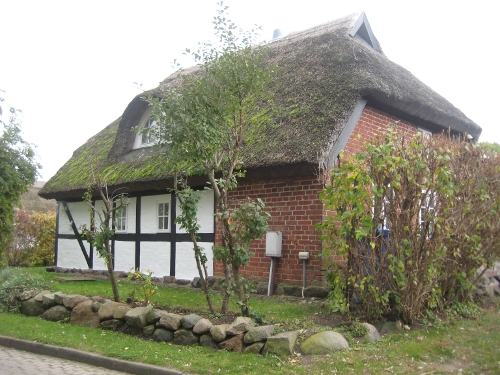
Wir haben es heute langsam angehen lassen und uns auf einen Rundwanderweg auf der Mönchgut Halbinsel begeben. Ich fand die Orte Groß und Klein Zicker unwiderstehlich – und die Zickerschen Berge sowieso. Und ich bin überrascht, wieviele manchmal mehr, manchmal weniger traditionelle Häuser mit Reetdach es hier gibt. Denkmalgeschützte wie das oben oder eher Neubauten.

We took it easy today and went on a circular trail on the Mönchgut peninsula. I loved the villages Great and Small Zicker (the pun can’t be translated into English) – and the Zicker Hills, too. And I was taken by surprise how many sometimes more, sometimes less traditional houses with thatched roofs are to be found here. Like the landmarked one above or the more recently built one below.

RÜG1_10

Hier sind sogar manche Bushaltestellen reetgedeckt:

Even some of the bus stops have thatched roofs:

RÜG1_11

Das Wetter war so la la… Zwar hat es nicht einen einzigen Regentropfen gegeben, aber die Aussicht war auch nicht besonders, es war ziemlich diesig. Aber auch in der Nähe war viel zu entdecken, denn es handelt sich bei der Gegend um ein Biosphärenreservat.

The weather could have been better… There wasn’t a single drop of rain but the view wasn’t all that good, much too hazy. So instead I went for discoveries close by as we were hiking in a biosphere reserve.

RÜG1_1

Was die kleinen weißen Beerchen da oben rechts sind – keine Ahnung. Allerdings habe ich die Sanddornbüsche gleich identifizieren können, auch wenn ich die Beeren greller orange erwartet hätte. Die sind für die Küsten der Ostsee typisch und man kann alle möglichen Produkte auf Sanddornbasis erwerben.

I don’t have a clue what those little white berries above to the right are. But I knew the sea buckthorn immediately when I saw them even though I had expected its berries to be of a much brighter orange. Sea buckthorn is really common or even typical for thw shores of the Baltic Sea and you can buy all kinds of products made from it.

RÜG1_3

Auf den Hügeln waren auch immer wieder Schafe unterwegs – die gerade frisch geschoren schienen… Die sind sicher auch froh, dass die Temperaturen noch eher mild sind…

There were lots of sheep roaming the hills as well – they seemed to be very recently shorn… And I bet they appreciated the rather mild temperatures as well…

RÜG1_4

RÜG1_5

Wir hatten ein sehr spätes Mittagessen in Gager, wo ich kurz vor dem Rausschmiss stand, weil ich zu den Bratkartoffeln (zum Dorschfilet) Ketchup bestellte… Von einem Fischer am Hafen bekamen wir dann ein paar Infos zum Fischfang zu dieser Jahreszeit: „Eigentlich nur noch Flunder – und wer Ihnen eine Scholle verkauft, schiebt Ihnen eine Flunder zum Schollenpreis unter!“

We had a very late lunch in Gager where I was about to be thrown out of the restaurant because I dared to order ketchup with my roasted potatoes (and the cod filet)… A fisherman at the harbor kindly informed us about the catch at this time of year: „Really we only catch flounders these days – and anyone trying to sell you a plaice (?) is ripping you off with a flounder!“

RÜG1_8

Dieses ganz besondere Haus ist das Pfarrwitwenhaus in Groß Zicker, das 1719 gebaut wurde… und in das nach dem Tod des Pfarrers dessen Witwe (mit den Kindern) einzog. Das hohe und sehr spitze Rohrdach, der „Zuckerhut“, ist sehr auffällig – innen war es eher schockierend. Sehr niedrige Decken, kleine Räume und noch kleinere Fenster – ein dunkler Verschlag. Und die „schwarze Küche“, siehe unten, lässt einen nur beim Blick auf die Ruß-geschwärzten Wände und Decke husten (das Foto zeigt die schönere Ecke). Es war in dieser Form allen Ernstes bis 1984 bewohnt.

This very special house is the Clergy Widow’s House in Great Zicker, built in 1719… once the pastor died, his widow (and children) would move in. The high and very pointed reed roof is exceptional – from the inside it’s rather shocking. Incredibly low ceilings, small rooms and even smaller windows – a dark pit. And the „black kitchen“, see below, really makes you cough just looking at the soot covered walls and ceiling (the picture shows the nicer corner). The house was inhabited up until 1984, would you believe it?

RÜG1_9

Und das ist die Kirche, die quasi dazu gehört:

And this is the church that sort of goes with it:

RÜG1_7

Aber nun fix ins Bett, morgen wird es wieder spannend, wir sind auf einem „Überraschungsausflug“!

But now I have to get to bed quickly – have to get up early tomorrow… we’ll be on a surprise event!

Barbara