Madagascar | Ambohimanga

Kohlesäcke

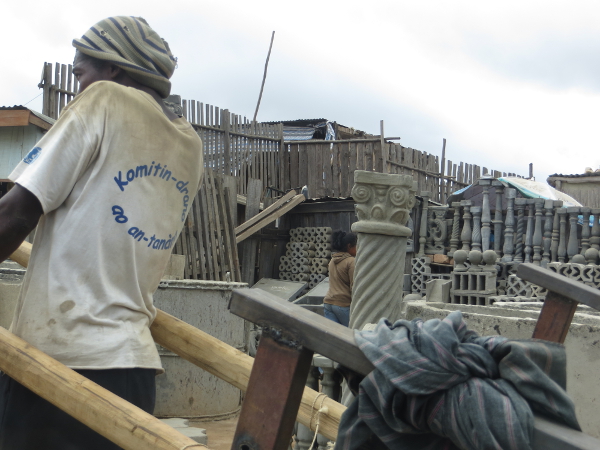
Den zweiten Hauptstadttag haben wir nicht in der Hauptstadt verbracht. Wir haben uns für den Tag ein Auto mit Fahrer gemietet. Jaona heißt er, was sich eigentlich ein bisschen wie Johnny anhört. Mit dem machen wir und auf den Weg nach Ambohimanga (Amboïmang, wieder mit leicht verschlucktem e am Ende), was „blauer Hügel“ heißt. Und schon auf der Fahrt setzt leichte Reizüberflutung ein. Die Dame oben hat, scheints noch wenig motiviert, Säcke voller Holzkohle im Angebot. Der Herr unten steht mit seinem noch leeren Karren vor einem Geschäft, in dem Betonplatten und –pfeiler erworben werden können.

We decided to spend the second day in the capital outside of it. We rented a car with driver for the day. His name is Jaona, which sounds a little bit like Johnny. Together we go out to Ambohimanga (Amboïmongue), which means „blue hill“. And in the car we are about to get a stiff neck from looking this way, that way, this way again… there’s so much to take in. The lady above is trying to sell bags of charcoal. The gentleman below is pulling a large cart and taking a break from it in front of a store that sells concrete tiles and pillars.
Pfeilershop

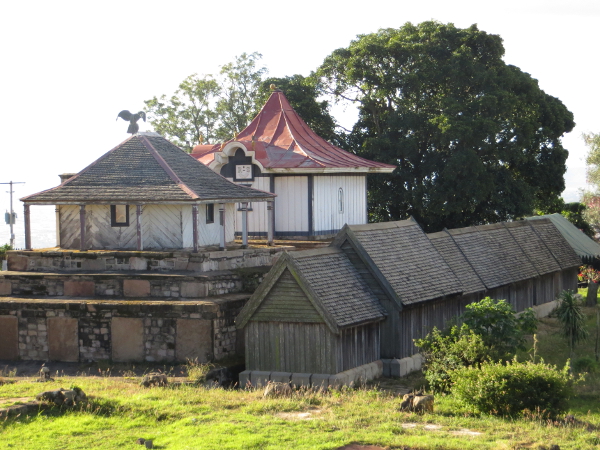
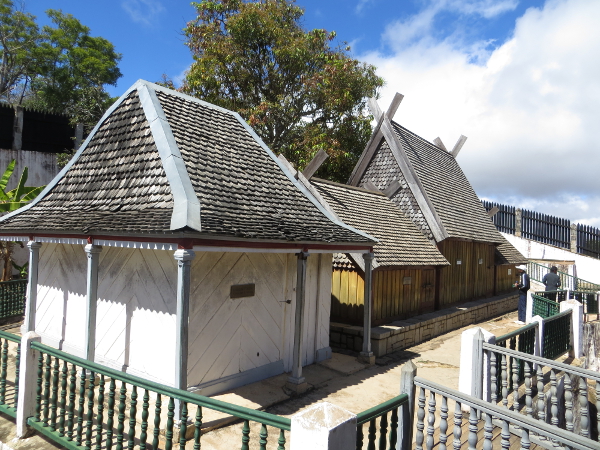
Einmal angekommen ist der Besuch in diesem UNESCO Weltkulturerbe eine wahre Freude. Wir werden von einer sehr freundlichen Führerin begrüßt, die uns in fließendem Englisch die Geschichte dieser seit König Andrianampoinimerina als Sommerresidenz genutzten Anlage näherbringt. Sein Holzpalast ist in der Mitte – ein hohes Einraumgebäude mit Spitzdach, dass als Schlaf-, Ess- und Empfangsraum diente. Ein Studio, wenn man so will. Sehr einfach, mit gestampftem Lehmboden… und einem Hochbett für den König. Als wir sagten, dass in Deutschland viele Studenten aus Platzgründen Hochbetten hatten, war sie etwas sprachlos, meinte dann aber lächelnd, dass sie sich dann wie Könige und Königinnen fühlen könnten.

Once we got there, visiting this UNESCO World Heritage Site was a real pleasure. We were welcomed by a very nice guide who explained the history of this place, that was a royal summer residence since King Andrianampoinimerina used it as such. His wooden palace is in the center – a very high ceilinged one-room building with a pointed roof which was used as bed-, dining- and reception room. A studio apartment, if you wish. Very simple with a floor of compacted soil… and a raised bed for the king. When we mentioned that raised beds are often used by students in Germany, trying to make the most out of small rooms, our guide was a little speechless but then remarked with a smile that they can surely feel like kings and queens then.
Ambohi4

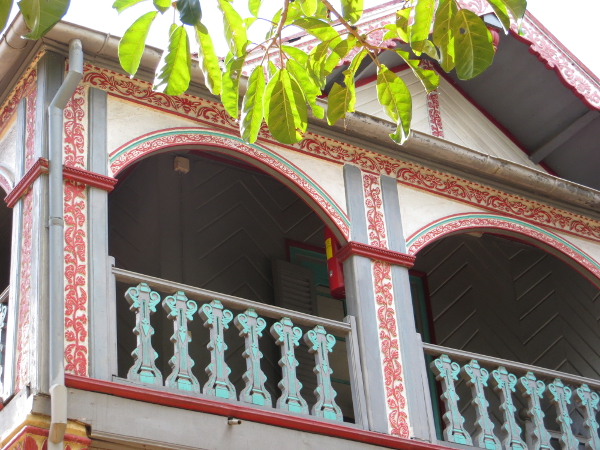
Grabstätten wie im Rova in Tana gab es auch wieder, aber interessanter waren eigentlich die beiden von Königin Ranavolona I. 1871 gebauten zweistöckigen Gebäude, oben jeweils mit einer Galerie /Balkonen und schönen Holzverzierungen. Im ersten Stock sind die Gebäude über eine Brücke verbunden. Innen war das Fotografieren nicht gestattet, da es sich um heilige Stätten handelt. Es kommen weiterhin Menschen, um hier zu opfern und zu beten. Aber besonders der Empfangs- und Speisesaal im Erdgeschoss des einen Hauses war beeindruckend (hier wurde u.a. auch Winston Churchill empfangen), sowie das vollkommen verglaste Arbeitszimmer im zweiten Stock des anderen Hauses, mit fantastischem Ausblick.

Again there were also tombs as we had also seen at the Rova in Tana but the two two-floor buildings added by Queen Ranavolona I. in 1871 were rather more fascinating. They both have a gallery /balcony and featuring very pretty woodwork. On the second floor the buildings are connected via a bridge. Photography inside was not permitted as the buildings are considered sacred places. TO this day people come to pray and sacrifice. But the reception and dining room on the first floor of one building in particular was impressive (Winston Churchill apparently dined there once) – as was the office on the second floor of the other house, featuring a breathtaking view.

Ambohi13

Ambohi3

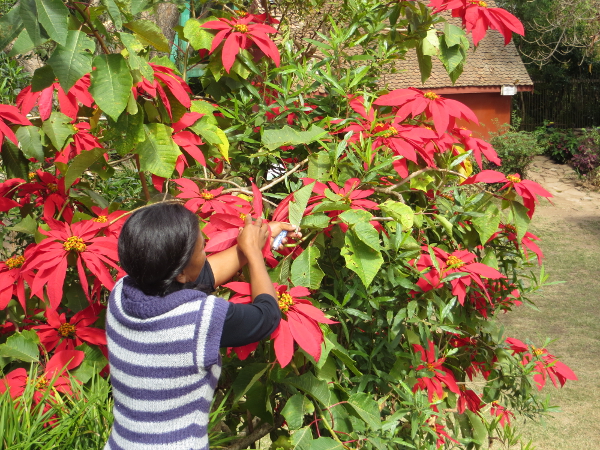
So als Weihnachtsfan ist man hier auch bestens aufgehoben, denn es gibt an jeder Ecke riesige Büsche, um nicht zu sagen WeihnachtssternBÄUME. Unsere Führerin, die sich auch mal ein bisschen Deutsch angeeignet hat, hatte die Vokabel Weihnachtsstern auch parat und hat uns dazu dann noch erklärt, dass die Pflanze hier einfach die Madagaskar-Pflanze ist, weil die grünen Blätter, wenn man sie in der Mitte faltet, die Form der Insel haben.

This is a wonderful place for a Christmas fan, too, as there are huge bushes – or should I say trees – of poinsettia on practically every corner. Our guide who has also endeavored to learn some German some time ago, even knew the German word for it and went on to explain that here they simply call it the Madagascar plant because when you fold the green leaves down the middle, the shape is more or less that of Madagascar.
Ambohi1

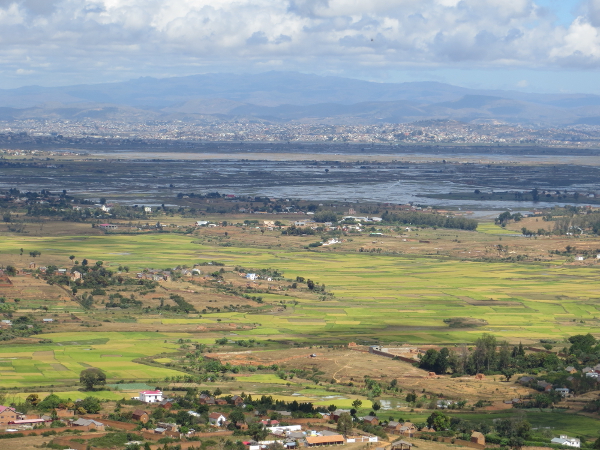
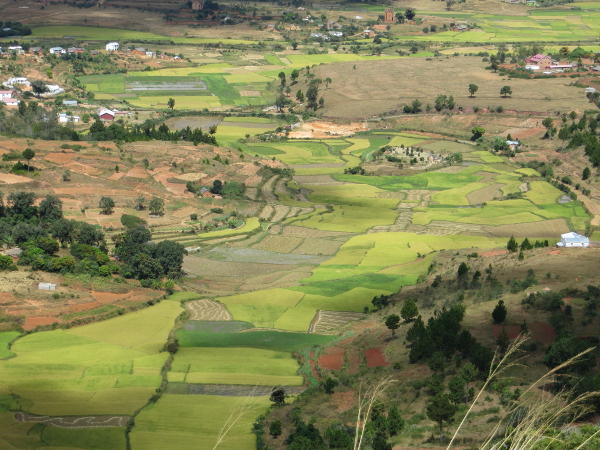
Nichts jedoch toppt den Ausblick vom Gipfel des blauen Hügels – es war ein ähnlicher Anblick wie vor zwei Jahren in Sigiriya in Sri Lanka: schier unendliche Weiten bis nach Tana und das Hochland im Hintergrund und man sitzt da einfach nur sprachlos in der Brise und genießt. Und stellt mal wieder fest: bei Königs wissen sie schon, wie man es sich gutgehen lässt!

Absolutely nothing, though, beats the view from atop the blue hill – it was similar to that in Sigiriya in Sri Lanka two years ago: endless views all the way to Tana and the highlands beyond and you just sit there in the breeze and enjoy. And notice again: the royals sure did know where and how to get the best of everything!
Ambohi7

Ambohi5

Ambohi6

Und selbst DAS gibt es auch mit Weihnachtsstern!

And even that can be had with poinsettias!

Ambohi2

Beim Abstieg wurde es dann auch deutlich lebhafter: Schulklassen und riesige Horden Pfadfinder waren ebenfalls zur Besichtigung gekommen.

When we descended again things got a lot livelier as there were school classes and huge crowds of boy scouts coming to visit.

Ambohi8

Und, wer hätte es vermutet, hier ist ja jeder Vorgarten bzw. der Straßenrand ein halber botanischer Garten. Deswegen dürfen auch erste Einblick aus diesem Bereich nicht fehlen.

And who would have guessed: every front yard or just the road side here are practically botanical gardens. So of course a few impressions from that end must be included as well.

Ambohi12

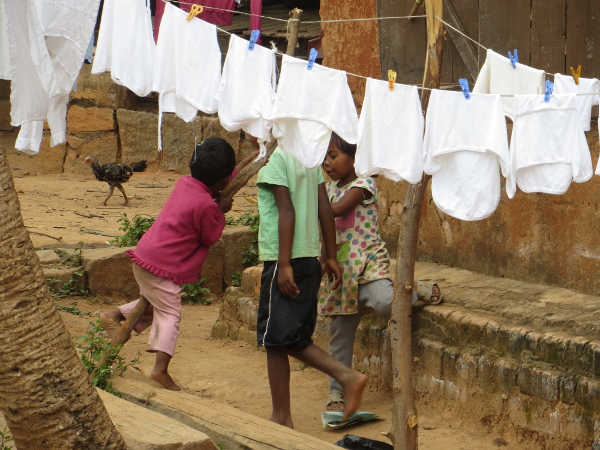
Auf dem Rückweg zum alten und original erhaltenen Eingangstor (ein gutes Stück vom Palastkomplex entfernt) konnten dann auch noch einige Eindrücke des Alltagslebens gesammelt werden.

On our way back to the old and original entrance gate (quite a ways away from the actual palace grounds) we were able to take in a bit more of daily life in Ambohimanga village.
Ambohi9

Ambohi10

Zurück in Tana wollten wir eigentlich noch den Zoo und Botanischen Garten besuchen, aber der war unerwartet geschlossen. Vielleicht ergibt sich da gegen Ende der Reise noch eine Gelegenheit. Jetzt geht es erstmal los Richtung Süden!

Back in Tana we had planned to go see the zoo and botanical gardens, too, but they were unexpectedly closed. Maybe there will be an opportunity towards the end of the trip. For now, we are getting ready to go south!

Barbara

Madagascar | Antananarivo

Tana13

Endlich war es soweit: Aufbruch nach Madagaskar! Trotz Bahnstreiks ging alles einwandfrei. Auch nach langem Flug (über zehn Stunden) konnten wir noch fasziniert die Ausstellung eines „Visa on arrival“ verfolgen. Dazu waren sechs Beamte vonnöten. Einer prüfte die Pässe, die dann zu vier weiteren Kollegen in einen Glaskasten gereicht wurden, die alles mögliche damit angestellt haben und der letzte hat sie dann wieder ausgehändigt. Und dann waren wir drin.

Finally: departure for Madagascar! Despite the fact that the train drivers were on strike, everything went according to plan. And even after a long flight (more than 10 hours) we were fascinated by the visa on arrival process. The passport had to go through the hands of six officials. The first had a look at it and handed it into a glass cube where four colleagues were seated and did whatever with them. And the last one, at the other end of the cube, handed them out again. And then we were in.

Tana6

Mehr als einmal war ich gefragt worden: „Madagaskar? Warum Madagaskar?“ Und ich dachte immer nur: warum nicht? Irgendwie hatte ich mich letztes Jahr in diverse Reportagen reingezappt, zu Naturwundern, zu alten Städten, zu den Highlights der hiesigen Fauna und abschließend auch noch zu famadihana, den regelmäßig als große Feierlichkeit stattfindenden Umbettungen der Toten – und es war klar: hochinteressant. Der Ankunftsabend war dann eher weniger spannend, denn kaum eine Menschenseele war noch auf den Straßen unterwegs, hier und da noch eine kleine „Kneipe“ am Straßenrand mit zwei, drei Gästen, aber hauptsächlich Banden marodierender… Hunde.

More than once I was asked: „Madagascar? Why Madagascar?“ And all I could think of was: why not? I had somehow zapped into a number of documentaries last year – about natural wonders, old towns, highlights of the endemic fauna and also about a very particular rite: the famadihana, the „relocation“ of the dead, which is a big celebration that takes place every so many years. I knew: this was going to be highly interesting. The night of our arrival was rather less interesting, though, as not a soul was outside anymore. On a few corners there was a little „pub“ by the side of the road with two or three regulars but mainly just hordes of marauding… dogs.

Tana1

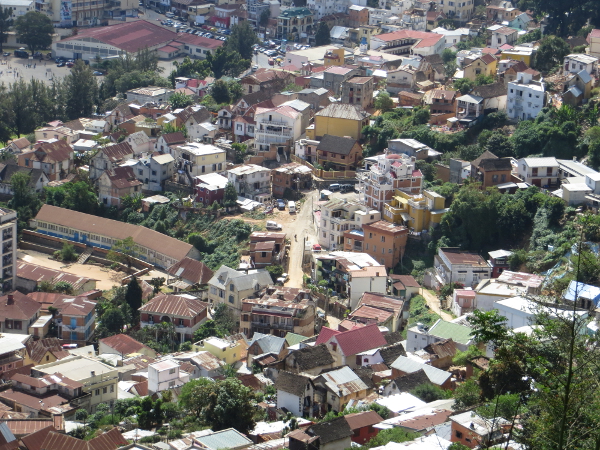
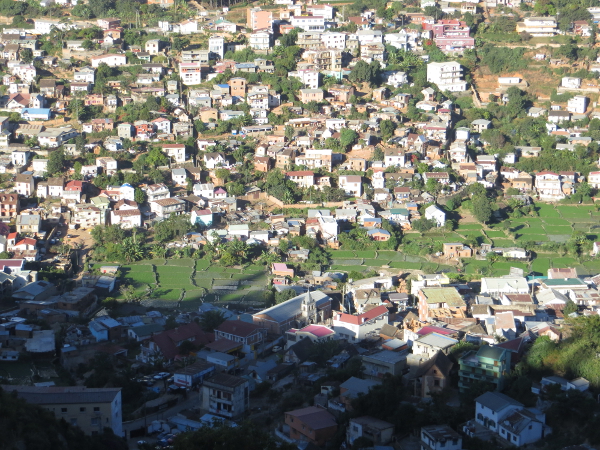
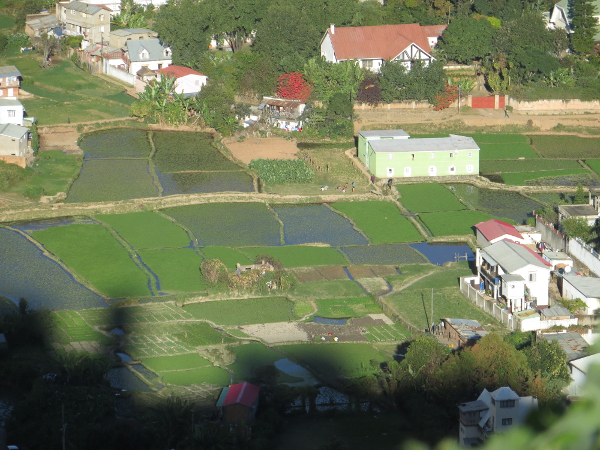
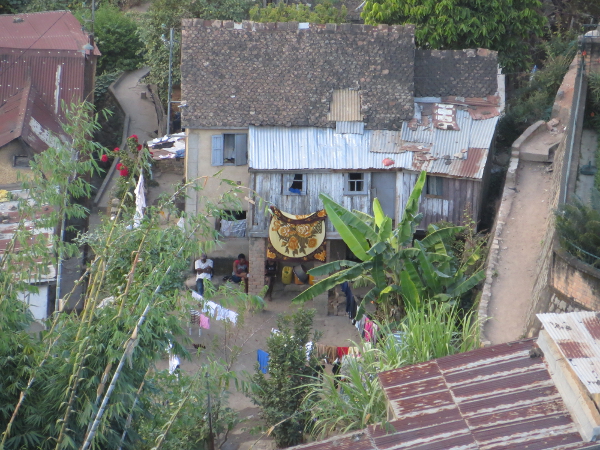
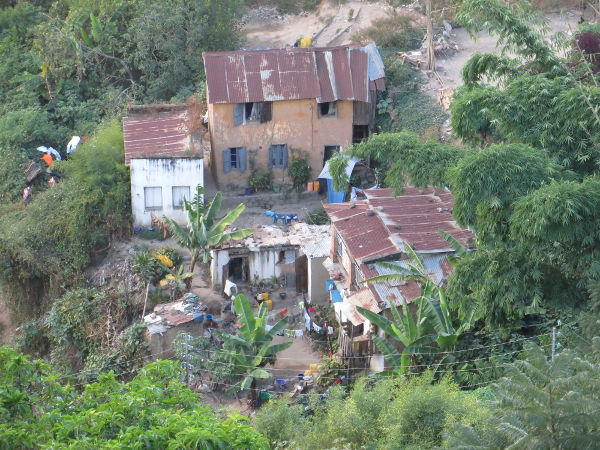
Antananarivo („Stadt der Tausend“), so der eingängige Name der Hauptstadt – gern auch kurz Tana – ist, wenn nicht auf einem der vielen Hügel, auf entwässertem Gebiet gebaut. Das Wasser findet man heute im ansehnlichen Lac Anosy, gleich beim Fußballstadion. Aber nicht nur dort: immer mal wieder findet man Streifen mit Reisfeldern mehr oder weniger mitten in der Stadt. Hier hat die urbane Landwirtschaft offenbar Tradition. Und weil ich den Blick von oben liebe (und mich nicht entscheiden konnte), kommt hier die erste kleine Reihe. Ich habe das Gefühl, es werden noch viele weitere kommen…

The capital Antananarivo (“City of Thousands”), or Tana for short, was built on drained land (when it isn’t on one of the many hills). Today that water can be found in picturesque Lac Anosy, right next to the soccer stadium. But not only there: all over the city you can find patches with rice paddies. Apparently, urban agriculture is a traditional concept here. And as I love the bird’s eye view (and couldn’t make up my mind which ONE to take, either), here’s the first little series for you. And I have a feeling there are many more to come.

Tana3

Tana2

Tana9

Wer jetzt denkt, Antananarivo an sich sei ein Zungenbrecher, dem sei gesagt: es wird ja noch nicht mal ausgesprochen, wie geschrieben wird (mehr so Ntananarive, und das e ist auch verschluckt). Oder wie wäre es mit Andrianampoinimerina, König 1750-1809? Allerdings hörten wir, dass sein voller Name eigentlich 28 Buchstaben umfasst und irgendwie ist er mir entfallen. Und wo wir gerade von Königshäusern sprechen: der Rova, der Palast der Königin, ist eines der Highlights in Sachen Sehenswürdigkeiten (der Herr in grün ist kein Vertreter einer bekannten deutschen Hilfsorganisation):

If you think that Antananarivo itself is a tongue twister, think twice: it isn’t even pronounced as it’s written (more like Ntananareeve). Or how do you like Andrianampoinimerina, king 1750-1809? We did hear, though, that his full name consists of 28 letters but somehow I forgot. And talking about royalty: the Rova, the Queen’s Palace, is one of the city’s sightseeing highlights:

Tana5

Tana4

Der Taxifahrer meinte, eigentlich reiche das durch das Eingangstor gemachte Bild – das Gebäude an sich sei ja eh leer, nach einem verheerenden Brand 1995. Und die Führer seien so aufdringlich – wir sollten uns das sparen. Haben wir dann aber doch nicht, denn es gibt ja auch noch mehr zu sehen als diesen Palast allein. Die Führer waren WAHNSINNIG aufdringlich, aber letztlich konnten wir sie doch abschütteln und die ganze Anlage in Ruhe ein bisschen auf uns wirken lassen.

The taxi driver said to take a picture through the gate (above) and leave it at that – the building as such was empty anyway after a fire in 1995. And that the guides were such a nuisance. We didn’t listen because after all there is more to see than the palace as such. The guides were extremely obtrusive but in the end we were left to explore the place in peace and quiet by ourselves.

Tana12

Zum Beispiel diese Königsgräber – neben denen eigentlich noch ein weiterer Palast stand, der aber ebenfalls dem großen Feuer zum Opfer fiel. Eine eigene Kirche hat der Komplex auch: 1881 wurde diese sog. Fiangona, eine anglikanische Kirche, geweiht. Sie steht, vom Eingang aus betrachtet, am anderen Ende des Grundstücks, hinter dem Palast.

These royal tombs for example – which were originally accompanied by another palace that also succumbed to the flames in 1995. The compound has its own church, too: its name is Fiangona, an Anglican church finished in 1881. It’s located at the opposite end of the compound (seen from the entrance), right behind the palace.

Tana8

Und wie gesagt… ich mag ja den Blick von oben.

And as mentioned earlier… I like the bird’s eye view.

Tana11

Tana10

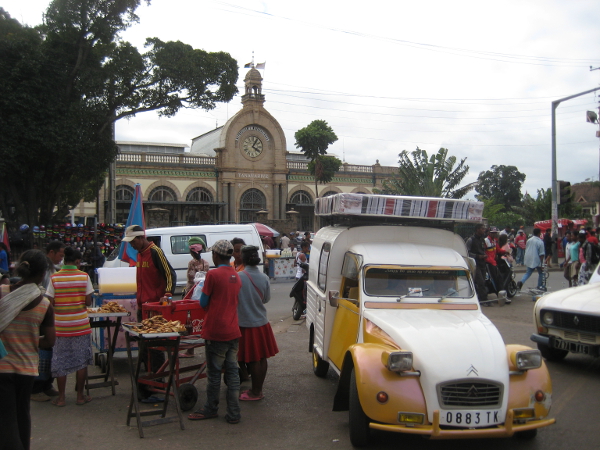
Tanas Zentrum ist in eine Unter- und eine Oberstadt eingeteilt. Der Unterstadt haben wir und auch noch ein bisschen gewidmet: ein Spaziergang die Avenue de L’Indépendance am Rathaus vorbei hinunter zum Hauptbahnhof. Die Beschreibung der Avenue im Reiseführer als „beliebte Flaniermeile“ mit Restaurants und gemütlichen Cafés ist allerdings eine Übertreibung besonderen Ausmaßes. Beliebt ja – es war die Hölle los. Aber alles in allem eher heruntergekommen. Nichtsdestotrotz war es sehr interessant; die Erwartungen waren nur andere.

Tana center is split into an upper and a lower city. We have also found the time to have a stroll in the lower city: along Avenue de l’Indépendance past the city hall all the way down to the train station. The description of the Avenue in the guide as a „popular place for a stroll“ with restaurants and cozy cafés is a far cry from reality, though. Popular, yes – it was absolutely crowded. But in all everything was rather run down. Nevertheless, it was a good half hour nicely spent – just the expectations were different.

Tana14Auf dem Rückweg vom Hauptbahnhof, der nicht mehr angefahren wird und heute als kleines Shopping Center dient und offenbar auch für Festlichkeiten angemietet werden kann, fanden wir sehr bald Begleitung von zahlreichen Bettlern und Souvenirverkäufern. Unter letzteren auch Francoise, Chantal und Isabelle, die an Hartnäckigkeit unübertroffen sind. Sie sind uns geschlagene 20 Minuten nicht von der Seite gewichen. Im Angebot waren Vanillestangen, aus Raffia geflochtene Häuschen gefüllt mit Gewürzen u.ä. Die Verhandlungen liefen so:

„Madame, Vanillestangen! Nur 8000!“
„Nein danke, ich brauche keine Vanillestangen.“
„Wieviel wollen sie zahlen? 6000?“
„Nein danke.“
„4000?“
„Auch nicht.“
„2000? 1000? Gar nichts – gratis?“ … und schmiss sich lachend weg. Auch wenn ihr tief im Herzen sicher nicht wirklich nach Lachen zumute war.

On our way back from the train station which by the way is not in use as such anymore today (it houses a little shopping mall and can apparently be rented for parties also), we soon found ourselves accompanied by numerous beggars and souvenir sellers. Among the latter were Francoise, Chantal and Isabelle which have still to find their equals for endurance. They were our constant followers for more than 20 minutes. On offer were vanilla, little houses made from raffia and filled with spices and similar things. The negotiations went like this:

“Madame, vanilla? Only 8000!“
“No, thank you, I don’t need vanilla.“
“How much do you want to pay? 6000?“
“No, thank you.“
“4000?“
“Not 4000, either.“
“2000? 1000? Nothing – for free?“… and doubled over laughing. Even if deep inside she certainly didn’t feel like this was a laughing matter at all.

Tana15

Vielversprechende erste Eindrücke also – aber ich muss auch sagen, dass ich voller Vorfreude auf die Tage unterwegs im Land bin.

First impressions that make me look forward to more – mainly to our adventures in the rest of the country.

Barbara

Reif für die Insel / New Island Adventures

Map mada
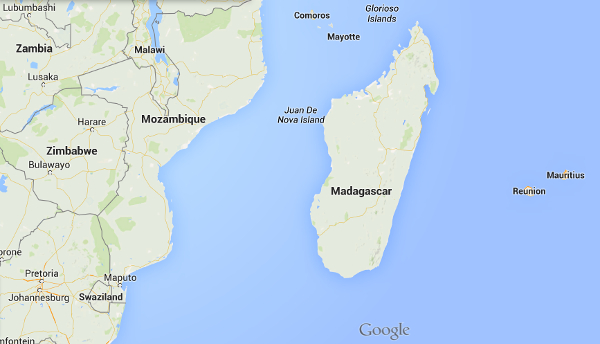
Es ist soweit: Urlaub. Und, wie ich erst vor wenigen Tagen feststellte: schon wieder eine Insel. Die dritte in Folge. Letztes Jahr die auf der anderen Seite Kanals, davor Sri Lanka. Jetzt ist es Madagaskar, die viertgrößte der Erde. Zweimal so groß wie Deutschland. Das musste man auch erstmal realisieren… und was das bei suboptimalen Straßenverhältnissen für mögliche Reiserouten heißt! Eins scheint klar – es könnte eine der abwechslungsreichsten Reisen überhaupt werden. Landschaftlich. Kulturell. Kulinarisch! Ich bin gespannt. Und werde berichten!

Finally: vacation. And as I noticed a few days ago: another island. The third one. Last year it was the one on the other side of the Channel, before that it was Sri Lanka. Now it’s Madagascar, the fourth largest on earth. Twice as large as Germany. It was important to realize what that meant for potential routes and destinations when taking into account possibly less than average road conditions. One thing seems clear: it could become one of the most varied trips ever… as far as scenery, culture and food go! I can’t wait. And will let you know more about it soon, I hope!

Barbara